How to stop dangerous fungal infections? Researchers at CSIR-CCMB, Hyderabad have answers
Fungal infections are quietly becoming one of the most dangerous and underestimated threats of our time
By - Newsmeter Network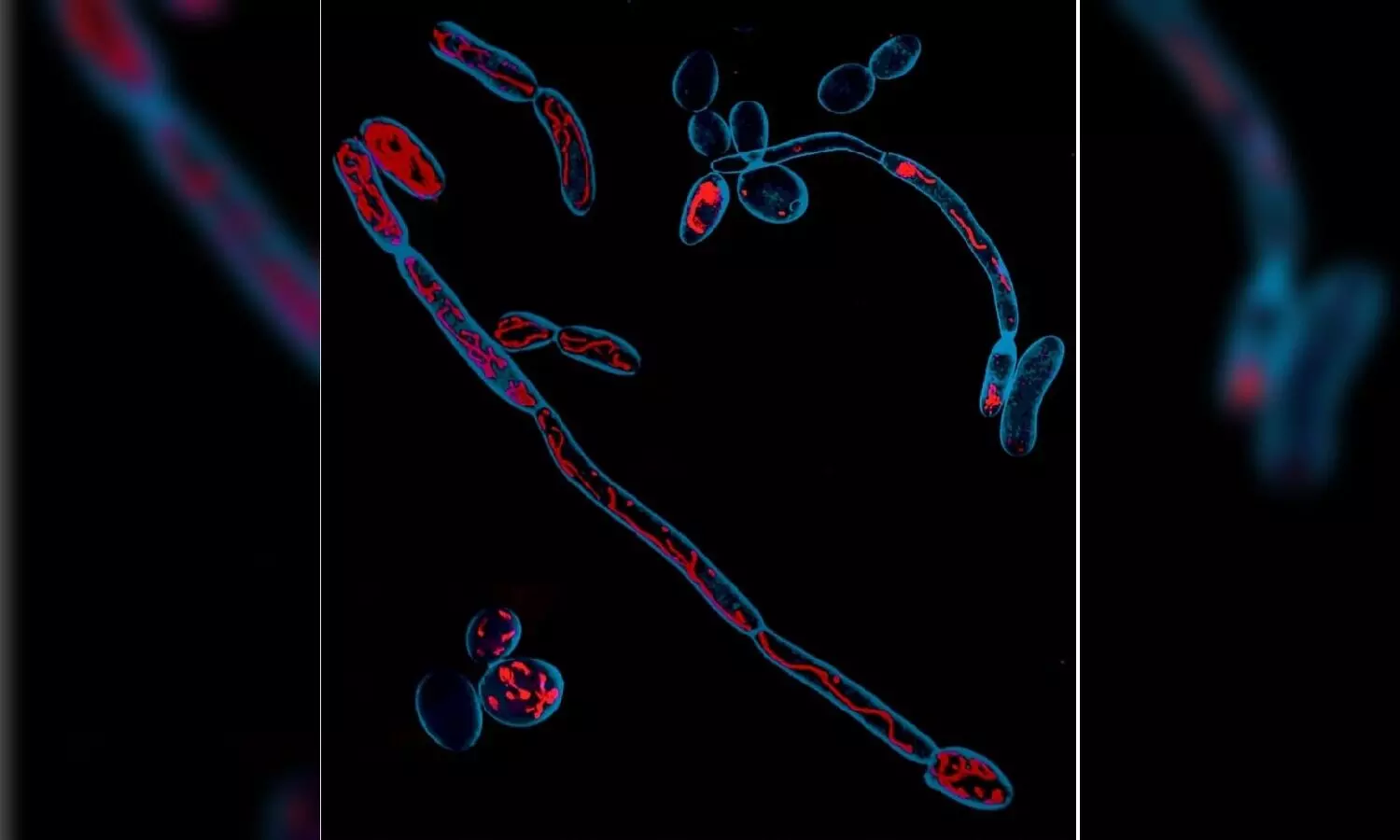
How to stop dangerous fungal infections? Researchers at CSIR-CCMB, Hyderabad has answers
Hyderabad: Researchers from Dr Sriram Varahan’s laboratory at CSIR-Centre for Cellular and Molecular Biology, Hyderabad, have uncovered a striking new insight into how fungi become dangerous and how to stop them.
Fungal infections are quietly becoming one of the most dangerous and underestimated threats of our time. Often overshadowed by viruses and bacteria, fungi are now responsible for a growing number of severe infections worldwide, contributing to rising hospitalizations and deaths.
At the same time, fungal diseases are devastating crops, reducing yields, and worsening food insecurity—making this a dual crisis for both public health and agriculture. Yet, our ability to fight back is weakening.
Antifungal medicines are far fewer than antibiotics, can be toxic, and even their efficacy in treating fungal infections is declining rapidly due to antimicrobial resistance.
Doctors and scientists are beginning to face a frightening reality: the pipeline of effective antifungal treatments is shrinking, even as the threat expands.
A remarkable “superpower” of fungi is their ability to change their shape. Fungi exist in predominantly two shapes: yeast (oval in shape, about 5 microns in diameter) and filamentous (~20-100 microns long).
The yeast forms travel from one place to another, looking for niches to anchor itself. Once it finds that, it starts to filament and takes over the region. When fungi enterhost cells present in our bodies, it is primarily in its yeastform.
In the host, it facesa shortage of nutrients, differences in temperatures, and encounters other microbes.All of these trigger the fungi to form filaments. The filamentous forms of fungi are difficult to clear out for the immune cells of our bodies, as well as for medicines.
For decades, scientists have largely known the genes governing signalling pathways and regulatory mechanisms inside the fungal cell that instruct it to change shape. However, this new work reveals that the true driver of shape-shifting does not lie only in gene networks, but also in the fungus’s internal power supply – its metabolism.
New study finds fungi’s sugar metabolism controls infection-driving shape shift
By looking at fungi through a metabolic lens, we uncovered what can be described as a previously hidden biological 'short circuit'. We discovered a crucial connection between the process by which cells break down sugar to generate energy (called glycolysis) and the production of specific sulfur-containing amino acids,” said Dr Varahan. Put simply, when fungi consume sugars rapidly, sugar breakdown also runs at high rates.
This influences whether the cell can produce certain sulfur-based amino acids that are necessary for triggering invasive growth. Thus, fungal shape-shifting is not only programmed by genes—it is also fuelled and controlled by how the fungi process nutrients.
To prove this, the team performed laboratory experiments in which sugar breakdown was slowed in the fungus. In these conditions, fungi remained trapped in a harmless, oval (yeast) form, unable to transition into the more invasive shapes associated with infection.
But when supplied with sulfur-containing amino acids from outside, the fungi rapidly regained their ability to change shape. This dramatic “rescue” demonstrated that these nutrients act like an essential on/off switch—without them, morphogenesis stalls; with them, the invasive transformation can restart.
Metabolic connection has disease relevance
The team studied a strain of Candida albicans, a leading cause of fungal diseases worldwide, lacking a key sugar breakdown enzyme, and found that it became “metabolically crippled.”
The fungi showed a weakened ability to undergo morphogenesis, as well as struggled to survive attacks from immune cells called ‘macrophages’. These immune cells form the body’s first line of defence.
In mouse infection studies, this altered strain caused much milder disease compared to normal fungal strains. In effect, disrupting fungal metabolism reduced its capacity to adapt, evade immunity, and establish infection.
This discovery could open a promising new path in antifungal treatment strategies. Scientists may be able to disrupt the metabolic processes that fungi rely on fortheir survival. Dr Varahan opined that “since these pathways are fundamental for fungal growth and shape-shifting, they may represent an 'Achilles’ heel' that is harder for fungi to escape through resistance”.
At a time when drug-resistant fungal infections are rising globally, these findings highlight a powerful idea: to stop fungal infections, we may need to cut off the energy and nutrients that enable fungi to transform into harmful forms.
By targeting metabolism, we may be able to outsmart these shape-shifting invaders and develop safer, more effective antifungal therapies – protecting both human health and food security.


