EoDB 2.0: Telangana plans shift from regulator to ‘collaborative partner’, says Sridhar Babu
The Minister detailed a three-pronged regional strategy designed to ensure that economic growth is not confined to the capital, but spreads across the state
By Newsmeter Network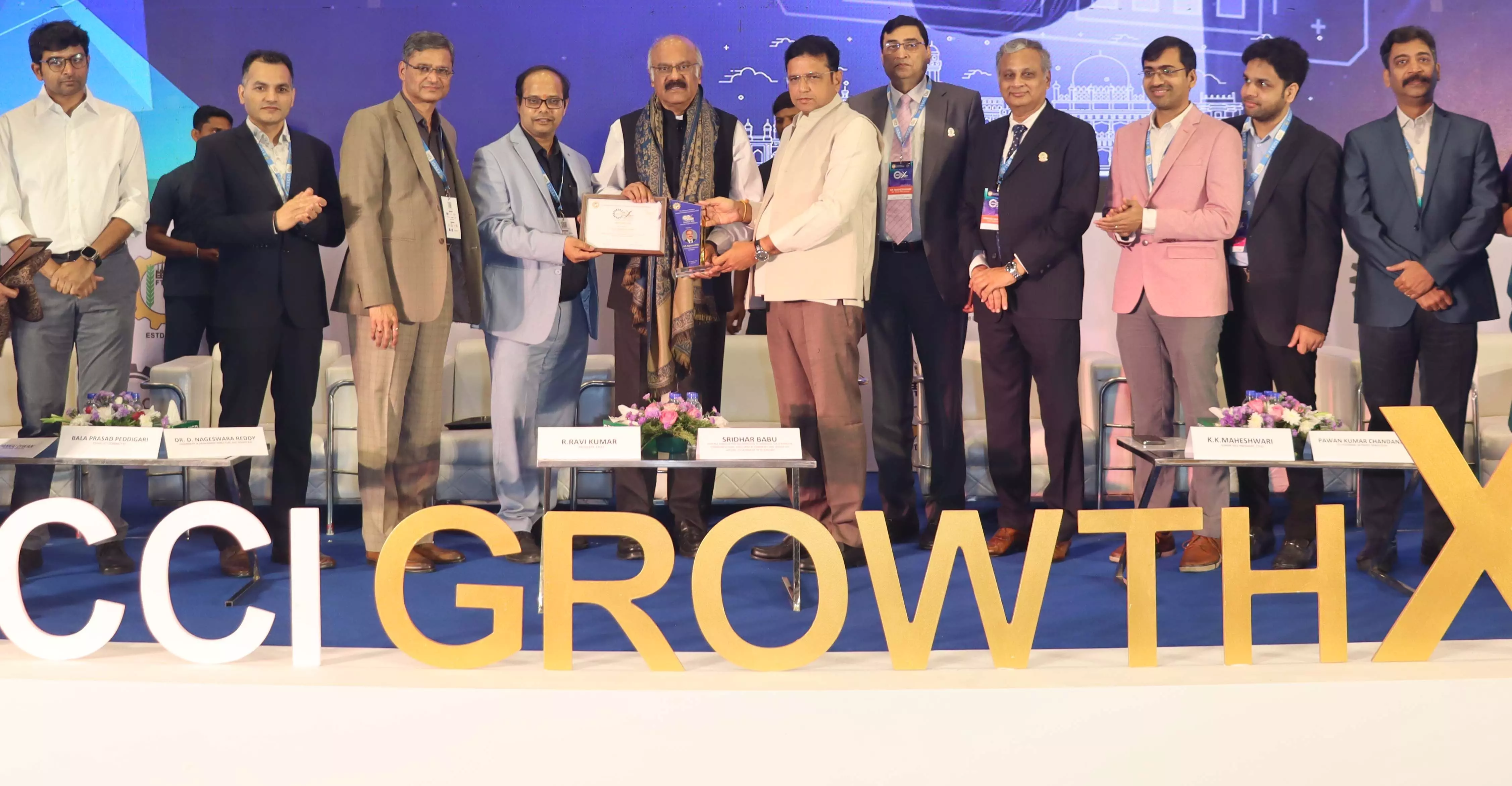
EoDB 2.0: Telangana plans shift from regulator to ‘collaborative partner’, says Sridhar Babu
Hyderabad: Telangana State government said it is set to overhaul its industrial framework with the upcoming launch of Ease of Doing Business (EoDB) 2.0.
Speaking at the Growth X 2026 conference organised by the Federation of Telangana Chambers of Commerce and Industry (FTCCI), IT and Industries Minister D Sridhar Babu announced that the new policy aims to transition the State government from a regulatory body to a ‘collaborative partner’ for global investors.
The CURE, PURE and RARE strategy
The Minister detailed a three-pronged regional strategy designed to ensure that economic growth is not confined to the capital, but spreads across the state:
CURE: Service Sector focus within the Outer Ring Road
PURE: Manufacturing hub between the ORR and the Regional Ring Road
RARE: Agri processing and green economy beyond the RRR to the state borders
Roadmap to 2047
The ‘Telangana Vision 2047’ document targets a massive economic leap. Currently a $200-billion economy, the State aims to reach $1 trillion by 2034 and $3 trillion by 2047. To achieve this, the Minister emphasised the integration of Industry 5.0 and Artificial Intelligence into the State’s business ecosystem to maintain global competitiveness.
What is ‘Ease of Doing Business’?
The concept of ‘Ease of Doing Business’ originated with the World Bank in 2003. It was an annual report that ranked 190 economies based on how easy it was to start and operate a local business.
1. Countries were measured on 10 specific parameters, including:
Starting a business (procedures and time)
Getting electricity and construction permits
Paying taxes and enforcing contracts
Trading across borders
2. In India, the Department for Promotion of Industry and Internal Trade (DPIIT) adapted this into the Business Reform Action Plan (BRAP).
This created a ‘competitive federalism’ environment where Indian states like Telangana, Andhra Pradesh and Gujarat competed for the top spot.
Telangana's Track Record: Since its formation in 2014, Telangana has consistently been a top performer, often ranking 1st or 2nd in India’s EoDB rankings due to its TS-iPASS system, which provides self-certification and ‘deemed approvals’ for industries.
3. Why ‘2.0’ now?
The original World Bank report was discontinued in 2021 (replaced by the B-READY framework). EoDB 2.0 represents a shift from "paper reforms" to "impact reforms."
Phase 1.0: Focused on digitising applications and reducing the number of forms.
Phase 2.0: Focuses on decriminalising minor technical defaults, using AI for automated approvals, and integrating central and state systems (like the National Single Window System) to remove redundant inspections.


