Interview: Dr BVR Mohan Reddy explains Cyient’s push for grassroots AI education in govt schools
In an interview with NewsMeter, Dr BVR Mohan Reddy explains the importance of AI-enabled education and healthcare.
By - Kedar Nadella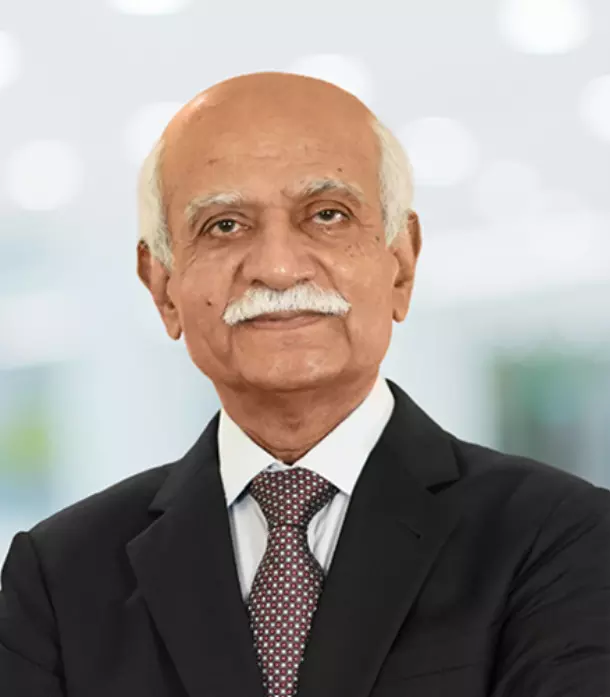
Hyderabad: “At Cyient, CSR is not mere philanthropy; it is nation-building through technology,” says Dr BVR Mohan Reddy when asked about Cyient’s approach towards CSR (Corporate Social Responsibility).
In an interview with NewsMeter, Dr BVR Mohan Reddy, Founder and Chairman, Cyient, explains the importance of AI-enabled education and healthcare, the spirit and values that drive Cyient Foundation’s CSR activities. The CSR work is visible in the innumerable hours spent in volunteer work by the company’s 2,500 employees in supporting digital literacy initiatives and other community programs.
He emphasises the Foundation’s projects that are laying the groundwork for sustainable AI education in places such as Pedamainavani Lanka in Andhra Pradesh and Dimapur, Nagaland.
NewsMeter: Cyient was founded in 1991. What values still define the company?
BVR Mohan Reddy: Cyient was founded on a simple but enduring belief — that values outlast business cycles. From the beginning, we built the organisation on fairness, integrity, transparency and long-term thinking, which we call our Values FIRST.
Starting with four engineers in 1991, we focused on building deep engineering capability, global trust and customer-centric innovation. Those principles remain unchanged even as Cyient has grown into a global engineering and technology company operating across multiple industries and geographies.
Another foundational decision was to invest early in engineering research and development as a strategic capability, which ultimately contributed to India becoming a global hub for ER&D services. At Cyient, technology, innovation and purpose have always moved together and that continues to define who we are today.
NewsMeter: How does Cyient approach CSR as a strategic responsibility?
BVR Mohan Reddy: At Cyient, CSR has always been part of our philosophy of responsible growth, not just a compliance requirement. We believe that the sustained development of society is essential for the sustained growth of business, which is why we institutionalised CSR long before it became mandatory.
At Cyient, CSR is not mere philanthropy; it is nation-building through technology. Our philosophy is ‘Sustained development of society is vital to sustained business growth.’ CSR must create measurable and scalable impact, not just activity.
Our CSR strategy focuses on technology-enabled social transformation, particularly in education, digital literacy and livelihoods. Today, our programs align with national priorities like Digital India, Skill India, NEP-2020 and Viksit Bharat 2047, as well as global frameworks such as the UN Sustainable Development Goals. This approach ensures CSR is integrated into our long-term business vision, not separate from it.
We run CSR as outcomes, with governance, partnerships, measurement and scalability. Our programs align closely with Schedule VII and map to global frameworks like the UN SDGs, because credibility today demands both local relevance and global rigour.
This is why our CSR has evolved into technology-led nation-building education, digital inclusion, women’s livelihoods, healthcare, environment and innovation ecosystems—aligned with national priorities and delivered with accountability.
NM: Why did the Foundation choose education, digital literacy, healthcare and skill development?
BVR Mohan Reddy: These focus areas were chosen because they address the root causes of inequality and economic exclusion. Education builds opportunity, digital literacy builds access, healthcare builds resilience and skill development builds livelihoods. Together, they create sustainable community transformation. Over two decades, Cyient Foundation has impacted more than 2,50,000 lives through technology-driven development programs, including school education, digital inclusion, women’s empowerment and rural development.
These priorities reflect our belief that human capability development is the most powerful form of nation-building. We chose these focus areas because they address the root enablers of human capability. Education creates aspiration and opportunity. Digital literacy creates access and participation in the modern economy. Healthcare builds resilience and protects families from sliding back into poverty. Skills and livelihoods translate capability into income and dignity. Together, they form a complete pipeline from a child in a government school to a young person with employable skills to a family with improved health and stable income.
Our work shows scale and outcomes like school adoption supporting 21,000+ children annually, with over 56 per cent of girl child enrolments in Cyient-adopted schools, digital centres delivering IT literacy at scale, women’s skilling with strong livelihood conversion and preventive healthcare impacts.
We invested where it matters most: capability education, digital access, health and livelihoods. If you strengthen capability, communities become self-reliant. That is the real ROI.
NM: How do you ensure long-term impact? Which initiative shows strong ground-level impact?
BVR Mohan Reddy: Long-term social impact requires three essential elements — community ownership, measurable outcomes and strong partnerships.
At Cyient Foundation, every initiative is designed with these principles in mind, supported by structured monitoring systems, teacher and trainer capacity-building and continuous tracking of learning and livelihood outcomes.
Our experience over the past two decades shows that consistent engagement with communities creates generational transformation. For example, the Adopt-a-School initiative, one of our longest-running programs, currently supports over 21,000 students annually, with nearly 56.5 per cent being girls, reflecting strong progress in gender inclusion. Over time, the Foundation has improved learning environments for more than 2,50,000 children, demonstrating the power of sustained investment in education.
Technology-enabled education has been another key driver of impact. Cyient Foundation has enabled digital access in 120 government schools by providing ICT, AI, STEM and robotics infrastructure, reaching over 35,000 school children annually. In addition, over 5,000 government schoolteachers have been trained in ICT and digital pedagogy, ensuring long-term sustainability of these interventions.
Beyond education, digital inclusion and livelihoods have been equally important. The Foundation has provided digital literacy to over 37,000 individuals, including 14,000 women, and continues to train around 2,000 rural women every year for employment and entrepreneurship, helping families move toward economic stability.
A powerful example of holistic community transformation is Mokshagundam village, where Cyient Foundation’s integrated interventions have helped achieve 100 per cent school enrollment, zero infant mortality and universal access to healthcare and sanitation, making it a model of rural resilience.
Taken together, these initiatives show that real impact happens when communities become self-reliant. By combining education, digital access, skilling and community development, Cyient Foundation continues to create sustainable, measurable, and scalable social transformation.
NM: How do Cyient employees participate in CSR?
BVR Mohan Reddy: Employee participation is central to our CSR culture.
Cyient associates contribute through volunteering, mentoring students, supporting digital literacy initiatives, and participating in community programs. Over 2,500 employees have contributed thousands of volunteer hours, reinforcing a culture of purpose within the organisation. This participation transforms CSR from a program into a shared organisational movement. Cyient associates are not observers they are participants in change.
Volunteering creates a culture of purpose inside the company. When employees engage with communities, CSR becomes personal.
NM: How does the Foundation focus on education and skill development as enablers of long-term community growth?
BVR Mohan Reddy: Education and skill development are the most reliable pathways to long-term community growth.
At Cyient Foundation, we focus on building capability at scale, especially among underserved communities. As of today, over 2.5 lakh underprivileged children have gained access to quality education through our interventions. We have enabled ICT/IoT infrastructure in 232 government schools, and more than 50,000 children annually access digital pedagogical tools in Cyient-supported schools. Equally important, over 5,000 government schoolteachers have been trained in ICT and digital learning tools, ensuring sustainable classroom transformation.
Our Adopt-a-School initiatives demonstrate how education interventions can drive social inclusion. With focused investments in infrastructure, WASH facilities, and learning environments, girl-child enrollment in adopted schools has increased from 13 to 56 per cent, reflecting growing community trust in education.
Alongside education, livelihood-linked skilling remains central to our community development approach. Cyient Foundation currently operates five skill centres in 3 states, creating employment pathways for women and youth:
- The Cyient Urban Micro Skill Centre, with about 85% employment/self-employment outcomes.
- The Cyient Rural Micro Skill Centre, training unemployed girls with 100% job placement.
- The Cyient IT/ITES Skill Centre, enabling non-engineering graduates with about 86% employment outcomes, while supporting local industries with a reliable talent pool.
Building on this strong foundation, Cyient Foundation has expanded into AI-enabled future skills development, aligning community skilling with global workforce trends.
The AI and Future Skills Centre of Excellence at NTTC Dimapur, Nagaland, integrates AI into vocational domains such as handloom, robotics, coding and digital manufacturing. The centre is expected to train over 200–240 youth annually with a targeted 75 per cent placement or self-employment outcome, creating technology-enabled livelihood opportunities in aspirational regions.
Similarly, the Cyient AI and Future Skills Hub at Digital Bhavan in Pedamainavani Lanka, Andhra Pradesh, represents a village-level model for AI-enabled rural skilling, designed to train over 300 participants annually in AI-enabled digital literacy, e-commerce, and drone-based agri-services, with strong employment and entrepreneurship outcomes.
Together, these initiatives demonstrate how education builds aspiration and skills create livelihoods, ultimately enabling self-reliant communities and a future-ready workforce. By integrating foundational education with AI-enabled skilling, Cyient Foundation is helping communities participate meaningfully in India’s digital growth journey, aligned with Digital India, Skill India, and Viksit Bharat 2047.
NM: What is the importance of investing in AI education at the grassroots level?
BVR Mohan Reddy: Artificial Intelligence will fundamentally reshape the future of work, learning, and livelihoods. If India is to lead in this AI-driven era, access to AI education must begin at the grassroots level in government schools, rural communities, and aspirational regions, not only in universities or corporate environments.
At Cyient Foundation, we are building a continuum of AI learning and skilling, starting from school education and extending to workforce readiness.
Through CyAILS – Cyient AI Labs for Schools in Visakhapatnam, we are enabling over 25,000 government school students across 50 schools to learn AI, STEM, and robotics through experiential learning. This initiative ensures that children from underserved communities gain early exposure to emerging technologies and develop innovative mindsets.
Similarly, CYIENT vijAIpatha in Hosapete, Karnataka, implemented in partnership with the Department of Education, demonstrates how AI–STEM labs can be integrated into public schooling systems, empowering over 2,000 students and training teachers to sustain AI education in classrooms.
Beyond school education, we are extending AI learning into livelihood pathways. The Cyient AI & Future Skills Hub at Digital Bhavan in Pedamainavani Lanka represents a village-level model for AI-enabled skilling, training 300+ rural youth annually in AI-enabled digital skills, e-commerce, and drone-based agri-services with strong employment and entrepreneurship outcomes.
In aspirational regions, the AI & Future Skills Centre of Excellence at NTTC Dimapur, Nagaland, demonstrates how AI-integrated vocational education can strengthen employability and entrepreneurship, creating opportunities for youth in the North-East and contributing to regional economic resilience.
Together, these initiatives reflect a simple belief: AI education must be democratised. When AI learning reaches government schools, rural youth, and underserved communities, technology becomes a powerful equaliser rather than a divider.
Investing in grassroots AI education is therefore not just about technology — it is about equity, employability, and preparing India’s young population to participate meaningfully in the global digital economy, aligned with the vision of Digital India, Skill India, NEP-2020, and Viksit Bharat 2047.
NM: How will AI Labs bridge the digital and employability gap?
BVR Mohan Reddy: Across the world, industries are undergoing a profound transformation driven by Artificial Intelligence, automation, and digital engineering. Increasingly, employers are looking not only for academic knowledge but for digital fluency, problem-solving ability, and an innovative mindset. The gap between traditional education and future workforce requirements is therefore widening, particularly in low-income communities.
AI Labs in government schools help bridge this gap at its source. By providing hands-on exposure to robotics, coding, IoT systems, and AI-enabled problem-solving, these labs enable students to move from passive learning to experiential, application-oriented learning. Instead of seeing technology as something distant, students begin to understand how it can be used to solve real-world challenges in agriculture, healthcare, manufacturing, and community development.
From an industry perspective, this early exposure is critical. The future workforce will require computational thinking, data literacy, and interdisciplinary collaboration skills, regardless of the sector they work in. AI Labs nurture these foundational capabilities at a formative stage.
Through initiatives such as CyAILS in Visakhapatnam and CYIENT vijAIpatha in Karnataka, Cyient Foundation is enabling government school students to engage with AI and STEM tools in a structured and inclusive manner. These programs are complemented by teacher training, project-based learning, and innovation challenges, ensuring that AI learning becomes sustainable within the public education ecosystem.
What makes AI Labs particularly powerful is their ability to bridge both the digital divide and the opportunity divide. When a child in a government school gains exposure to AI tools similar to those used in industry, it builds confidence, curiosity, and aspiration, the essential ingredients for employability.
In many ways, AI Labs are not just technology spaces; they are innovation spaces that prepare young learners to participate in the future economy, ensuring that India’s demographic advantage translates into a globally competitive, future-ready workforce.
At Cyient Foundation, we are working to build AI-enabled skilling pathways that connect learning directly to livelihoods. Our initiatives reflect how CSR-led AI skilling can serve as a bridge between education, industry, and employment, particularly for rural youth, women, and first-generation learners.
Ultimately, AI-enabled skilling is not just about preparing individuals for jobs — it is about preparing the nation for the future of work. By investing in inclusive AI skilling models, we are contributing to India’s journey toward Viksit Bharat 2047, ensuring that growth in the digital economy is both innovative and inclusive.
NM: What is the role of teacher training in sustaining AI education?
BVR Mohan Reddy: Globally, one of the biggest lessons from technology adoption in education is that this infrastructure alone does not transform learning; teachers do. Whether it is digital classrooms, AI tools, or robotics labs, long-term impact depends on how confidently educators can integrate technology into everyday teaching.
As Artificial Intelligence becomes central to the future of work, education systems must evolve from content delivery to capability building. This shift cannot happen without teachers being equipped with the right knowledge, tools, and confidence to guide students through emerging technologies.
At Cyient Foundation, we therefore see teacher capacity-building as the foundation of sustainable AI education. Across initiatives such as Cyient Digital Centers structured teacher training programs are built into the design of the Computer & Digital Classrooms. By enabling educators to understand IoT concepts, use STEM and robotics kits effectively, and facilitate project-based learning, we ensure that IoT and Digital Education become embedded within the school ecosystem rather than remaining a one-time intervention. Cyient Foundation has provided ICT infrastructure in 232 Government Schools and trained over 5000 Government School Teachers on ICT/IoT usage.
From an industry perspective, this is essential. The future workforce will require adaptability, digital literacy, and problem-solving skills, and teachers are the first mentors who shape these capabilities. When teachers become comfortable with technology-enabled learning, classrooms naturally shift toward innovation, experimentation, and inquiry.
NM: Finally, how would you mentor a business or a business leader in making values and policies a priority rather than the profit motive?
BVR Mohan Reddy: Values and profit are not competing priorities; values create sustainable profit. Organisations that invest in people, education, innovation and ethical governance build stronger institutions and stronger societies. Purpose-driven companies attract better talent, build trust with stakeholders and create long-term value. Profit follows purpose, not the other way around. Profit is important, but purpose makes profit sustainable. Businesses must invest in education, innovation, and people. Strong values build strong institutions.


