Telangana aluminum industry faces mounting pressure due to rising primary prices
The study was released by CUTS International executive director Bipul Chattopadhyay
By - Sri Lakshmi Muttevi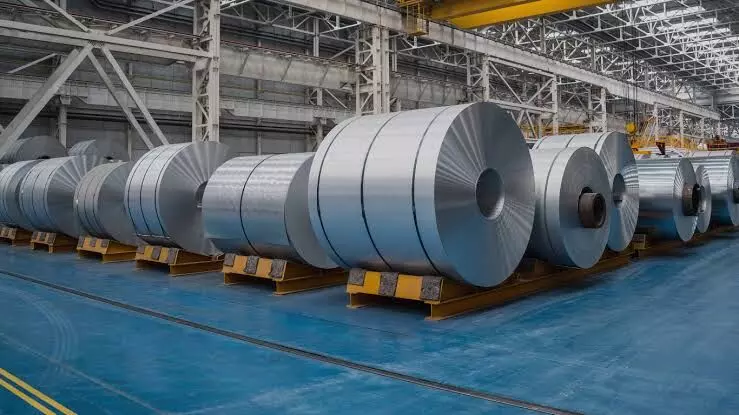
Representational Image
Hyderabad: The Telangana aluminum industry is facing huge challenges due to the rising primary prices.
The surging prices, driven by the existing 7.5% import duty, are squeezing MSMEs that depend on stable, competitively priced raw materials to remain viable. For secondary producers and fabricators operating on thin margins, even modest price fluctuations can determine survival or closure.
Telangana: Ground Zero for Industry Transformation
Telangana hosts a range of aluminium downstream and value-added activities, including manufacturing units and MSMEs engaged in aluminium extrusion and profile production. It is supported by companies such as Global Aluminium Pvt Ltd, which operates aluminium extrusion manufacturing facilities in the state, and Mahasai Aluminium Profiles in Hyderabad, involved in precision extrusion work.
The state also has various aluminium fabrication and product manufacturing firms producing items like doors, windows, partitions, and other aluminium products. Additionally, there are plans for an aluminium industrial park in Telangana aimed at housing numerous downstream MSMEs, indicating growing investment in the sector.
"The aluminium industry in Telangana represents more than just production numbers—it's about livelihoods, skill development, and regional economic stability," noted a senior industry observer familiar with the state's manufacturing landscape. "When MSMEs face cost pressures, the entire value chain feels the impact, from raw material suppliers to finished goods exporters."
Overall, the increasing input costs driven by a distorted import duty structure are severely constraining India’s Micro, Small, and Medium Enterprises (MSMEs) in the secondary aluminium sector.
The developments are threatening the nation's ambitious manufacturing goals. A policy paper released by the think tank CUTS International in Hyderabad highlights the critical need for duty rationalisation to unlock the sector's potential and support the Viksit Bharat 2047 vision.
The Sector and The Challenge
India’s domestic aluminium demand is projected to surge from 5.3 million tonnes today to 8.3 million tonnes by 2030. The secondary aluminium sector, which is heavily reliant on raw material and comprises MSMEs, is described as indispensable to realizing the country’s manufacturing value chain.
The core issue is a policy anomaly known as the "inverted duty distortion":
Raw aluminium, which is the primary input for domestic manufacturers, faces a 7.5% import duty.
Conversely, finished aluminium products often enter India at zero duty through Free Trade Agreements (FTAs).
This structure inflates the input costs for domestic producers, making their final goods more expensive than cheaper duty-free imports. This places local MSMEs at a significant competitive disadvantage, causing them to lose market access both domestically and internationally.
The Competitiveness Imperative
Navendu K Bharadwaj of the Aluminum Secondary Manufacturers Association (ASMA) underscored the broader national implications: "Duty reduction of primary aluminum will enable downstream manufacturers to play a key role in driving demand for aluminum needed for development initiatives to achieve a Viksit Bharat in 2047. Aluminum value-added products are key components in sectors such as construction, infrastructure, automobiles, and electronics."
The policy paper reveals that the current duty structure keeps domestic aluminium prices elevated relative to international benchmarks, creating a competitive disadvantage for Indian manufacturers. This pricing gap particularly impacts sectors experiencing rapid growth—construction, renewable energy infrastructure, electric vehicles, and electronics—all of which require substantial aluminium inputs.
Call for Policy Reform
The policy paper concludes that rationalising aluminium duties is not just a sectoral adjustment but a strategic imperative for national industrial policy. By addressing the high cost structures, policymakers can:
Enable India's 3,500 aluminium MSMEs to compete effectively.
Boost employment in labor-intensive downstream sectors.
Incentivize domestic value addition over imports.
The paper urges the government to correct the inverted duty structure to unleash the full potential of India's aluminium value chain, driving employment, innovation, and economic growth across industrial clusters nationwide.
The study was released by CUTS International executive director Bipul Chattopadhyay and member of he association Navendu K Bhardwaj in Hyderabad.


