Waste to energy: Telangana launches ₹700 Cr compressed biogas project in Narmetta
The project was commissioned at a time when Telangana is working hard to become a national model for clean energy while simultaneously revitalizing the rural economy.
By Newsmeter Network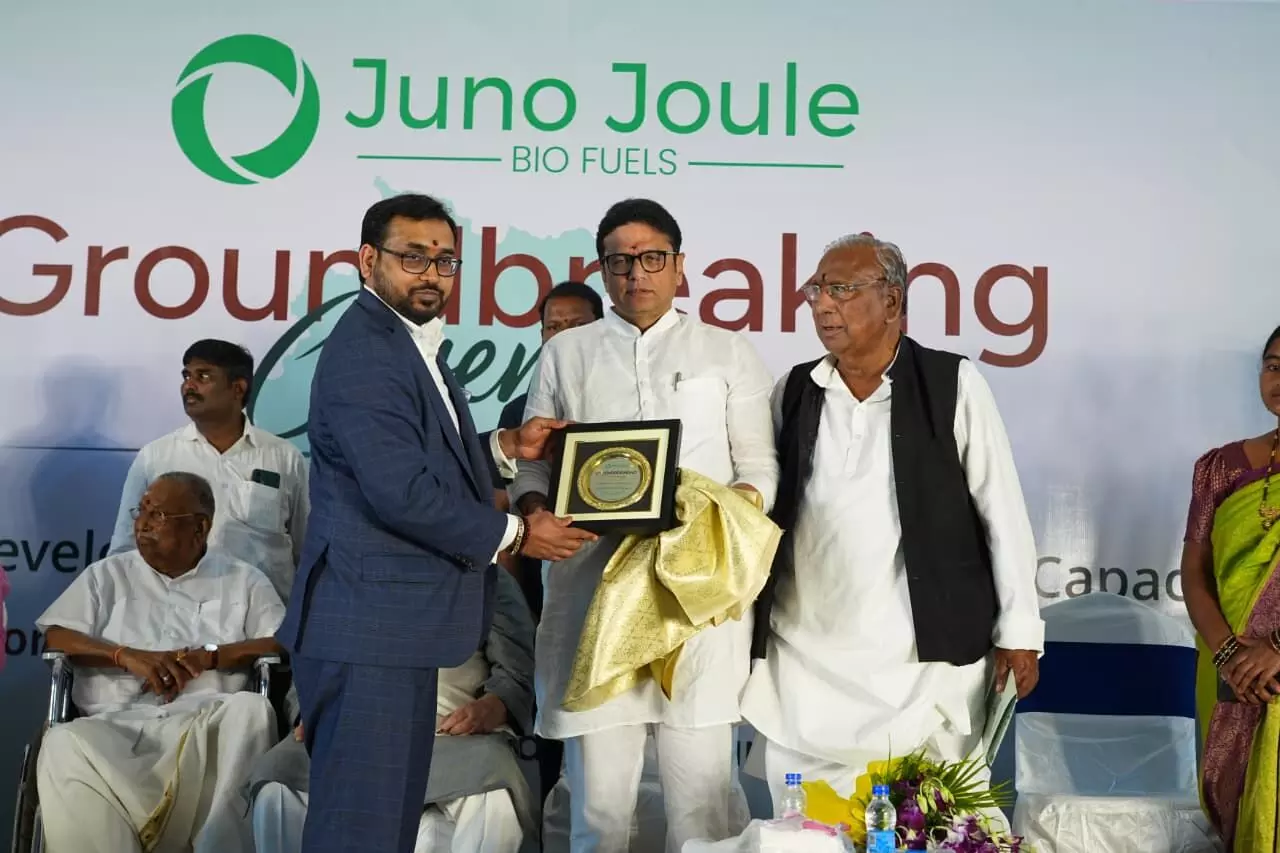
Siddipet: IT and Industries Minister D Sridhar Babu inaugurated a Rs 700 crore compressed bio gas project in Narmetta.
The project was commissioned at a time when Telangana is working hard to become a national model for clean energy while simultaneously revitalizing the rural economy.
Developed by Juno Joule Biofuels Pvt. Ltd, the project utilizes a `cluster model' comprising 10 plants, each capable of processing 100 tonnes of waste daily. Beyond its environmental impact, the project is a major employment generator, expected to create 1,400 direct jobs, with a notable mandate to ensure 30% of the workforce is women.
Empowering the 'Urja-daata'
Speaking at the ceremony, Minister Sridhar Babu emphasized the shift in the role of the Indian farmer. "Our farmers are no longer just 'Annadatas' (food providers); through projects like this, they are becoming 'Urja-daatas' (energy providers)," the Minister remarked.
By utilizing agricultural residues like paddy straw, cattle dung, and poultry waste, the plant converts rural "waste" into high-value biofuel. This not only provides farmers with an additional income stream but also tackles the environmental hazard of stubble burning.
National Energy Security
The Minister highlighted the strategic importance of domestic biofuels, noting that India currently imports nearly 90% of its crude oil and 60% of its LPG. By scaling up CBG production, Telangana aims to reduce this external dependency and contribute to India’s broader climate goals.
A Proven Track Record in Clean Energy
This project is the latest chapter in Telangana’s rapid transformation from a power-deficient state in 2014 to a green energy powerhouse.
Key updates of clean energy:
Solar Prowess: Telangana was among the first in India to surpass 5 GW of solar capacity. It currently hosts one of the nation's largest floating solar plants (100 MW) at Ramagundam.
Decentralized Power: Pilot projects are underway in 81 villages, transitioning rural households and agricultural pumps to solar power.
Urban Waste-to-Energy: The state already leads in urban sustainability with the Jawaharnagar plant, which converts municipal waste into electricity for the Hyderabad region.
The Road to 2047
The state government has cleared massive new tenders, including 3,000 MW in Solar PPAs and 2,000 MW in Pumped Storage to manage grid stability. These steps are part of a broader "Vision 2047" roadmap, which targets a 50% green power mix in the state’s total energy portfolio.
By decentralizing industrial growth and focusing on rural energy hubs, Telangana is proving that environmental sustainability and economic prosperity can go hand-in-hand.


