62.6% blindness cases in Telangana due to cataract; refractive errors and glaucoma follow
Cataract continues to be the single largest contributor to blindness and visual impairment in Telangana, accounting for 62.6 per cent of blindness in the State, according to current hospital and programme data.
By - Anoushka Caroline Williams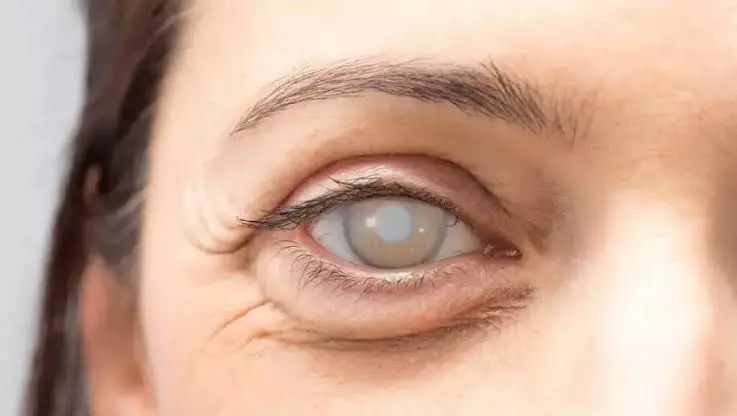
Hyderabad: Visual impairment remains a significant public-health challenge in Telangana, with many cases arising from conditions that are either preventable or curable if detected and treated in time.
Uncorrected refractive errors and glaucoma make most cases
An analysis of disease patterns shows that cataract, uncorrected refractive errors and glaucoma together account for a substantial share of vision loss, underscoring the need for targeted investments guided by outcomes rather than infrastructure alone.
As Telangana moves towards a comprehensive, 360-degree eye-care approach covering prevention, screening, treatment and referral, current hospital and programme data provide critical insight into where resources can have the greatest impact.
Drawing on ground-level data and service delivery experience, Dr P Modini, Superintendent, Sarojini Devi Eye Hospital, speaking to NewsMeter, outlines the present burden of eye diseases in Telangana and explains why prioritising treatable causes of visual impairment is central to effective planning and budget allocation.
Cataract is the largest contributor to blindness
Cataract continues to be the single largest contributor to blindness and visual impairment in Telangana, accounting for 62.6 per cent of blindness in the State, according to current hospital and programme data.
Health authorities are prioritising cataract care as part of a proposed comprehensive eye-care strategy aimed at maximising outcomes from curable and preventable conditions.
“From a public-health perspective, it makes sense to invest in conditions where outcomes are measurable and reversible. Cataract is curable and addressing it gives the highest return in terms of restored vision,” said Dr Modini.
Majority of cataract cases are manageable
She explained that nearly 80 per cent of cataract cases are routine and manageable, while about 20 per cent involve complications that require senior surgical expertise and tertiary-level care.
Quality of life links with cataract
Cataract management is no longer guided by the concept of a lens becoming ‘ripe’. Instead, surgery is advised when visual impairment begins to affect a person’s quality of life.
“The timing of cataract surgery is not universal. A pilot, a surgeon or a software professional will need intervention much earlier than an elderly person whose daily activities are limited. Cataract surgery today is guided by lifestyle needs,” Dr Modini said.
While spectacles may offer temporary improvement in early stages, cataract progression eventually necessitates surgery in most cases.
Public health system for cataract care
Cataract surgeries in Telangana are delivered through a tiered public health system. District hospitals and medical colleges handle routine procedures, while complicated cases are referred to tertiary centres.
Sarojini Devi Eye Hospital functions as the apex referral centre for the State and receives patients from neighbouring States due to the availability of advanced surgical services.
“Training is also a core function. Most future ophthalmologists in Telangana are trained through the government medical education system,” Dr Modini said.
Uncorrected refractive errors: A major cause of vision impairment
Uncorrected refractive errors account for approximately 19.7 per cent of visual impairment in Telangana. Though not classified as blindness, they significantly affect functional vision and productivity.
“This is vision impairment, not blindness. A person may see, but not clearly enough to perform skilled tasks without glasses,” Dr Modini said.
Schoolchildren are a key focus group, with vision screening conducted at multiple levels of the public health system. Referrals are made for cases requiring specialist assessment.
Glaucoma: silent and irreversible
Glaucoma contributes to around 5.5–5.8 per cent of visual impairment in the State and remains a major challenge due to its asymptomatic nature in early stages.
“Glaucoma does not give warning signs. By the time vision loss is noticed, damage is often advanced and irreversible,” Dr Modini said.
She noted that screening requires specialised equipment and trained personnel, limiting detection at the field level. Awareness and targeted screening among high-risk groups, including individuals over 40, those with a family history of glaucoma and people with diabetes, are therefore critical.
“Screening and lifelong treatment are the only options. Awareness remains the biggest barrier,” she added.
Corneal blindness due to injury and infection
Corneal blindness in Telangana is primarily linked to trauma and infection, particularly among agricultural workers and children. Even minor injuries can result in infections that heal with scarring, leading to permanent vision loss.
“The cornea is like clear glass. When it heals after infection or injury, it can become opaque and affect vision,” Dr Modini explained.
Advanced treatment, including corneal transplantation, is available only at specialised tertiary centres. Peripheral facilities focus on early identification and referral.
Retinal diseases and diabetes-related vision loss
Retinal disorders, including diabetic retinopathy, are emerging as a growing cause of visual impairment in the State due to rising diabetes prevalence.
“Retinal diseases require both expertise and advanced technology. Screening may be possible at select centres, but treatment is concentrated at tertiary hospitals,” Dr Modini said.
Focus on curable and preventable blindness
Dr Modini emphasised that the proposed eye-care strategy for Telangana prioritises conditions where intervention produces measurable benefits.
“When resources are limited, spending must be guided by evidence. Cataract and refractive errors together account for the majority of visual impairment, and both are treatable,” she said.
She added that accurate data forms the foundation of effective policymaking.
“What is presented to the government directly influences budget decisions. That responsibility must be handled with seriousness,” the doctor said.


