8 in 10 experience VIP culture at religious, public places and roads: LocalCircles survey
VIP culture controversies in India sparked widespread public debate and political scrutiny in the last 12 months
By - Kedar Nadella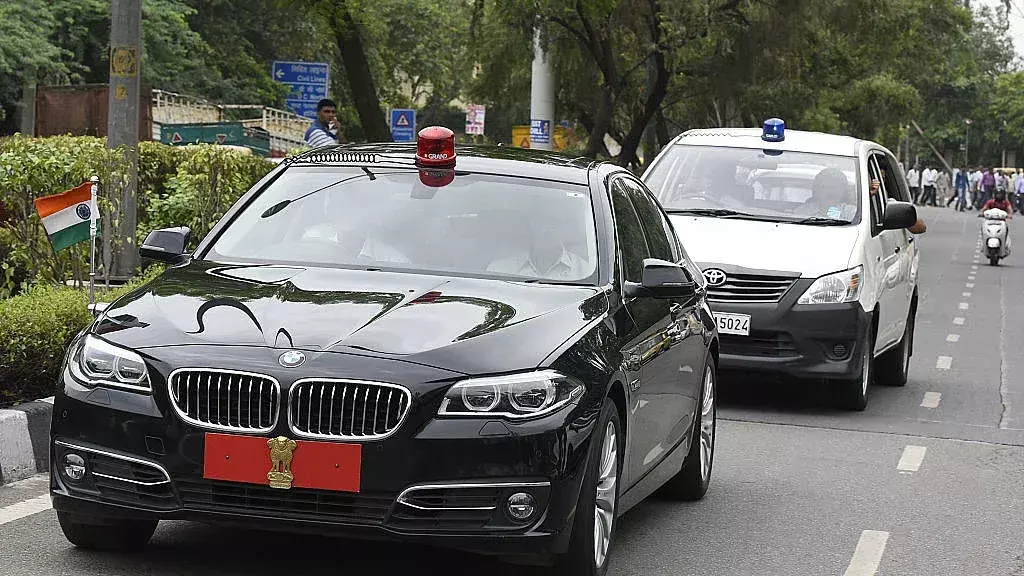
Hyderabad: According to a LocalCircles survey, 8 in 10 of those who witnessed VIP culture said it is prevalent in many public spaces such as places of worship, roads, tollways and public and private events.
It doesn’t come as a surprise that VIP culture is deeply rooted in Indian spaces enough to have caused inconvenience to the general public.
VIP culture controversies in India sparked widespread public debate and political scrutiny in the last 12 months.
VIP culture has penetrated all aspects of life
From Maha Kumbh Mela in Prayagraj to Ganapati pandals in Mumbai and from government offices to hundreds of cases of VIP movement with convoy on Indian roads, social media is full of videos where citizens are reporting VIP culture.
High-profile private events like the Lionel Messi ‘GOAT India Tour’ in December last year also attracted criticism for how VIP access displaced ordinary fans, igniting discussions about elitism in major cultural events.
These instances fuelled broader debates about governance, equality and whether VIP protocols need reform to prioritise public convenience over privilege in India’s democratic context.
VIP culture is slowing down public movement
The VIP culture is very much prevalent in hospitals, trains, airlines, right-of-way on roads, toll booths, etc. It is a frequent sight to see VIP movements causing massive traffic jams—a problem common in most state capitals and big cities. Even highways witness traffic jams and diversions due to VIP movements.
A LocalCircles 2024 study revealed that 46 per cent of those surveyed found that VIP culture is intact; 14 per cent believed that it had, in fact, risen significantly in the previous three years.
Interestingly, 91 per cent of those who have travelled by road attested to experiencing VIP culture, 83 per cent found government offices to be afflicted by VIP treatment; the same held true of public and private events (79%), religious places (73%) and hospitals.
VIP continues to persist
Even in 2026, there appears to be no change in the VIP culture in India.
Whether through premium passes in temples, exclusive event access or daily disruptions in traffic, the entrenchment of VIP privilege continues to raise debate and criticism across public forums.
81% witnessed VIP culture on roads and tollways; 70% observed it at airports and on flights
When the LocalCircles survey asked citizens, ‘During commute and travels, what are all the places where you have experienced or observed VIP culture in the last 1 year?’ some among 19,320 respondents indicated more than one place.
The largest group of 81 per cent indicated ‘roads and tolls’; 70 per cent of respondents indicated ‘airports and flights’; 52 per cent of respondents indicated ‘trains and stations’.
83% saw VIP culture at religious places, 80% at public and private events
Preferential treatment for those in power and their near and dear ones being the norm, the survey asked citizens, ‘Outside of commute and travel, what are all the other places where you have experienced or observed VIP culture in the last 1 year?’
Some among 17,382 who responded to the question indicated more than one place.
The largest group of 83 per cent indicated ‘religious places’; 80 per cent of respondents indicated ‘public and private events’; 74 per cent of respondents indicated ‘government offices’; 57 per cent of respondents indicated ‘hospitals’.
77% citizens surveyed say VIP culture is not reducing in India
With several news reports highlighting instances of all-pervading VIP culture, the survey asked citizens, ‘Based on what you have experienced and observed, how do you feel VIP culture has changed in India in the last 3 years?’
Out of 17,893 who responded to the question, 35% stated that ‘it is intact and very much there’; 33% of respondents indicated ‘it has increased significantly’.
In essence, 77 per cent of citizens surveyed say VIP culture has not reduced in India in the last 3 years.
Future of VIP culture
The Supreme Court has started the drive to curtail some of the VIP privileges by restricting the use of beacon lights on vehicles used by high dignitaries holding Constitutional posts while on duty.
However, going by the latest LocalCircles survey, the VIP culture seems to be growing.
Organisations like the Indian Railways have announced initiatives to reduce VIP culture, but the result is yet to be seen. Until and unless every Central and State Government leader takes it upon themselves and holds themselves and their MPs and MLAs accountable, it is unlikely to change.
Extent of survey
The LocalCircles survey received over 54,000 responses from citizens located in 333 districts of India; 69 per cent of respondents were men, while 31 per cent of respondents were women; 44 per cent of respondents were from tier 1, 29 per cent from tier 2 and 27 per cent of respondents were from tier 3, 4, 5 and rural districts.


