Half of gig workers in Hyderabad face sudden ID blocking; majority have no access to grievance redressal mechanisms: Study
The findings indicate widespread insecurity, inconsistent support, and limited labour protections for workers employed by major platforms such as Swiggy, Zomato, Rapido, and Urban Company
By - Newsmeter Network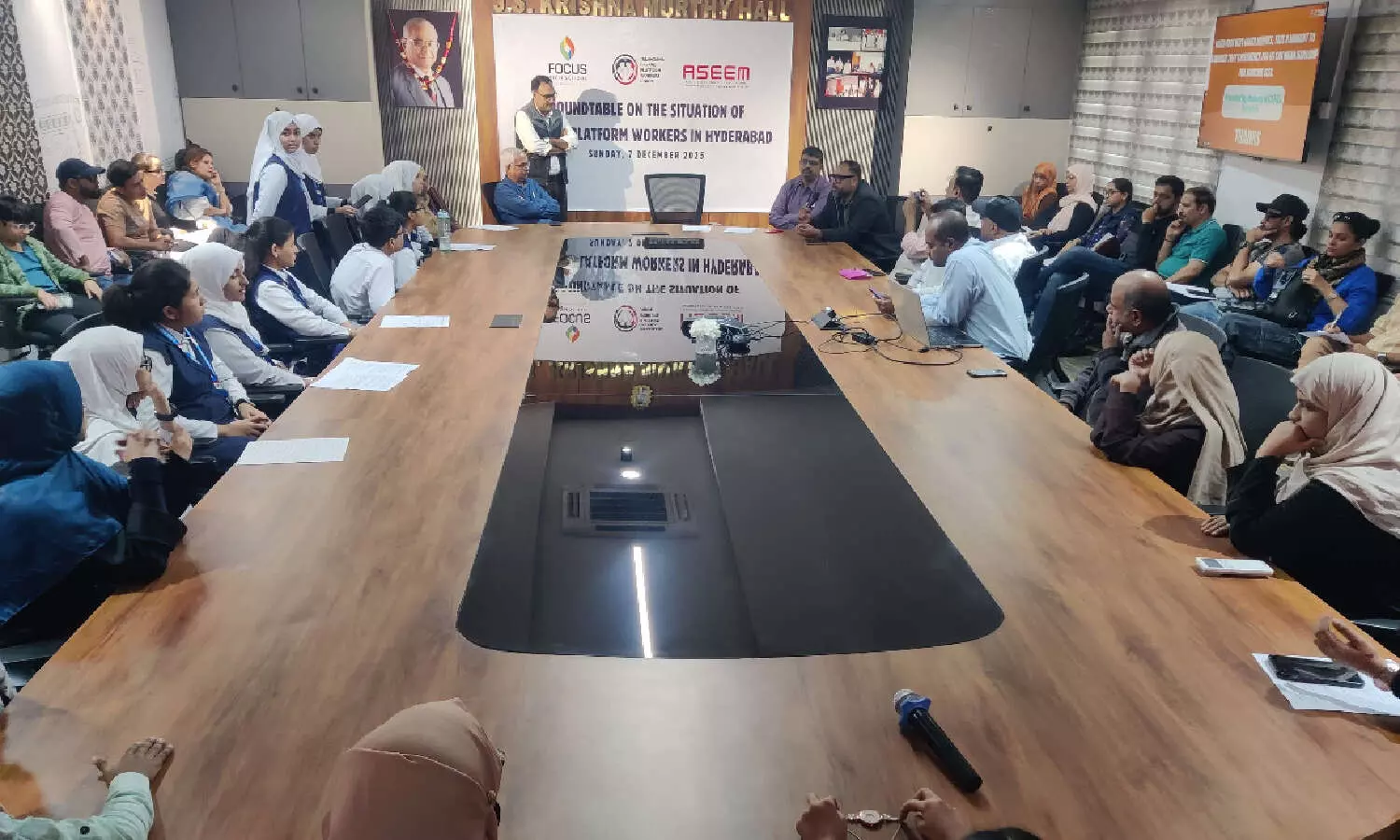
Hyderabad: A new field study has revealed that nearly half of gig and platform workers in Hyderabad have faced sudden ID blocking or account suspension. Plus, a majority of them have no access to grievance redressal mechanisms.
The findings indicate widespread insecurity, inconsistent support, and limited labour protections for workers employed by major platforms such as Swiggy, Zomato, Rapido, and Urban Company.
Commenting on the study, Shaik Salauddin, President of the Telangana Gig and Platform Workers Union, speaking to NewsMeter, said, “These numbers confirm what workers have been telling us for years. Without transparency, social protection, and a proper grievance system, gig workers are left to navigate the entire burden of risk alone.”
The report was compiled by Class 9 students of Focus High School, supported by ASEEM and TGPWU, under the guidance of mentors Eesha Kunduri (Ph.D. scholar, University of Minnesota) and Shaik Salauddin. Sixty gig workers were interviewed across the city.
How the study was conducted
Students booked services through apps, interviewed workers after explaining the project, and ensured that no personal data was collected. Some respondents were compensated for their time.
Thirty students participated in the fieldwork, while eight, Arsheen Jamal, Syeda Zainab Raza Abidi, Fatima Shabeer Hussain, Hassan Hassan, Lubaba Fatima, Syeda Fizza Fatima, Asiya Reza Hussain, and Inaya Bhamani compiled the final report, edited by Ali Asghar, S.Q. Masood and Shaher Bano.
Educational background of workers
The survey found a broad educational range among workers:
• 10th Pass – 28%
• Intermediate – 28%
• Uneducated – 16%
• Graduates – 16%
• Below 10th – 8%
• Professional qualifications – 4%
According to the report, gig work “mainly attracts individuals with secondary education, providing flexible job opportunities across educational backgrounds.”
Full-Time and Part-Time Workers
• 56% work full-time
• 44% work part-time
The report notes that more than half “rely on gig work as their main livelihood.”
ID blocking and account suspension
• 45% have experienced ID blocking or account suspension
• 52% received a reason; 48% did not
The report highlights “a disturbing lack of transparency” in how platforms communicate disruptions that affect workers’ incomes.
Grievance redressal systems
When asked about grievance mechanisms:
• 66% said no such system exists
• 34% said there was one
Access to human representatives was also limited:
• 56% could not speak to a company representative
• 44% could
The report states that inconsistent support “creates a hit-or-miss experience that erodes trust.”
Police-related issues
• 24 workers reported harassment or fines
• 13 workers had not
• 10 workers were unsure
The study notes that interactions with police remain “a common challenge for many workers.”
Access to benefits
Workers were asked about social protections:
• 23 had no access to benefits
• 12 had access sometimes
• 11 had reliable access
The report says that platform benefits “fail to provide a safety net for the vast majority.”
Handling of complaints and ratings
Workers reported the following:
• 18 said the app takes immediate action against workers
• 8 said it asks for an explanation
• 5 said it offers solutions
• 6 faced no immediate action
• 3 said their complaints were ignored
The report says the system appears “largely punitive,” with “a default bias against the worker.”
What workers want
Workers’ priorities included:
• 20: fair and transparent pay
• 10: protection from unfair penalties
• 10: grievance and emergency support
• 9: social security benefits
• 6: reduced platform commissions
Conclusion
The study concludes that gig workers operate in an environment marked by uncertainty, limited protections, and “a significant power imbalance.” It calls for stronger regulation and formal recognition of platform workers.


