Every household in Hyderabad to get daily drinking water supply by 2027
The city draws drinking water from Krishna, Godavari, Singur, and Manjeera sources spread across hundreds of kilometres
By - Sistla Dakshina Murthy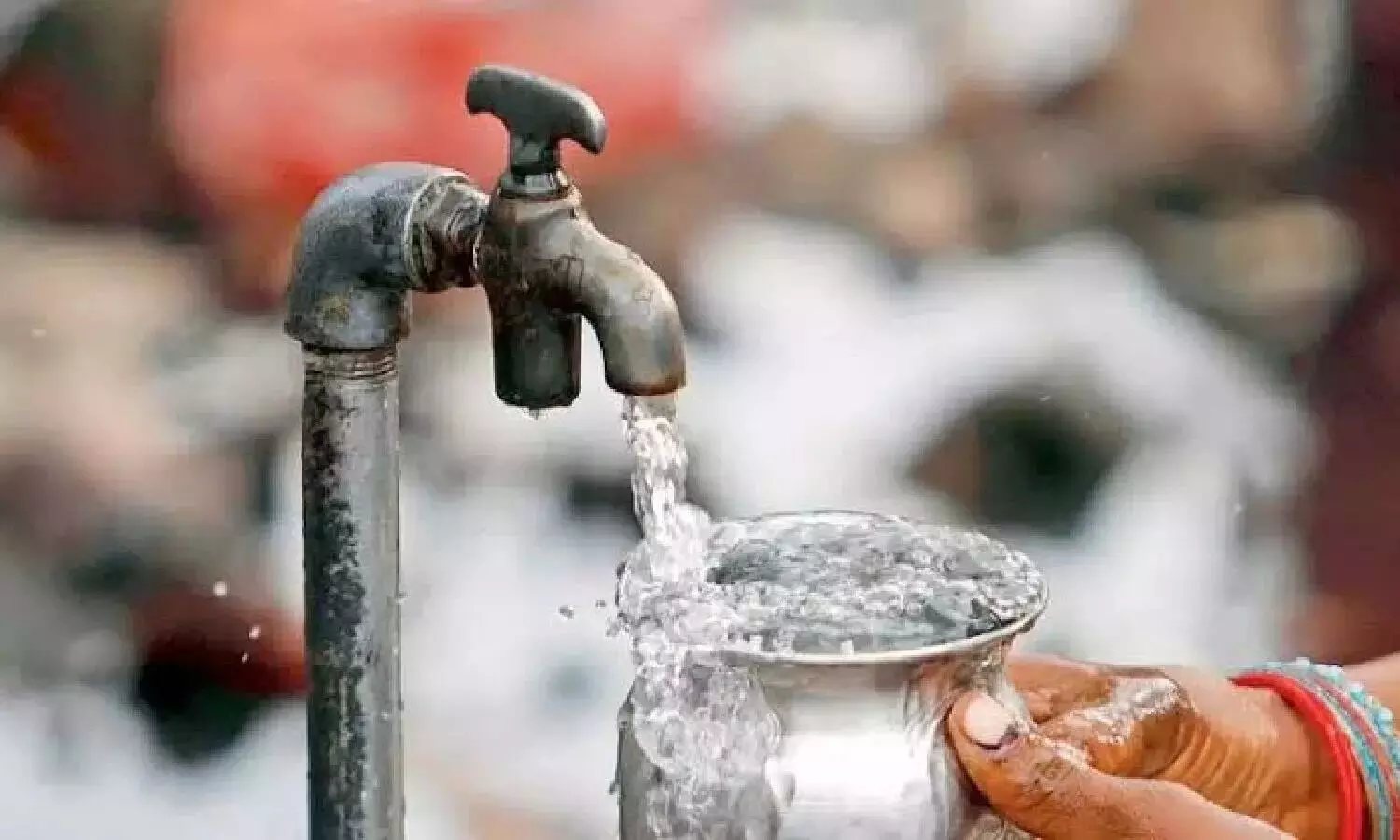
Representational Image
Hyderabad: Every household in Hyderabad will get a daily drinking water supply by the end of 2027.
This will be possible after launching Godavari Drinking Water Supply Project Phases II and III and rolling out a parallel plan for 100 per cent sewage treatment to protect the Musi river and the city’s lakes.
Godavari Phase-II & III to augment supply
Disclosing the details in an Annual Report-2025, HMWSSB managing director Ashok Reddy said that the Water Board is accelerating works under the Godavari Phase-II and Phase-III projects to meet Hyderabad’s growing water demand.
The city draws drinking water from Krishna, Godavari, Singur, and Manjeera sources spread across hundreds of kilometres. With an allocation of 30 TMC of Godavari water, the Board has planned Phases II and III to bring in an additional 20 TMC, ensuring long-term water security.
Officials estimate that Hyderabad’s drinking water requirement will touch 835 MLD by 2027 and rise further to 1,114 MLD by 2047, he said.
₹7,360-crore works fast-tracked
Elaborating further, Ashok Reddy said that under the Rs 7,360 crore Godavari drinking water scheme, works on the master balancing reservoir and water treatment plants are being taken up on a fast-track basis.
The projects are aimed at stabilising supply across the city and enabling a shift from intermittent to daily water distribution, he added.
Support for Musi Rejuvenation
As part of an integrated water management strategy, the Water Board has also initiated measures to fill select reservoirs with Godavari water to support the Musi River rejuvenation programme. Officials say this will help improve environmental flows and reduce pollution levels in the river.
100% sewage treatment under AMRUT 2.0
To prevent untreated sewage from entering the Musi River and city lakes, the Water Board has launched works on 39 Sewage Treatment Plants (STPs) with a combined capacity of 972 MLD within the Outer Ring Road limits.
These projects, taken up under AMRUT 2.0 at a cost of ₹3,849.10 crore, are scheduled for completion by 2026. Once operational, Hyderabad’s total sewage treatment capacity will increase to 2,850 MLD, sufficient to meet the city’s requirements up to 2036, the HMWSSB managing director said.
Trunk sewer lines to stop pollution
In addition, a Rs 4,700-crore Detailed Project Report (DPR) has been prepared for laying trunk sewer lines to ensure that sewage does not flow into the Musi River. A comprehensive master plan is being finalised to achieve 100 per cent sewage treatment within the ORR limits by 2036, he said.
Summer Action Plan and Groundwater Recharge
With summer approaching, officials have begun planning to avoid drinking water shortages. During the previous summer, groundwater levels had dropped by 14 to 28 metres in several parts of the city.
However, due to better rainfall and the Water Board’s soak pit and rainwater harvesting drive, groundwater levels have improved by 2 to 11 metres in many localities. Compared to last year, groundwater levels have risen by an average of 3 to 9 metres, officials said.
So far, notices have been issued to 16,000 households to construct soak pits, while plans are in place to ensure another 25,000 houses take up rainwater harvesting measures by March.
New reservoirs and network expansion
As part of future infrastructure expansion, the Water Board is taking up several key projects:
Construction of a 5-million-litre reservoir at Mahendra Hills and a 7.5-million-litre reservoir at Asmangadh at a cost of ₹30 crore
Rs 722-crore Manjeera water supply network strengthening
Restoration of the Osman Sagar conduit
Rs 282-crore additional pipeline to bring 21 million gallons per day of water
Proposals worth nearly Rs 8,000 crore for a 140-km radial ring main and 98 km of link pipelines along the Outer Ring Road
From alternate-day to daily supply
At present, many areas within Greater Hyderabad receive water on alternate days, while peripheral areas get supply once every three to four days. With the completion of ongoing and proposed projects, the Water Board aims to ensure a daily water supply across the city by 2027.
A long-term master plan is also being prepared to provide 24/7 drinking water and sewerage services for the wider CURE region by 2047, marking a major step towards sustainable urban infrastructure, Ashok Reddy said.


