Hyderabad: Dakani Urdu exponent Jeelani Bano passes away; tributes pour in
Her storytelling also transcended the printed page. Her work inspired Shyam Benegal’s acclaimed movie Well Done Abba, proving that her themes resonated just as powerfully on the silver screen as they did in text.
By - Newsmeter Network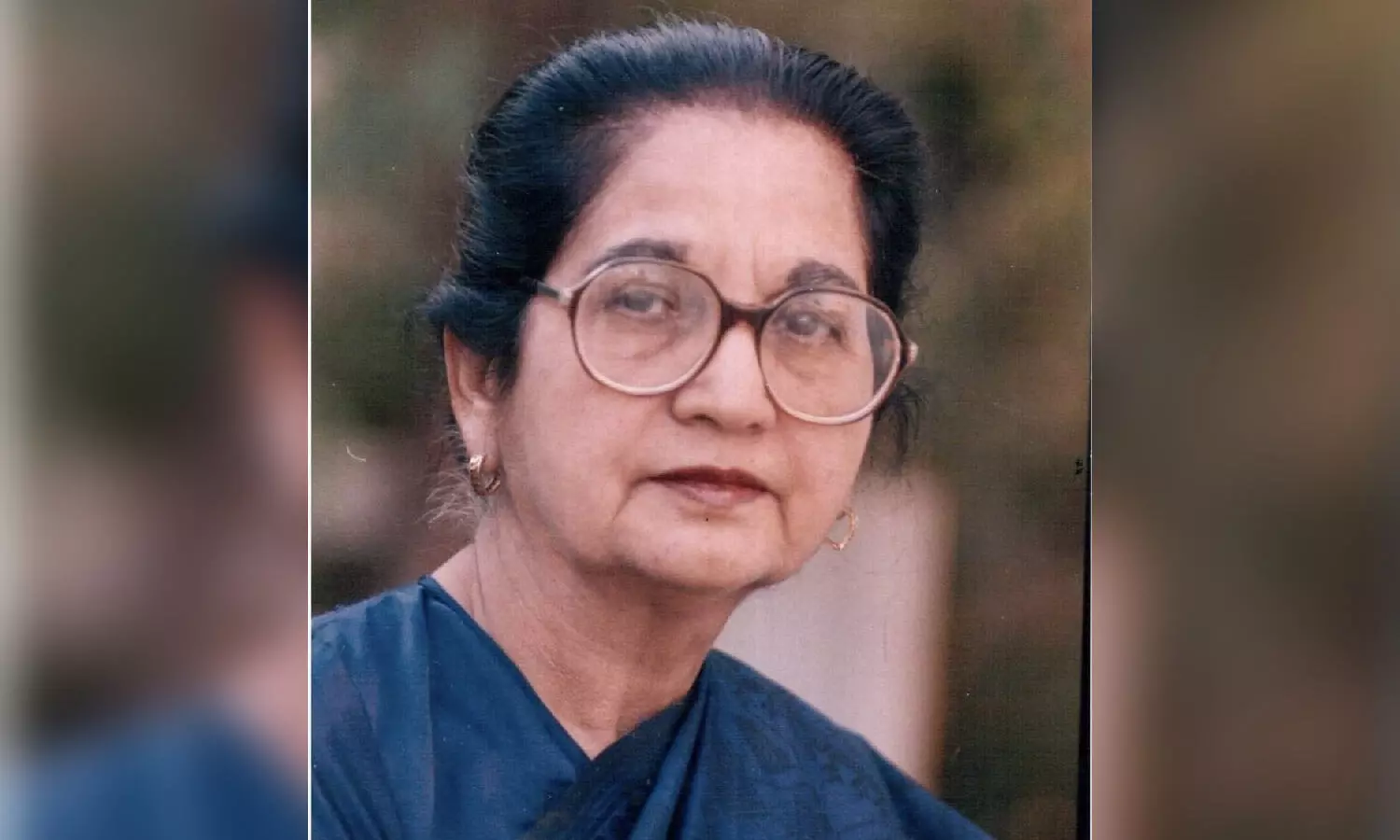
Hyderabad: Jeelani Bano, a defining figure of Urdu literature and a tireless champion for the underprivileged, has passed away at the age of 90.
Bano passed away on Sunday, March 1, 2026, due to age-related ailments. A Padma Shri recipient and Doctor of Literature, Bano leaves behind a void in the literary world, ending a career that spanned seven decades and served as a bridge between the Deccan’s feudal history and its modern evolution.
Her journey, which began with her first short story in 1954, saw her evolve into a "social architect" who used fiction to examine the complexities of human dignity. She was not just a writer of Hyderabad; she was its chronicler and its conscience.
Influence of Deccan culture
Though her narratives were deeply embedded in the culture of the Deccan, Bano’s work achieved a rare universal appeal. Over the course of her life, she penned 22 books, ranging from novels and plays to screenplays. Her magnum opuses, Aiwan-e-Ghazal and Baarish-e-Sang, traveled far beyond India, finding readership in translation across Russian, German, Norwegian, and almost every major Indian language.
Her storytelling also transcended the printed page. Her work inspired Shyam Benegal’s acclaimed movie Well Done Abba, proving that her themes resonated just as powerfully on the silver screen as they did in text.
Audio cassettes in Dakani Urdu
Bano’s contribution to culture extended well beyond her own prose. In a determined effort to save the unique linguistic heritage of her home, she recorded 13 audio cassettes documenting Dakani Urdu. By capturing the speech of ordinary people, from street vendors to homemakers, she ensured that the authentic cadence of Hyderabad would not be erased by time.
What separated Bano from many of her peers was her "grounded" approach to life. She was a writer who refused to look away from harsh realities. Serving as the chairperson of the NGO ASMITA, she was a formidable advocate for women’s rights and social empowerment.
To the academic world, she was a subject of rigorous study from Delhi to Uzbekistan. To her devoted readers, she was the author who understood their Roz Ka Qissa (Daily Stories). Jeelani Bano leaves behind a "library of empathy," a body of work that remains as sharp and vital today as it was when she first began writing 70 years ago.


