Hyderabad: HMWSSB to supply treated wastewater directly to construction projects to save water
This decision comes as large-scale and high-rise construction emerges as one of the biggest consumers of water in Greater Hyderabad
By - Sistla Dakshina Murthy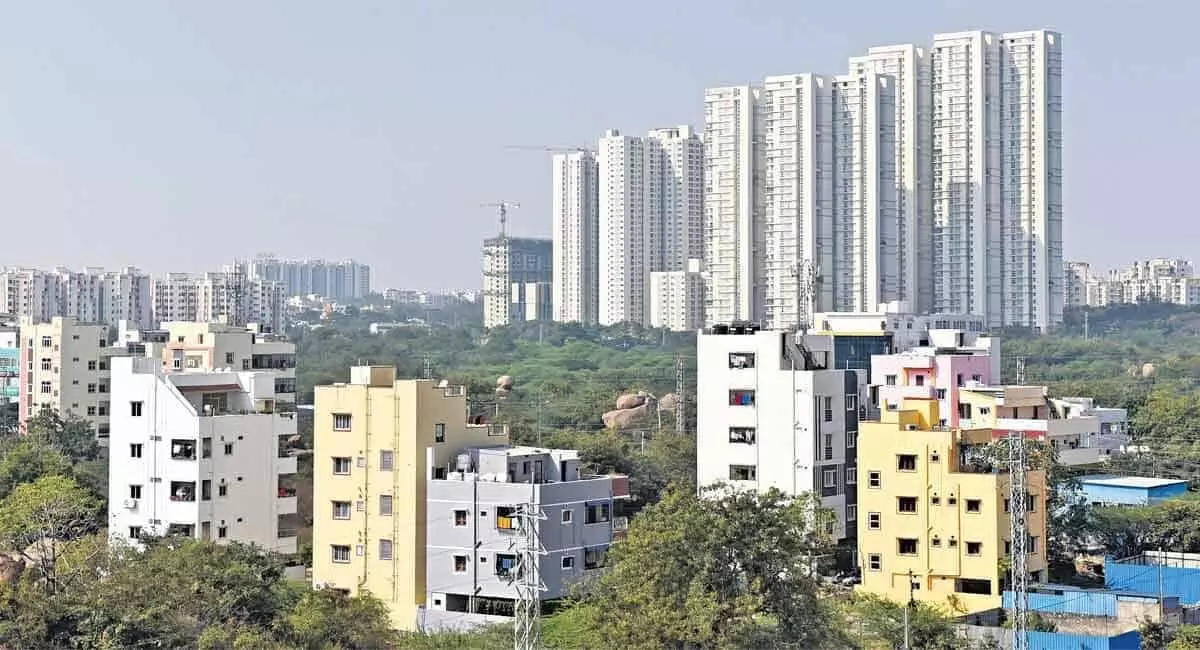
File Photo
Hyderabad: Hyderabad Metropolitan Water Supply and Sewerage Board (HMWSSB) has decided to supply treated wastewater directly to construction projects.
This decision comes as large-scale and high-rise construction emerges as one of the biggest consumers of water in Greater Hyderabad.
The move is aimed at stopping the use of drinking water and borewell sources at construction sites and easing the growing pressure on the city’s limited water resources.
Treated sewage water will be sourced from nearby Sewage Treatment Plants (STPs) and supplied to construction sites either through temporary pipelines or by tankers, depending on distance and feasibility, officials said.
Construction sector under the scanner
“Rapid urban expansion has led to a surge in infrastructure and real estate projects across the city. These projects require huge volumes of water, much of which is currently drawn from groundwater or diverted from drinking water supplies, worsening water stress in several areas," said HMWSSB managing director Ashok Reddy.
The Water Board said regulating water use in the construction sector has become critical to ensuring long-term water security.
Shift to treated sewage for non-potable needs
As part of a broader water conservation strategy, the HMWSSB is promoting the reuse of treated sewage water for all non-drinking purposes. Large volumes of treated water, which were earlier discharged into the Musi River, will now be channelled for productive urban use.
A structured operational plan and policy framework are being finalised to support large-scale adoption of treated wastewater, Ashok Reddy said.
Capacity expansion through STPs
The Water Board is simultaneously strengthening sewage treatment infrastructure to ensure 100 percent treatment of wastewater generated in the city.
25 operational STPs are currently treating around 772 million litres per day (MLD).
21 additional STPs, with a total capacity of 1,134 MLD, are in advanced stages of completion, with more than half already commissioned.
Under the AMRUT 2.0 programme, work has begun on 39 new STPs with a combined capacity of 972 MLD.
Once fully operational, the city will be able to treat over 1,500 MLD of sewage daily.
Parks, gardens to follow
The HMWSSB is also coordinating with the GHMC and HMDA to supply treated wastewater for maintaining public parks, gardens, and green belts, further conserving potable water.
Pricing policy on the anvil
Officials said a tariff structure for treated wastewater will be announced soon, after which bulk users, including builders and civic agencies, will be encouraged, and in some cases required, to shift to treated water.
By making treated wastewater the mainstay for construction and other non-potable uses, the Water Board hopes to curb water wastage, protect groundwater reserves, and ensure sustainable growth for Hyderabad.


