Hyderabad: HYDRAA reclaims 1,313.19 acres of encroached land worth Rs 65,650 Cr
Addressing senior IAS officers and administrators, HYDRAA Commissioner AV Ranganath said rapid urbanisation across India has significantly increased disaster vulnerability in cities
By - Newsmeter Network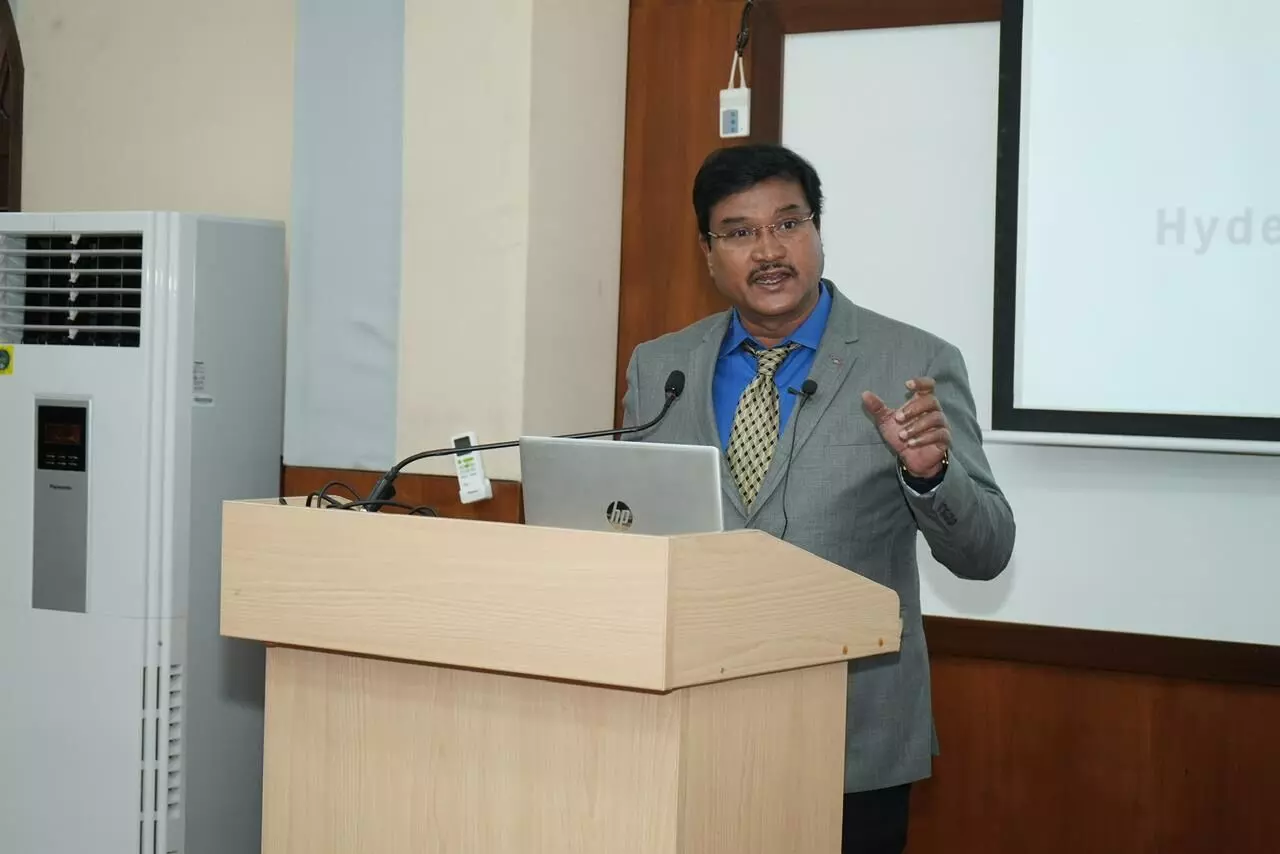
Hyderabad: Hyderabad Disaster Response and Asset Protection Agency (HYDRAA) has reclaimed 1,313.19 acres of encroached public land, including lakes, parks, roads, and stormwater drains, worth Rs 65,650 crore.
The agency is also undertaking large-scale efforts to restore the natural flow of the Musi River by removing encroachments along its floodplains, officials informed at the Lal Bahadur Shastri National Academy of Administration (LBSNAA), Mussoorie.
Urban expansion driving disaster risks
Addressing senior IAS officers and administrators, HYDRAA Commissioner AV Ranganath said rapid urbanisation across India has significantly increased disaster vulnerability in cities.
Citing population data from 1975 to 2025, he pointed out that metros such as Delhi, Mumbai, Bengaluru, and Hyderabad have witnessed multi-fold population growth, placing immense pressure on civic infrastructure and natural drainage systems.
By 2050, India’s urban population is projected to reach 50 crore, making proactive disaster mitigation and sustainable urban planning unavoidable, he said.
HYDRAA: A first-of-its-kind institutional model
Ranganath described HYDRAA as a bold and visionary initiative of the Telangana government, conceived to integrate disaster response with public asset protection.
He said the agency represents a paradigm shift from reactive disaster management to anticipatory governance, focusing on risk reduction rather than post-disaster relief alone.
HYDRAA, he noted, is the first agency in the country with statutory authority to address floods, encroachments, and environmental degradation in an integrated manner.
Flood mitigation through restoration of natural systems
Explaining HYDRAA’s core strategy, the Commissioner said restoring lakes, nalas, and interlinked water bodies is central to flood prevention.
Large-scale desilting of stormwater drains, protection of buffer zones, and pre-monsoon lowering of lake water levels have substantially reduced flood risks in Hyderabad.
“When natural water systems function properly, rainwater is absorbed instead of flooding residential colonies,” he said, adding that these measures have yielded visible results within the agency’s first year.
Protecting public spaces and environmental assets
Ranganath stressed that safeguarding public assets is essential for sustainable urban living. “Protecting parks helps reduce pollution, preserving lakes prevents floods, and maintaining open spaces supports groundwater recharge,” he said.
He added that HYDRAA is working to ensure lakes remain clean freshwater bodies rather than turning into sewage dumping zones.
Growing public support despite initial resistance
The Commissioner acknowledged that HYDRA initially faced criticism and resistance, particularly from encroachers and vested interests. However, public perception has evolved with increased awareness of environmental and safety concerns.
“Citizens now understand concepts such as Full Tank Level (FTL) and buffer zones, and actively support enforcement,” he said, noting that public rallies in favour of HYDRAA reflected growing trust in the agency.
Senior officials seek replication of HYDRAA model
During an interactive session, senior IAS officers, municipal commissioners, and disaster management officials raised questions on public response, political pressure, and enforcement challenges.
Many participants lauded HYDRAA’s transparent approach and suggested that similar institutional frameworks are needed across the country.
“There is a strong case for replicating HYDRA in other major cities to balance urban growth with environmental protection,” several officials observed.
Real estate gaining stability through clarity
Addressing concerns over the impact on real estate, Ranganath said HYDRAA has brought much-needed clarity on land ownership, FTL limits, and buffer zones.
“Far from harming development, HYDRAA has improved investor confidence. Homebuyers now invest with clarity and confidence,” he said, adding that Hyderabad’s real estate sector is moving towards stable and sustainable growth.


