Hyderabad ranked 18th dirtiest city globally by Radical Storage, only Indian city on list
According to the survey, the company analysed Google reviews of each city’s top tourist attractions between October 2024 and November 2025
By Anoushka Caroline Williams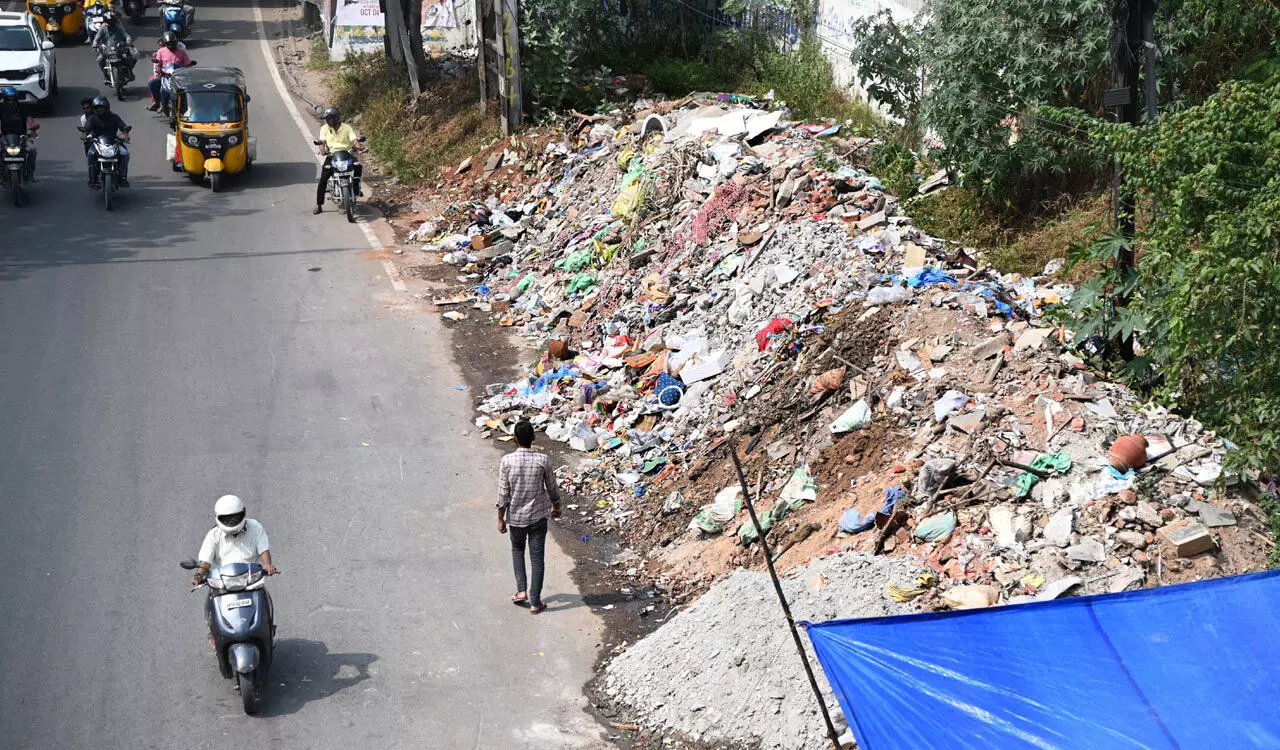
Hyderabad: Hyderabad, long celebrated for its heritage charm and tech-driven growth, has found itself in an unexpected global spotlight and not a flattering one.
A new survey by tourism facilitation company Radical Storage has placed Hyderabad as the 18th dirtiest city in the world, the only Indian city to appear on the list.
The revelation has sparked debate among residents, urban planners and civic officials who argue that the city’s on-ground progress in sanitation does not reflect this ranking. At the same time, many citizens admit that tourists may be reacting to everyday realities that locals have grown accustomed to.
How the ranking was arrived at
According to the survey, the company analysed Google reviews of each city’s top tourist attractions between October 2024 and November 2025.
Only reviews that mentioned words like clean or dirty were considered. The comments were then classified as positive or negative to calculate a ‘cleanliness score.’
Urban data researcher Dr Saritha Venkataraman, who has reviewed the methodology, notes, “This is not a pollution-based ranking. It is a perception-based index with a very narrow sample. But perception matters, especially for cities that want to grow as tourism hubs.”
She adds that a city can score well on structured parameters like waste processing, yet still fare poorly on how clean visitors feel it looks.
Official awards vs tourist impressions
What makes the ranking controversial is that Hyderabad has received multiple national certifications for sanitation in the past two years. From garbage-free ratings to water-treatment compliance, the city’s documentation suggests consistent improvement.
But urban sociologist Prof. Mubeen Azeez, speaking to NewsMeter, says the contradiction is not surprising: “Tourists rarely visit the planned colonies where civic performance is measured. Their experiences are shaped by heritage areas, crowded bazaars, narrow roads, informal settlements and transit zones. These are precisely the areas where cleanliness breaks down.”
This gap between what is measured and what is seen may explain the city’s global placement.
A reality check, says citizens
Many Hyderabadis argue that the ranking, though embarrassing, is not entirely unfair. Residents point to recurring issues that blemish the city’s image daily.
Based on citizen feedback collected through local groups, resident-welfare associations, and community surveys, the commonly cited ‘dirtiest spots’ in Hyderabad include:
1. Old City and Charminar surroundings
• Garbage accumulation along inner lanes
• Food waste around markets
• Overflowing drains after rain
A shopkeeper near Mecca Masjid notes, “Sweeping happens, but the crowd throws waste immediately after. The turnover is too high.”
2. Hitech City – Kondapur corridor
• Construction debris left unattended
• Litter from street food stalls at night
• Dust from ongoing infrastructure work
A Kondapur resident said, “The city showcases IT towers, but tourists also see plastic cups, dust clouds and broken pavements. That contrast stays with them.”
3. Public transport zones
• Stains and litter under flyovers
• Spitting around bus stops
• Stagnant water near footpaths
Commuters often complain that these are the first visuals visitors encounter after leaving the airport belt.
4. Hussain Sagar and Necklace Road
• Visible floating waste on windy days
• Overflow from nearby eateries and street stalls
• Neglect during high-footfall weekends
What do the experts say
Experts cite three key reasons for negative tourist impressions
1. Rapid growth outpacing upkeep
Urban planner Tejas Raghav states, “Hyderabad’s population has grown faster than its maintenance workforce. Scaling infrastructure is easier than scaling routine upkeep.”
2. Poor source segregation
Only about two-thirds of households segregate wet and dry waste properly.
“If segregation fails at the doorstep, every downstream system gets stressed,” says solid-waste consultant Harita Koduri.
3. Behavioural issues
Public littering, spitting, and waste dumping remain common.
“Cleanliness is not just about sweeping. It is about habits, enforcement and shared responsibility,” notes Koduri.
Is Hyderabad really losing its shine?
The answer is layered. Official data suggests Hyderabad is improving its waste-management systems. The city has modern composting units, waste-to-energy projects and a strong record of door-to-door collection.
But image-building relies on what visitors see, not just what municipal reports show.
Urban environmentalist Dr Leela Narang summarises it well: “A city’s cleanliness is not its certificates. It is the moment a tourist steps out, walks a lane, crosses a footpath or visits a monument. That lived experience forms the global reputation.”
Hyderabad’s challenge now is not only to improve systems but to ensure visible cleanliness in everyday spaces, heritage cores, IT corridors, markets, footpaths and transit zones.
Until that happens, global perception indices will continue to reflect the disconnect between Hyderabad’s aspirations and the reality on the ground.


