Hyderabad to get 300 MGD extra water by 2027; HMWSSB exploring 24-hour supply
The Board plans to study cities across India where a continuous water supply has been implemented successfully
By - Newsmeter Network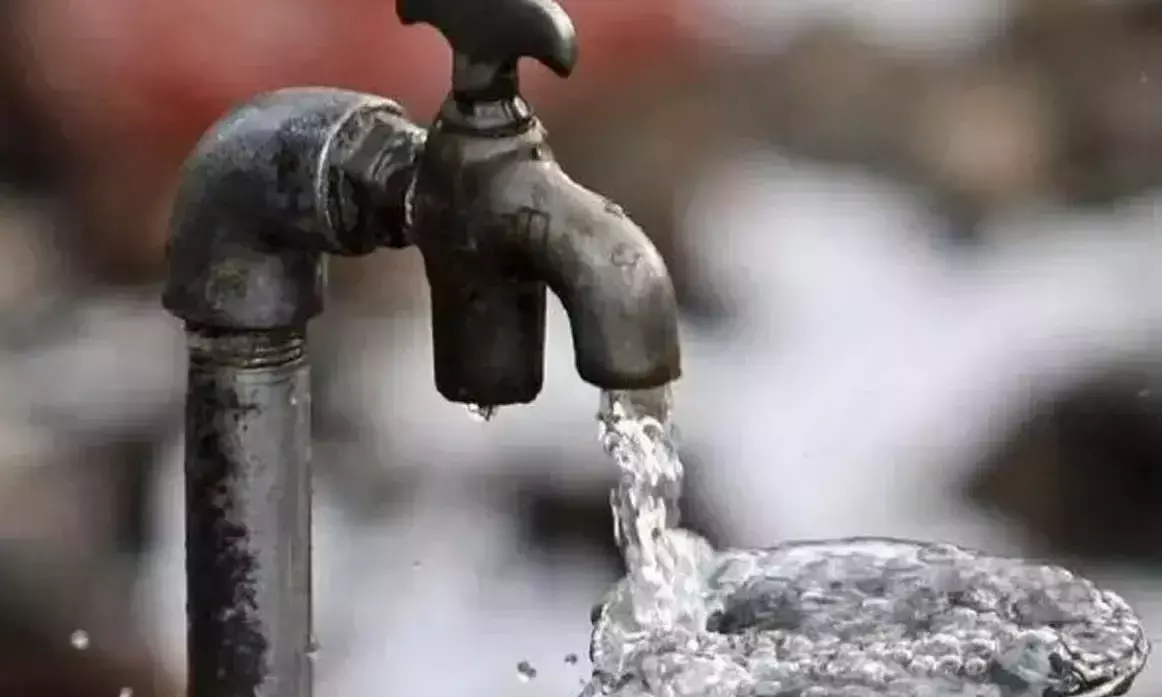
Representational Image
Hyderabad: Hyderabad Metropolitan Water Supply and Sewerage Board (HMWSSB) is set to undertake a comprehensive study on the feasibility of providing a 24-hour water supply across the city.
This follows the board’s announcement to make an additional 300 million gallons (MGD) of drinking water available per day by December next year through the Godavari Phase-II and Phase-III projects.
The Water Board will examine both the advantages and challenges of round-the-clock supply and assess whether the existing distribution network and infrastructure can handle continuous delivery, even if adequate water is available.
Focus on infrastructure readiness
Although discussions on 24×7 water supply have been ongoing for years, no scientific study has been conducted so far. Officials say the proposal is now being actively pursued. The Board plans to study cities across India where a continuous water supply has been implemented successfully.
One of the key concerns is the ageing pipeline network. In many areas, pipelines laid decades ago are prone to frequent leakages, leading to substantial water loss. Currently, nearly 30 to 35 per cent of supplied water is estimated to be wasted due to leakages and other inefficiencies.
Present supply scenario
At present, Hyderabad receives around 550 MGD of water daily. However, in most localities, supply is provided only once every two days, typically for one-and-a-half to two hours.
Another issue flagged by officials is the widespread use of treated drinking water for non-potable purposes, adding stress to the system. Public awareness of judicious water usage is being considered a crucial component of the proposed reform.
Pilot project under consideration
The Water Board is preparing an action plan to implement a pilot 24-hour supply project in a selected area of the city. The pilot study will evaluate technical feasibility, infrastructure gaps, cost implications, and public response before scaling up the initiative citywide.
With Hyderabad’s population projected to grow significantly by 2050, officials believe that long-term planning and infrastructure modernisation will be critical to ensuring a sustainable and equitable water supply in the future.


