Musi revival: ‘Water Man of India’ Rajendra Singh asks Hyderabadis to stop treating Musi River as backyard
Experts discussed the restoration and protection of Musi at the session on Musi Rejuvenation and Blue-Green Infrastructure in Hyderabad at the Telangana Rising Global Summit 2025.
By - Sistla Dakshina Murthy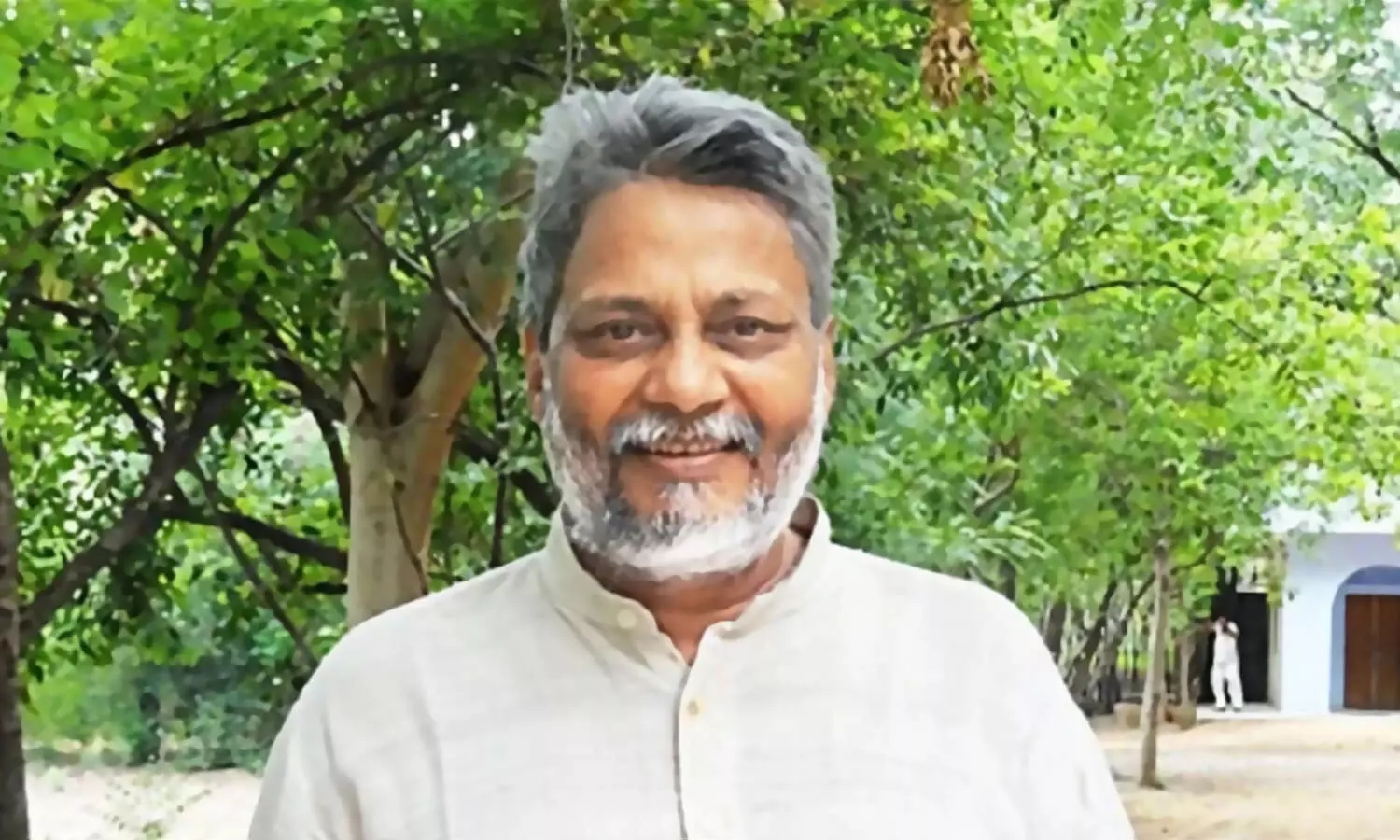
Divert 3 TMC Godavari waters to Musi for perennial flow
Addressing the gathering, Minister Sridhar Babu said the primary cause of Musi’s collapse is the loss of continuous natural flow.
To address this, the State government has proposed lifting 3 TMC of water from the Godavari River into the Musi basin to ensure year-round flow and restore river stability. “Only a flowing river can stay alive. This intervention will prevent stagnation and help revive the ecology,” he said.
50 sewage treatment plants to clean the river
To tackle decades of pollution, the project includes the installation of about 50 Sewage Treatment Plants (STPs) along the river stretch.
The treated water will ensure continuous purification of the Musi, preventing raw sewage discharge into the river.
Experts noted that additional STPs and constructed wetlands may be required in the future to minimise operational costs and enhance natural filtration.
Stop treating the Musi River as a backyard
Renowned water conservationist and ‘Water Man of India’ Rajendra Singh and urban planning experts stressed that true revival is possible only if land is returned to the river.
They cautioned that unless Hyderabad reorients development to face the river instead of treating it as a backyard, the Musi may turn into a ‘cleaner drain rather than a living river’.
HMDA master plan to be reworked
Urban specialists recommended that the HMDA 2031 Regional Master Plan should be revised with the Musi River serving as the spine of Hyderabad’s future growth.
They proposed:
- High-density, vertical development in select zones
- Releasing 80–90 sq km of land back to the river and its floodplains
- Creating large sponge zones, wetlands and green buffers.
This approach would protect the river while accommodating Hyderabad’s growing population.
Sponge zones, wetlands and green infrastructure
Tapas Paul, Ex-Lead Environment Specialist, World Bank, strongly recommended integrating sponge city concepts, urban wetlands, greenways and restored floodplains.
These nature-based solutions would absorb excess rainfall, reduce flood risks, recharge groundwater and improve urban climate resilience, he added.
Rising flood threat due to climate change
Hydrology expert Arjun Sasidharan warned that Hyderabad is witnessing shorter but more intense rainfall spells, increasing the risk of urban flooding.
Major floods recorded in 2000, 2016, 2020 and 2023 were cited as evidence of changing climate patterns. The narrowing of river channels, encroachments and high dam water levels were identified as compound risk factors.
Probabilistic flood modelling suggested
Arjun also found fault with conventional flood-control planning based only on past rainfall data.
Instead, he proposed probabilistic and statistical flood modelling, climate-adjusted projections and multi-scenario flood risk mapping.
This, he said, would ensure scientifically sound, economically viable and future-ready flood protection.
‘Low-lying areas to act as natural buffers’
Instead of relying only on embankments and concrete barriers, he also suggested using low-lying areas as floodable parks and playgrounds, allowing controlled seasonal flooding and connecting overflow waters to lakes and open green spaces.
This would reduce damage while preserving the river’s natural behaviour, he added.
Urban disaster management to be strengthened
With the proposed amendment to the Disaster Management Act, experts said Urban Disaster Management Authorities will become mandatory.
City-level disaster plans must now consider geographical, environmental and socio-economic factors together, using a river-basin and watershed approach.
Green jobs, revenue and long-term sustainability
The Rs 40,000-crore Musi Rejuvenation project is also expected to generate green jobs, boost eco-tourism and mixed-use development, and create sustainable annual revenues of Rs 3,000–4,000 crore.
Experts stressed that the project must prioritise multi-functional urban development over purely commercial or entertainment-centric models.
‘Let the river live with us’
Summing up the vision for the Musi, experts said, “Give the river its right. Let the river live with us. Let the river give us life. Hyderabad now has a rare opportunity to set a national benchmark in river rejuvenation.”


