Serving dignity, not just food: How Hyderabad foodie group Die Hard Foodies is marking Ramzan
During the holy month of Ramzan, orphans aged 6 to 12 receive a full Iftar feast every day
By - Rajeswari Parasa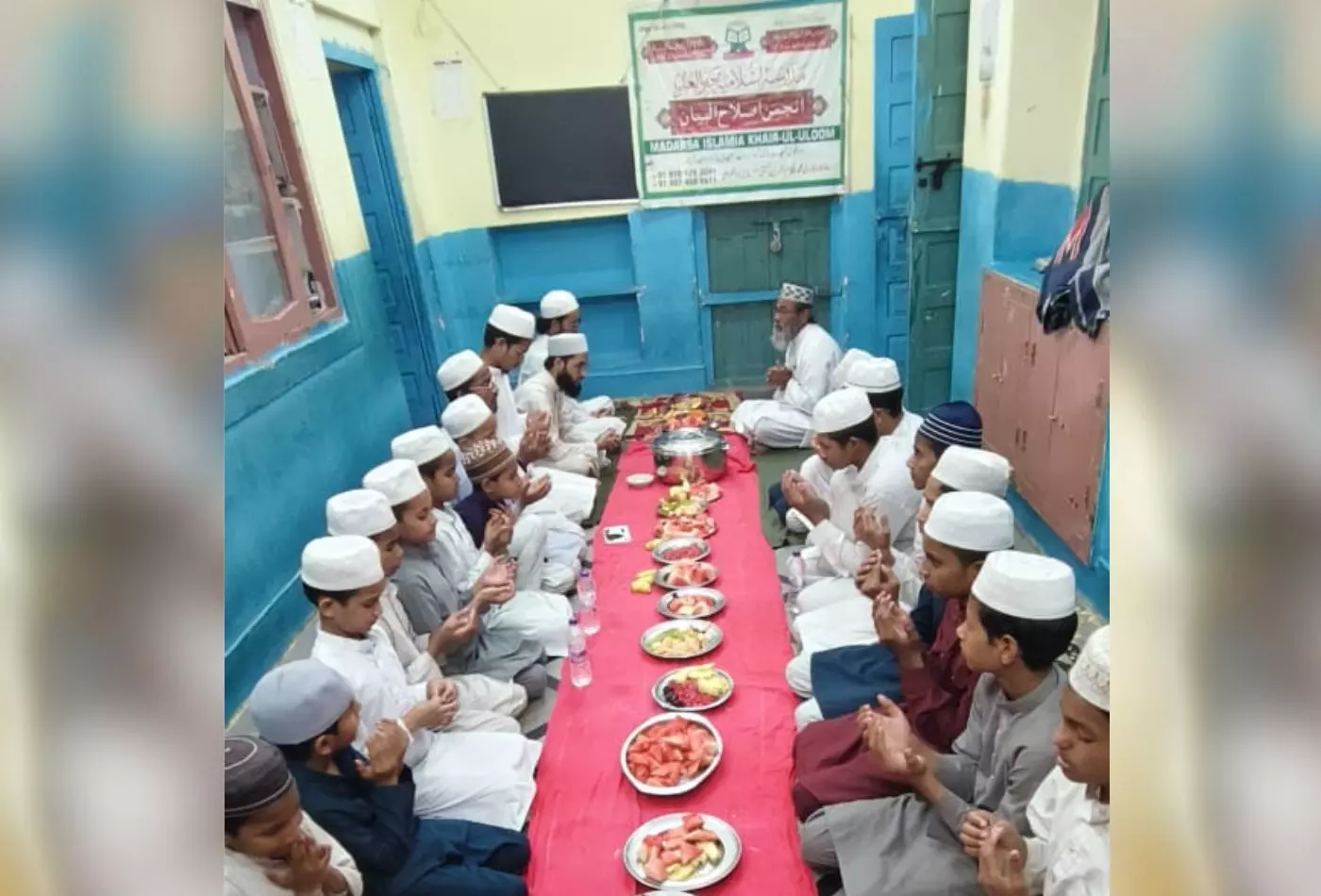
Serving dignity, not just food: How Hyderabad foodie group Die Hard Foodies is marking Ramzan
Hyderabad: In an era when Instagram likes and viral hashtags often measure charity, Faraaz Farshori of Hyderabad represents a quiet anomaly.
Although he is an award-winning tech professional by day and a humanitarian by instinct, he doesn’t run a registered NGO, and he doesn’t have a social media team; yet, through a community called ‘Die Hard Foodies’, he has fed thousands of orphans.
By putting in the work daily, he has transformed the way government schools teach, all without taking a single rupee for administrative costs.
Finding humanity
In October 2020, as Hyderabad faced a ‘double whammy’ of Covid-19 and devastating floods, this is when Farshori’s perspective shifted.
The agony of the people, when they were losing their loved ones to Covid-19 and their homes to the floods, Farshori reminded himself, “We needed to be relevant to society.”
While many watched the devastation from the safety of their balconies, Farshori led a team of 15 to 20 youngsters on the ground. They weren’t paid; they were fuelled by empathy.
The impact was so profound that the Association of Muslim Professionals (AMP) recognised ‘Die Hard Foodies’ with an NGO award, making it the first Facebook group in India to receive such an honour despite not being a registered organisation.
The ‘Die Hard Foodies’ model
Started in 2015, Die Hard Foodies began as a platform to bridge gaps between religions, castes and genders over a shared love for food. Today, it boasts 10,000 members, but its core strength lies in a small group of about 120 active contributors.
“If you go to a standard NGO, they might ask for Rs 1,500 to feed a child. We do it for Rs 300,” Farshori explained.
The model is unique. There are no overheads. Donors transfer money directly to the accounts of beneficiaries or trustees. Verification is rigorous; team members visit the locations, audit the meals with date-stamped videos, and often sit down to eat the same food as the children to ensure quality.
Ramzaan: Serving dignity, not just food
Currently, Farshori and his team are supporting three madrasas located in Tolichowki, Golkonda and Old City, comprising around 50, 75 and 35 students in each Madrasa respectively. These are not standard schools; they house orphans created by the floods and children from destitute families.
During the holy month of Ramzaan, these children aged 6 to 12 receive a full Iftar feast every day. Farshori insists on dignity. They hire a cook to ensure the children aren’t just eating to survive, but enjoying meals like Chicken Biryani, Mutton Biryani and Haleem.
Farshori also highlights the silent support of Pista House, a renowned Hyderabad eatery. “They don’t want the credit, but whenever I call, they ensure we get Haleem for these madrasas. It’s important to acknowledge that generosity,” he noted.
Imparting the art of storytelling
Farshori’s work extends beyond disaster relief and hunger. Since 2017, he has travelled to over 500 government schools across Telangana and Vizag to impart the students with ‘The art of storytelling’.
Realising that the gap between private schools and government schools is often just ‘delivery and execution,’ Farshori uses his own funds to train teachers. He teaches them how to inculcate storytelling and art into their curriculum to make subjects more engaging.
“I don’t publicise this,” he says. “I just go, train and leave. We teach them that education is about imagination.”


