Telangana government appoints vice-chancellors for nine State universities
The appointments were made after the terms of the VCs ended more than four months ago at the end of May
By - Newsmeter Network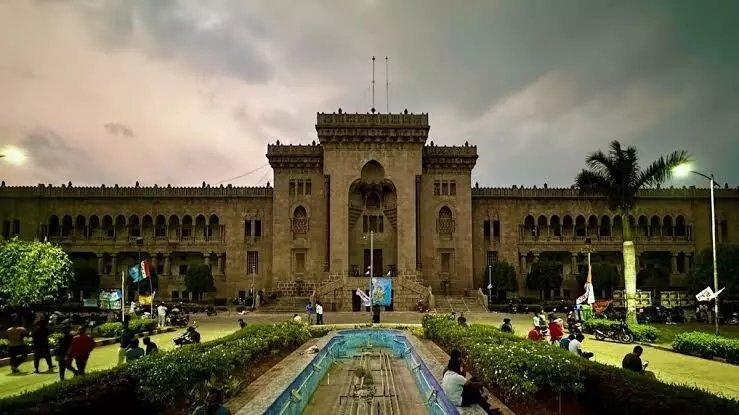
Representational Image.
Hyderabad: On Friday, governor Jishnu Dev Verma announced appointments to vice-chancellor posts in nine State universities, including Osmania University and Telugu University here.
The list of new vice-chancellors for the respective State universities is as follows:
1. Prof. GN Srinivas as vice-chancellor for Palamuru University, Mahabubnagar.
2. Prof. Pratap Reddy as vice-chancellor for Kakatiya University, Warangal.
3. Prof. Kumar Moglaram as vice-chancellor for Osmania University, Hyderabad.
4. Prof. Umesh Kumar as vice-chancellor for Satavahana University, Karimnagar.
5. Prof. Nityananda Rao as vice-chancellor for Telugu University, Hyderabad.
6. Prof. Altaf Hussain as vice-chancellor for Mahatma Gandhi University, Nalgonda.
7. Prof. Yadagiri Rao as vice-chancellor for Telangana University, Nizamabad.
8. Prof. Aldas Janaiah as vice-chancellor for Professor Jayashankar Telangana State Agricultural University, Hyderabad.
9. Prof. Raji Reddy as vice-chancellor for Sri Konda Laxman Telangana Horticultural University (SKLTSHU) in Siddipet.
Posts lying vacant for 4 months
The appointments were made after the terms of the VCs ended more than four months ago at the end of May. The State received 1,383 applications from 312 candidates; some applied at multiple universities to improve recruitment chances.
There has been considerable delay in the appointments even after chief minister A Revanth Reddy’s announcement at the end of August that the VC posts will be filled soon. Even the order for constituting a university-wise search committee for the VC selection process was considerably delayed.
Due to the delay, the State government-appointed senior bureaucrats have been serving as interim in-charge VCs so far. The vice-chancellor of Telangana University in Nizamabad was removed on corruption charges and the State principal secretary was made in-charge.
The bulk work of the administration is still pending in the respective universities while the in-charges were only clearing important files. This has also affected developmental work in some varsities.


