'Act now to prevent water wars’: HYDRAA chief Ranganath warns as 700 of 1,300 lakes vanish in Hyderabad
Ranganath stressed that safeguarding water resources is a collective responsibility and called for urgent, coordinated action to protect lakes and urban water systems
By Newsmeter Network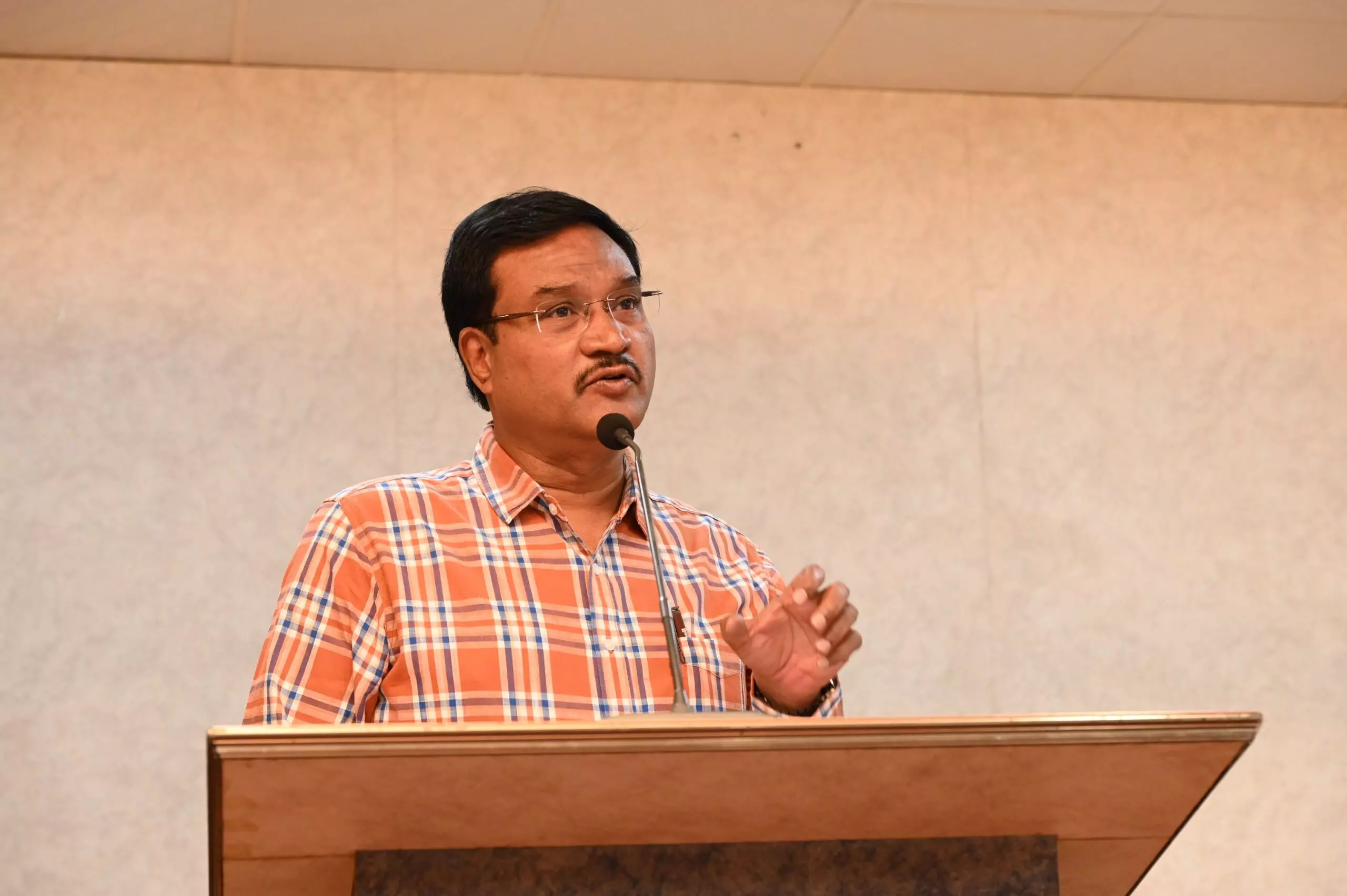
'Act now to prevent water wars’: HYDRAA chief Ranganath warns as 700 of 1,300 lakes vanish in Hyderabad
Hyderabad: With conflicts already emerging globally over oil, societies must act now to prevent future ‘water wars,’ HYDRAA Commissioner AV Ranganath cautioned on Monday.
He stressed that safeguarding water resources is a collective responsibility and called for urgent, coordinated action to protect lakes and urban water systems.
Speaking at the World Water Day celebrations held at JNTU in collaboration with the Open Geospatial Consortium and the Indian Society of Geomatics (Hyderabad Chapter), the Commissioner highlighted the growing pressure on Hyderabad’s water resources due to rapid urbanisation.
Hyderabad population can reach 3 crore by 2050
Ranganath noted that Hyderabad’s population, currently estimated at around 1.6 crore, could exceed 3 crore by 2050.
This surge demands forward-looking urban planning to meet water needs.
18 lakes set for restoration under Phase II
To address this, the State government has prioritised restoring the city’s historic chain-linked lake system. HYDRAA has already initiated restoration works in six lakes under Phase I, three of which are underway, while the remaining are set to begin soon.
An additional 18 lakes have been identified under Phase II.
The HYDRAA chief explained that restoring interconnected lakes would not only mitigate urban flooding during monsoons but also help recharge groundwater, easing water scarcity during summers in what he described as an increasingly ‘concrete jungle.’
700 out of 1,300 lakes have disappeared
Citing data from the National Remote Sensing Centre (NRSC), the Commissioner revealed that 61 per cent of Hyderabad’s lakes have disappeared between 1975 and 2023. If unchecked, the remaining lakes could also vanish within the next 15 years.
Out of nearly 1,300 lakes, about 700 have already been lost, and nearly 60 per cent of the remaining water bodies have been encroached upon.
Removal of encroachments crucial for protection of lakes
Ranganath pointed out that although removal of encroachments existed on paper in the past, implementation was lacking. He cited the example of Thammidikunta Lake in Madhapur, where illegal structures, including those within the Full Tank Level (FTL), were cleared. The lake area was expanded from 14 acres to 29 acres following HYDRAA’s intervention.
He added that while initial actions faced criticism, public perception has since shifted, with restored lakes now serving as recreational spaces. Increased awareness has also deterred real estate activity within FTL and buffer zones.
Towards an eco-friendly city
The Commissioner reiterated that HYDRAA’s long-term goal is to build an environmentally sustainable city while preserving water bodies and drainage systems for future generations.
He said that 1,350 acres of government and public-use land have been protected from encroachment so far. “Ignoring encroachments would endanger our very survival,” he warned, adding that HYDRAA’s actions, though inconvenient to some, are aimed at benefiting lakhs of citizens.
Collaborations with institutions such as JNTU, NRSC and the Survey of India have strengthened these efforts.
He also highlighted successful interventions such as the removal of encroachments along Patny Nala in Secunderabad, which helped prevent flooding in 27 colonies, and desilting works in Ameerpet that reduced waterlogging.
Experts stress need for water conservation
JNTU Vice-Chancellor Prof. T Kishan Kumar Reddy, Principal Prof. GV Narasimha Reddy, GPBAASRI Director Dr. K Mrutyunjaya Reddy, and environmental experts Prof. T Vijayalakshmi and Prof. V Himabindu also spoke on the occasion.
They underscored the urgent need to protect drinking water resources and commended HYDRAA’s efforts in lake restoration and removal of encroachments.


