NRSC satellite data helping HYDRAA identify lake boundaries, prevent encroachments in Hyderabad
HYDRAA Commissioner AV Ranganath said satellite data is helping authorities accurately establish FTL and buffer zones of lakes
By - Sistla Dakshina Murthy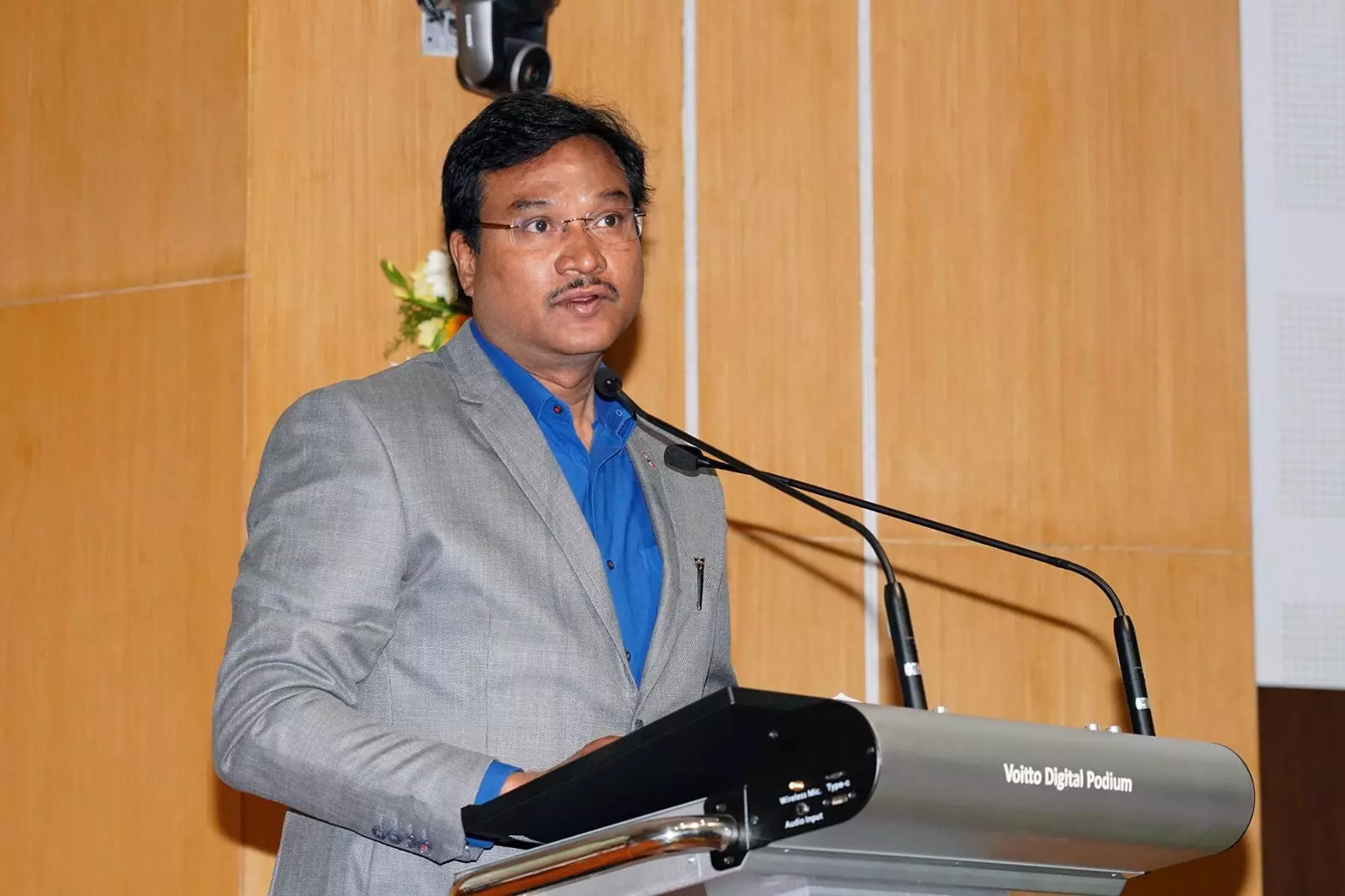
NRSC satellite data helping HYDRAA identify lake boundaries, prevent encroachments in Hyderabad
Hyderabad: Satellite-based data provided by the National Remote Sensing Centre (NRSC) has become a ‘powerful tool’ for the Hyderabad Disaster Response and Assets Protection Agency (HYDRAA) to identify vanished lakes and determine their Full Tank Level (FTL) limits, HYDRAA Commissioner AV Ranganath said on Friday.
Addressing a symposium at the NRSC centre on the theme ‘Earth Observation Approaches – Trends and Challenges in achieving Viksit Bharat @ 2047’, Ranganath said satellite data is helping authorities accurately establish FTL and buffer zones of lakes. Wherever there are conflicting records across departments, NRSC’s geospatial data has served as a reliable reference point for the agency’s work, he said.
Satellite data aiding land and lake protection
The commissioner said the data provided by NRSC is not only helping in identifying FTL limits of lakes and canals but also assisting HYDRAA in verifying government lands, parks, roads and areas earmarked for public purposes.
He noted that hundreds of citizens attend the agency’s weekly Praja Vani grievance programme every Monday. Using satellite imagery and historical land-use data, officials can visually demonstrate changes in land use over time to complainants, helping resolve several disputes on the spot.
61 per cent of lakes in ORR region have disappeared
Ranganath said HYDRAA’s jurisdiction extends up to the Outer Ring Road (ORR) area. According to NRSC estimates, nearly 61 per cent of lakes in the region have already disappeared, and there is a risk that many of the remaining ones could vanish in the next 15 years if not protected.
In response, HYDRAA has intensified efforts to identify and safeguard water bodies.
HYDRAA has protected govt lands worth Rs 70,000 crore so far
Due to the agency’s enforcement measures, real estate developers and others are no longer attempting to create layouts or constructions within lake FTL areas, he said.
He added that the agency has so far protected around 1,350 acres of government and public utility land within the ORR limits, estimated to be worth nearly Rs 70,000 crore.
For determining lake boundaries and buffer zones, HYDRAA is currently using Digital Elevation Model (DEM) data provided by NRSC from 2006 and may also rely on satellite data from the 1970s and 1990s if required.
Proposal for satellite studies on water quality
The commissioner also requested NRSC to collaborate in conducting satellite-based studies on the water quality of lakes in the Telangana Core Urban Region. Such studies, he said, would help monitor pollution levels and support scientifically backed lake restoration measures.
Speaking virtually at the event, ISRO Chairman Dr V Narayanan said water conservation is crucial for environmental protection and appreciated HYDRAA’s initiatives to safeguard water resources. He added that HYDRAA’s use of space-based technology to protect public assets and lakes could serve as a model for others.
Several scientists, including NRSC Director Dr Prakash Chauhan and former ISRO Chairman AS Kiran Kumar, also addressed the gathering and assured full cooperation in efforts to protect lakes and public spaces.
‘HYDRAA-Raksha’ citizen portal launched
During the symposium, HYDRAA also launched a citizen-centric portal named ‘HYDRAA-Raksha.’
The portal will allow users to access information on lake boundaries, canal limits and land details within the ORR region. It aims to help citizens verify whether a plot lies within lake boundaries, buffer zones or government land before purchasing property.
How can citizens use the portal?
Users can search by district, mandal, village, lake name or geographic coordinates, after which the portal automatically zooms into the selected area and displays the Full Tank Level (FTL) boundaries and buffer zones.
Initially, the portal will be used internally by HYDRAA for a few weeks. Once fully operational, it will be opened to the public.


