Interview: What's driving Hyderabad's deteriorating air quality, says TSPCB
From deteriorating air quality and stressed lakes to plastic waste and industrial compliance, environmental regulation today requires both enforcement and systemic reform
By - Anoushka Caroline Williams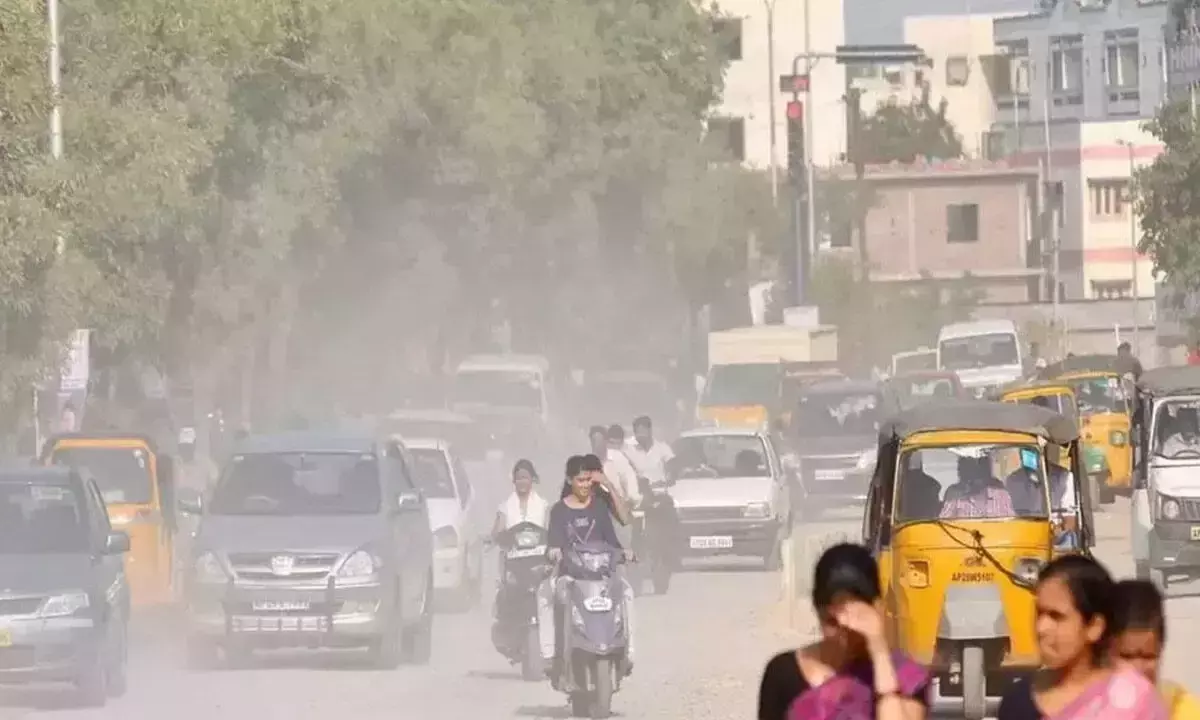
Hyderabad: Over the last decade, Telangana has experienced rapid urbanisation and industrial expansion, particularly in and around Hyderabad. While this growth has strengthened the state’s economic profile, it has also placed sustained pressure on air quality, water bodies, waste management systems, and environmental governance mechanisms.
The Telangana State Pollution Control Board (TSPCB) plays a central role in navigating these challenges, often in coordination with multiple government departments, industries, and local bodies. From deteriorating air quality and stressed lakes to plastic waste and industrial compliance, environmental regulation today requires both enforcement and systemic reform.
To understand how the state is responding to these evolving pressures, NewsMeter spoke with W. G. Prasanna Kumar, Senior Social Scientist at the Telangana State Pollution Control Board, about Telangana’s key pollution concerns, regulatory approaches, and priorities for the coming years. Excerpts
Setting the context: Pressing pollution challenges
NM: Telangana has seen rapid urbanisation and industrial growth over the last decade. From the Board’s perspective, what are the most pressing pollution challenges today?
Kumar: At present, three major concerns stand out.
The first is air pollution, especially in urban areas such as Hyderabad. Vehicular emissions, construction activity, road conditions, and industrial sources all contribute, and no single agency can address this alone.
The second concern is industrial pollution, particularly in sectors like pharmaceuticals. In some regions, the environmental carrying capacity has already reached its limit, which affects both the expansion of existing industries and the approval of new units.
The third major issue is plastic waste. This isn't easy to regulate because plastic manufacturing does not require large facilities. Thin plastic is often produced or imported illegally from other states. Addressing this involves multiple departments and enforcement mechanisms.
Multi-agency coordination and governance
NM: How does the Pollution Control Board balance economic development with environmental compliance, especially in industrial corridors around Hyderabad?
Kumar: Environmental issues today require coordinated action. Vehicular pollution involves transport authorities, municipal bodies, and traffic enforcement. Construction dust and road conditions fall under municipal administration, while industrial emissions are regulated by us.
Because multiple departments handle different aspects of the same issue, implementation becomes complex. We are working towards better coordination so that development and environmental protection move together rather than in conflict.
Pollution hotspots and focus areas
NM: Are there specific districts or zones in Telangana that require urgent environmental intervention?
Kumar: Yes. Certain regions consistently show higher stress indicators. Parts of Hyderabad’s outskirts are areas of concern, and Bachupally has recently seen a rise in complaints related to air quality and industrial activity. These areas are under closer monitoring.
Air quality trends in Hyderabad
NM: Hyderabad’s air quality has shown seasonal deterioration. What are the primary contributors?
Kumar: It is a combination of factors, vehicular emissions, construction activity, industrial output, road dust, and seasonal weather conditions. During certain periods, dispersion is poor, which worsens pollution levels.
NM: What trends have the Board observed in PM2.5 and PM10 levels over the last three to five years?
Kumar: Both PM2.5 and PM10 levels have shown an increasing trend. This indicates that sustained and location-specific interventions are required rather than short-term corrective measures.
NM: Are there area-specific action plans for pollution hotspots?
Kumar: Several districts in Telangana are covered under the National Clean Air Programme (NCAP). Action plans are prepared based on district-specific pollution sources and requirements.
Water pollution and lake health
NM: What is the current status of water quality in major water bodies such as Hussain Sagar, Durgam Cheruvu, and stretches of the Musi River?
Kumar: Most urban lakes are not fit for drinking or bathing. In some stretches, water quality is acceptable only for limited uses such as recreation. Urban runoff and sewage inflow continue to place pressure on these water bodies.
NM: Have sewage treatment plants helped reduce untreated discharge?
Kumar: Yes, sewage treatment plants have made a significant difference by reducing untreated sewage entering water bodies. There is still a small gap, but we expect this to be addressed within the next year as additional capacity comes online.
Industrial monitoring and compliance
NM: How robust is the industrial monitoring mechanism in Telangana, especially for high-pollution sectors like pharmaceuticals and chemicals?
Kumar: The monitoring system is strong and improving. Many industries are required to install continuous emission and effluent monitoring systems, which provide real-time data to the Pollution Control Board.
We also assess environmental quality at the area level, not just at individual units. If a region has reached its carrying capacity, further industrial expansion becomes difficult unless industries reduce pollution loads through cleaner production and waste minimisation.
NM: What action is taken against repeat violators?
Kumar: For initial violations, directions are issued for corrective action. In cases of repeated non-compliance, we issue stop-production or closure orders. Industries can resume operations only after upgrading pollution control systems and demonstrating compliance with verified data.
We also impose bank guarantees and conduct weekly task force meetings to review public complaints and monitor data. In some cases, we trace pollution through scientific fingerprinting to identify its exact source before taking action.
Waste Management and Emerging Concerns
NM: How is Telangana addressing solid waste, biomedical waste, and e-waste, particularly in urban centres?
Kumar: E-waste management faces a major challenge in collection. Many households retain unused electronics instead of sending them for recycling, which prevents proper material recovery.
In the case of biomedical waste, larger hospitals generally comply, but smaller clinics and healthcare establishments still need to be brought into the formal waste management system. Installation and operation of sewage treatment plants remain a concern in some facilities.
Solid waste management is particularly challenging due to the volume generated. Facilities such as Jawaharnagar face capacity constraints, and decentralised waste processing has not yet scaled up sufficiently. New residential developments are being required to put waste management systems in place, and compliance has improved in this segment.
Climate Change, Policy, and Preparedness
NM: How does the Pollution Control Board align its work with climate resilience and long-term sustainability goals?
Kumar: Climate and sustainability considerations are incorporated into consent conditions issued to industries. These include measures such as increasing renewable energy use, improving green cover, adopting water harvesting, and reducing carbon intensity.
NM: How prepared is Telangana to handle extreme weather events such as heatwaves and floods?
Kumar: Recent floods and rising temperatures highlight the need for stronger integration of disaster risk reduction and climate resilience into environmental planning. This requires coordination with disaster management authorities and improved preparedness across sectors. There is still work to be done in this area.
Technology, Data, and Transparency
NM: Are there plans to expand continuous air and water quality monitoring stations across the state?
Kumar: Yes, discussions are ongoing to strengthen and expand the monitoring network. Improved coverage will allow more location-specific data to be shared with both authorities and the public.
NM: How is environmental information shared with citizens?
Kumar: Air and water quality data are available on our website and shared with relevant departments such as municipal administration, water supply, and irrigation. However, we recognise the need for more detailed, location-specific information and are working towards improving accessibility.
Public Participation and Awareness
NM: How does the Board engage with schools, RWAs, and local communities?
Kumar: We run several outreach programmes, including Haritha Green initiatives, which cover schools and colleges across the state. Engineering and degree colleges have been actively involved in waste management hackathons and sustainability projects.
Schools and campuses also host activities such as eco-friendly bazaars, paper bag making, cloth bag production, seed ball initiatives, and waste-to-resource workshops to build environmental awareness from an early stage.
Looking Ahead
NM: What are the top environmental goals for the Pollution Control Board over the next five years?
Kumar: Key priorities include plastic waste management, improved sewage treatment, and better handling of solid waste compared to current levels.
We also aim to improve performance in high-impact sectors such as bulk drugs and pharmaceuticals, particularly through stricter implementation of zero liquid discharge and cleaner production practices.


