‘Khaleel Bidri Crafts’: How centuries-old craft is dying a slow death
Khaleel is also a recipient of the Telangana State Government’s Ministry of Handicrafts award
By - Rapolu Aakanksha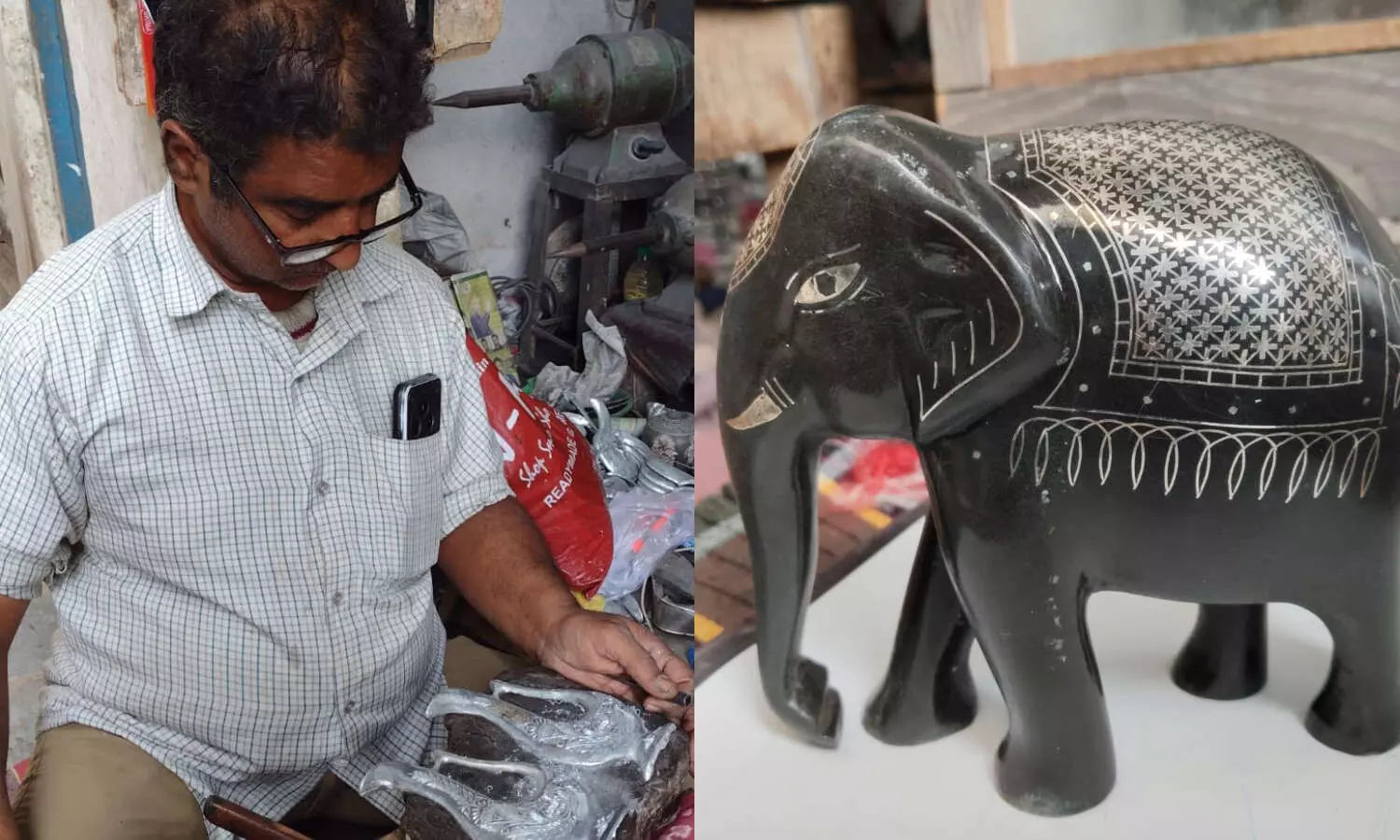
Hyderabad: Strolling through the old lanes of Dabeerpura, crammed into a small lane with rustic, antiquated features and no fancy tools, is where one can spot the ‘Khaleel Bidri Crafts’.
The shop’s owner, Khaleel Ahmed, cries in woe about the dying craft of Bidri. A craftsmanship that is gradually losing its recognition because of a lack of workers.
Khaleel Ahmed’s father, Rasheed Ahmed, was a fine arts graduate. He began by learning how to design, then went on to learn how to make crafts and even introduced modernisation. He created Bidri crafts that imitate historical figures such as the Taj Mahal, Charminar, and numerous other landmarks.
In addition to receiving numerous honours, he was even awarded by the Ministry of Handicrafts. Khaleel, the second generation of this vessel, inherited this craft.
Origin
This class of damascene derives its name from the town of Bidar, which was once a part of Hyderabad state, still part of the state's reorganization in 1956. Now Bidar is in Karnataka.
Since the period of the Nizams, Hyderabad has become a great centre of art and craft. It continues to be a Bidri centre even after the town of Bidar was separated from it.
The chief material in the preparation of a Bidri article is zinc. Since zinc is truly white, it is oxidised using sangzeera, a type of red clay that can only be found in Bidar.
An alloy of zinc and copper (94% zinc and 6%copper) is used. The design is carved by hand using thin wires made from silver bars. This metal alloy never rusts or corrodes, but is brittle and liable to break if dropped.
Current Scenario
Khaleel is also a recipient of the Telangana State Government’s Ministry of Handicrafts award. They supply their crafts to Golconda Handicrafts, having previously worked with Lepakshi Handicrafts. They are often invited to art colleges to exhibit their collection and teach art.
When asked about their difficulties, Ahmed responded, “There is not as much recognition as before from the government. This is a handmade craft that requires skill to sustain. It should be introduced in art colleges so the next generation can learn. We are keeping this art alive; if we don’t continue to advance the art, it will eventually fade away. Our patterns and designs are unique and cannot be found anywhere else. In addition to owning numerous designs, I’ve also got patents for many of them.”
Kasim, Khaleel’s fourth son, shares, “We are struggling with manpower; it’s just my father, me, and two helpers running the shop. This art form is super labour-intensive; a single piece can take days or even months to complete.”
Khaleel and his family remain committed to preserving the art of Bidri. Their struggle highlights the need to support traditional craftsmanship and recognize the value of cultural heritage. Let’s ensure that this dying art doesn’t fade away.


