Merry Xmas: Here are five sweets Indian Christians make not to impress, but to share
Kulkuls to milk cake, here are the five Christmas sweets Indian Christians make to spread sweetness
By - Anoushka Caroline Williams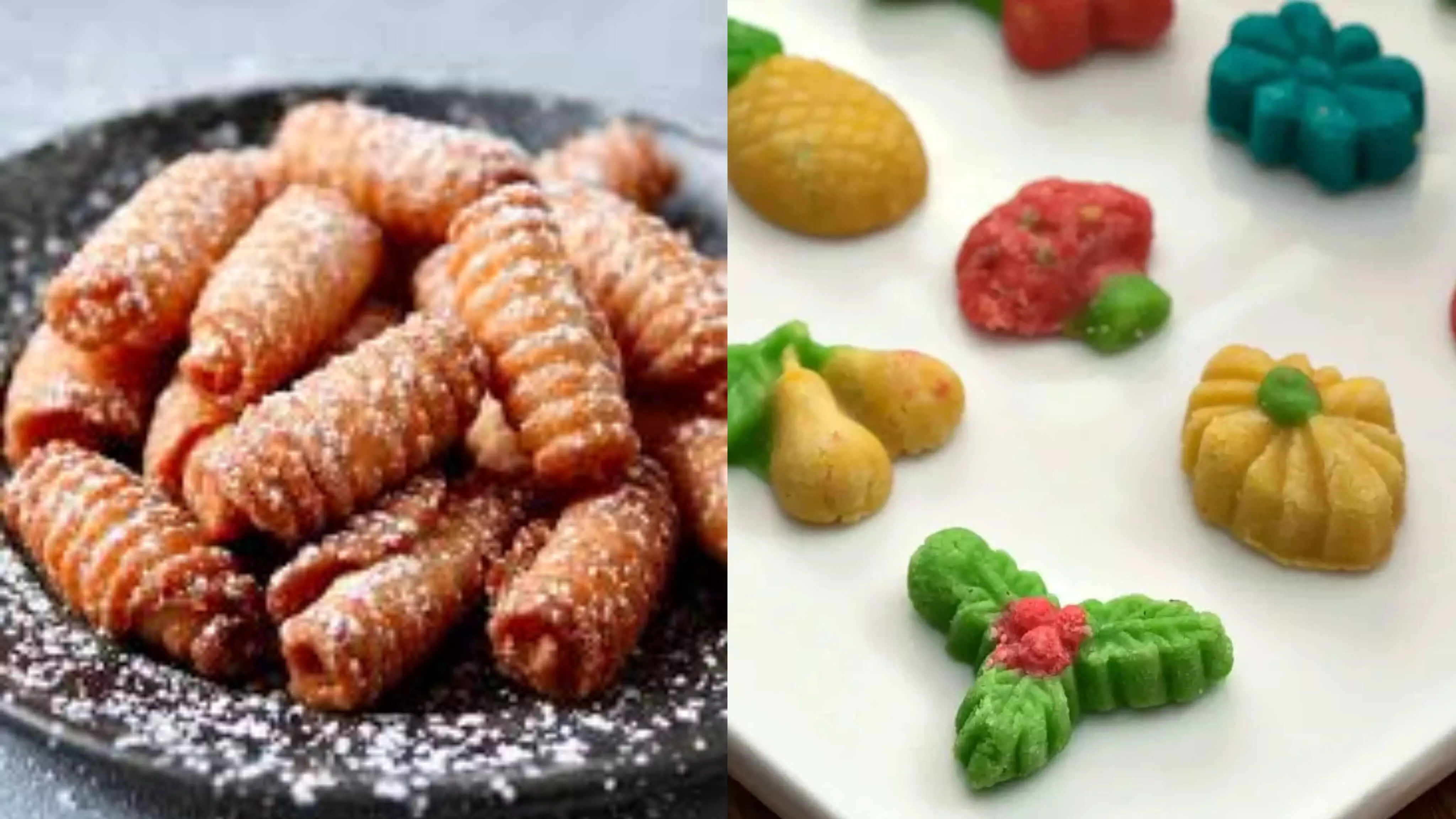
Kulkuls to milk cake: Five Christmas sweets Indian Christians make to spread sweetness
Hyderabad: In Indian Christian homes, Christmas sweets are rarely about display. They are made in batches, wrapped in old tins or butter paper, and sent out across neighbourhoods with children, drivers, church friends, and anyone who happens to drop by. These are not plated desserts. They are labour-intensive, time-bound, and deeply social.
Across regions, communities return to the same handful of sweets every December, not because they are trendy, but because they carry memory, faith, and the quiet discipline of giving.
Here are five Christmas sweets Indian Christians make not to impress, but to share:
1. Kulkuls (Kidiyo / Kalkals)
Kulkuls are small shell-shaped pastries fried until crisp and lightly coated with sugar. They are made communally, hands moving together around tables, forks pressing grooves into dough.
“Making kulkuls alone makes no sense,” says Maria D’Souza. “Someone rolls, someone cuts, someone fries. It’s how children learn Christmas before they understand it.”
The sweet is modest, but the effort is collective. Kulkuls are often the first item prepared, sometimes weeks before Christmas, stored carefully to be shared widely.
What it represents: Community labour and shared anticipation:
2. Marzipan
Goan marzipan is shaped by hand into fruits, flowers, and small figures, dyed using food colours. Traditionally made from ground almonds and sugar, it is one of the most time-consuming Christmas sweets.
“Each piece is for someone,” says Lourdes Fernandes, a home baker. “You don’t make marzipan for yourself. You make it knowing it will leave the house.”
Marzipan is gifted deliberately, wrapped, named, and carried to godparents, elders, and close friends.
What it represents: Care, patience, and intentional gifting.
3. Coconut Toffee
Coconut toffee made from grated coconut, sugar or jaggery, and ghee is common in Syrian Christian and Latin Catholic homes. It is cut into squares and stored in steel tins.
“This is the sweet that gets sent first to neighbours,” says Anitha Joseph. “It doesn’t spoil quickly, and everyone eats it.”
It is practical, economical, and generously designed to be made in quantity without excess.
What it represents: Hospitality without hierarchy.
4. Rose Cookies (Achappam)
Rose cookies are crisp, lacy, and fried using a metal mould dipped into batter. Their preparation requires skill and attention.
“You can’t rush achappam,” says Leena Rodrigues, whose family makes them every Christmas in Chennai. “The oil, the batter, the mould, everything has to be right.”
Despite the effort, they are rarely kept for the household alone. They travel well and are often packed for church visits and family calls.
What it represents: Skill passed down through practice, not instruction.
5. Milk Cake (Dodol / Kalakand-style versions)
Milk-based Christmas cakes, slow-cooked, dense, and mildly sweet, are common in Anglo-Indian and mixed urban households. They are sliced thin and shared widely.
“My grandmother always said it should be sweet enough to give away,” recalls Anthony Williams, an Anglo-Indian home cook. “If it’s too rich, it stays at home. That’s not the point.”
These cakes are designed to stretch to be divided without losing meaning.
What it represents: Moderation and generosity:
Two Home Recipes Still Followed
Recipe 1: Coconut Toffee (Basic Home Version)
Ingredients:
• 2 cups fresh grated coconut
• 1½ cups sugar or powdered jaggery
• 2 tbsp ghee
• ½ tsp cardamom powder
Method:
Cook coconut and sugar together on low heat, stirring continuously. Add ghee and cardamom once the mixture thickens and leaves the sides of the pan. Pour into a greased tray, flatten evenly, cool slightly, and cut into squares.
Why it lasts: Low moisture, simple ingredients, easy scaling.
Recipe 2: Kulkuls (Family Batch)
Ingredients:
• 2 cups maida
• 2 tbsp sugar
• 2 tbsp butter
• 1 egg (optional; some families skip)
• Coconut milk or water as needed
• Oil for frying
Method:
Mix ingredients into a soft dough. Roll into thin ropes, cut small pieces, and shape using a fork. Fry on medium heat until golden. Cool completely before storing.
Why it matters: Shaping is the ritual; frying is just the finish.
Meaning Over Finish
These sweets are not made for photographs or approval. They are made because Christmas, in Indian Christian homes, is incomplete if something doesn’t leave the kitchen and enter another home.
As Fernandes puts it, “If you finish Christmas with all the sweets still in your cupboard, you’ve missed something.”
In a season increasingly focused on presentation, these traditions remind us that the heart of Christmas food lies not in how it looks, but in where it goes next.


