From EVs to scrappage: Telangana sets 2047 roadmap for zero-emission transport
The state has already rolled out an Electric Vehicle (EV) Policy, with a target to ensure that most new vehicle purchases transition to electric in the coming years, he added.
By - Sistla Dakshina Murthy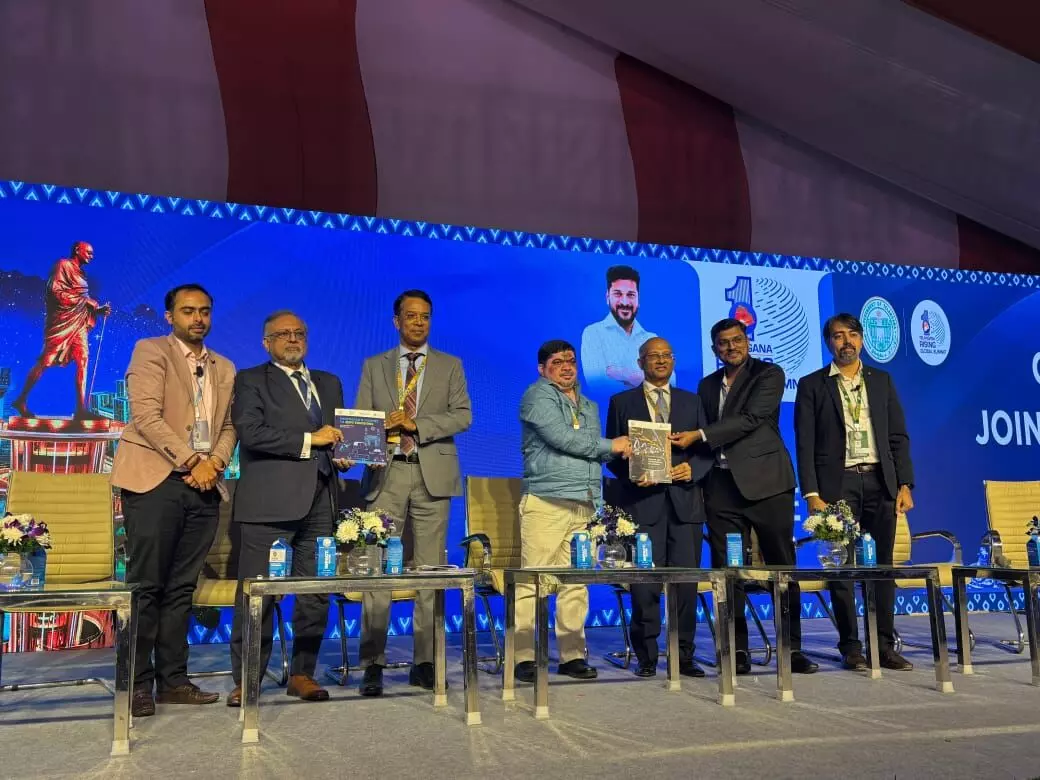
Hyderabad: The Telangana government on Monday reaffirmed its commitment to making the state a zero-emission transport hub.
The strategy will involve a multi-pronged approach covering electric vehicle adoption, vehicle scrappage, charging infrastructure, fleet electrification and battery recycling.
The roadmap was outlined by Transport Minister Ponnam Prabhakar at the ‘Green Mobility 2047: Zero Emission Vehicles’ session organised by the Transport Department at Telangana Global Rising Summit at Bharat Future City, Hyderabad, on Monday.
Vision 2047: Pollution-free transport is a core goal
“Officials from the Transport Department said the government is working in alignment with the state’s Vision 2047 document to ensure a pollution-free, inclusive and future-ready transport system. Transport plays a key role in economic growth and environmental protection, and Telangana aims to lead the country in clean mobility,” the Transport Minister said.
The state has already rolled out an Electric Vehicle (EV) Policy, with a target to ensure that most new vehicle purchases transition to electric in the coming years, he added.
Old vehicles to be phased out under scrappage policy
To curb emissions from ageing vehicles, Telangana has implemented a Vehicle Scrappage Policy, under which vehicles older than 15 years will be removed from roads in a phased manner.
The government is also planning to establish Automated Testing Stations (ATS) across the state to strengthen road safety, vehicle fitness certification and emission control, officials said.
IKEA sets benchmark with 100% electric deliveries in Hyderabad
IKEA CEO Patrick said Hyderabad has become the company’s first Indian city to achieve 100 per cent EV-based last-mile deliveries. The transition began in 2018 with electric three-wheelers and was later expanded to electric trucks for inter-city movement.
IKEA is also testing electric long-haul freight vehicles on Mumbai–Delhi and Mumbai–Bengaluru routes, while experimenting with battery-swapping solutions to address charging limitations. The company has also invested in a large solar power project in Rajasthan to power its operations with renewable energy.
The only state in India where aircraft tyres are manufactured
MRF Tyres Limited VC and MD Arun Mammen said the company has been operating in Telangana for over 35 years with two major manufacturing units employing more than 10,500 people.
MRF is currently India’s largest producer of EV tyres and supplies to most electric vehicle manufacturers.
Telangana is also the only state in India where aircraft tyres are manufactured, including for Indian Air Force fighter jets such as Rafale, he said.
Battery recycling, digital tracking in focus
Tarun Singhal of Lohum stressed that battery recycling is critical for India’s EV future. While the government has notified battery recycling rules, enforcement remains weak due to the dominance of the unorganised sector, he said.
He also revealed plans for a ‘Battery Aadhaar’ system using blockchain technology, which will allow real-time digital tracking of batteries from manufacturing to reuse and recycling. This will help standardise resale value and improve confidence in used EVs, he said.
Uber seeks lower EV costs, more charging stations
Uber India head Amit Deshpande reiterated the company’s global commitment to go fully zero-emission by 2040. Uber has already tied up with Tata Motors for 25,000 EVs and with SIDBI to unlock Rs 1,000 crore in EV loans for drivers.
However, he flagged the high upfront cost of EVs, limited access to fast charging and higher vehicle downtime compared to CNG vehicles as key barriers to rapid adoption. He urged the government to strengthen supply-side incentives and charging infrastructure.
Fleet electrification policy on the anvil
Senior officials disclosed that Telangana is in the final stages of drafting a Dedicated Fleet Electrification Policy, which will mandate high-usage commercial vehicles to shift to electric in a time-bound manner.
In parallel, the state is also examining supply-side regulations that could require manufacturers to meet minimum EV sales targets.
EV knowledge reports launched
Two key policy documents were formally presented to the government: A Fleet Electrification Roadmap for Telangana and a Supply-Side Regulatory Playbook for EV manufacturing and sales. These reports aim to guide the next phase of the state’s EV transition.
Transport is not just an industry, but a climate solution: Government
Summing up the discussion, officials said Telangana’s EV strategy goes beyond investment and job creation. The focus is on creating an end-to-end clean transport ecosystem, covering manufacturing, charging, recycling and workforce training.
With strong policy intent, industry collaboration and expanding infrastructure, Telangana is positioning itself as a national leader in zero-emission mobility, the government asserted.
The session was attended by government officials, industry leaders, global logistics firms, EV manufacturers and clean-tech experts.


