Vijayawada terror case: ISIS handler Hakeem Shukoor radicalised accused through social media for suicide missions
According to police, the accused admitted that they acted on Shukoor’s instructions to promote the activities of ISIS in India
By - Newsmeter Network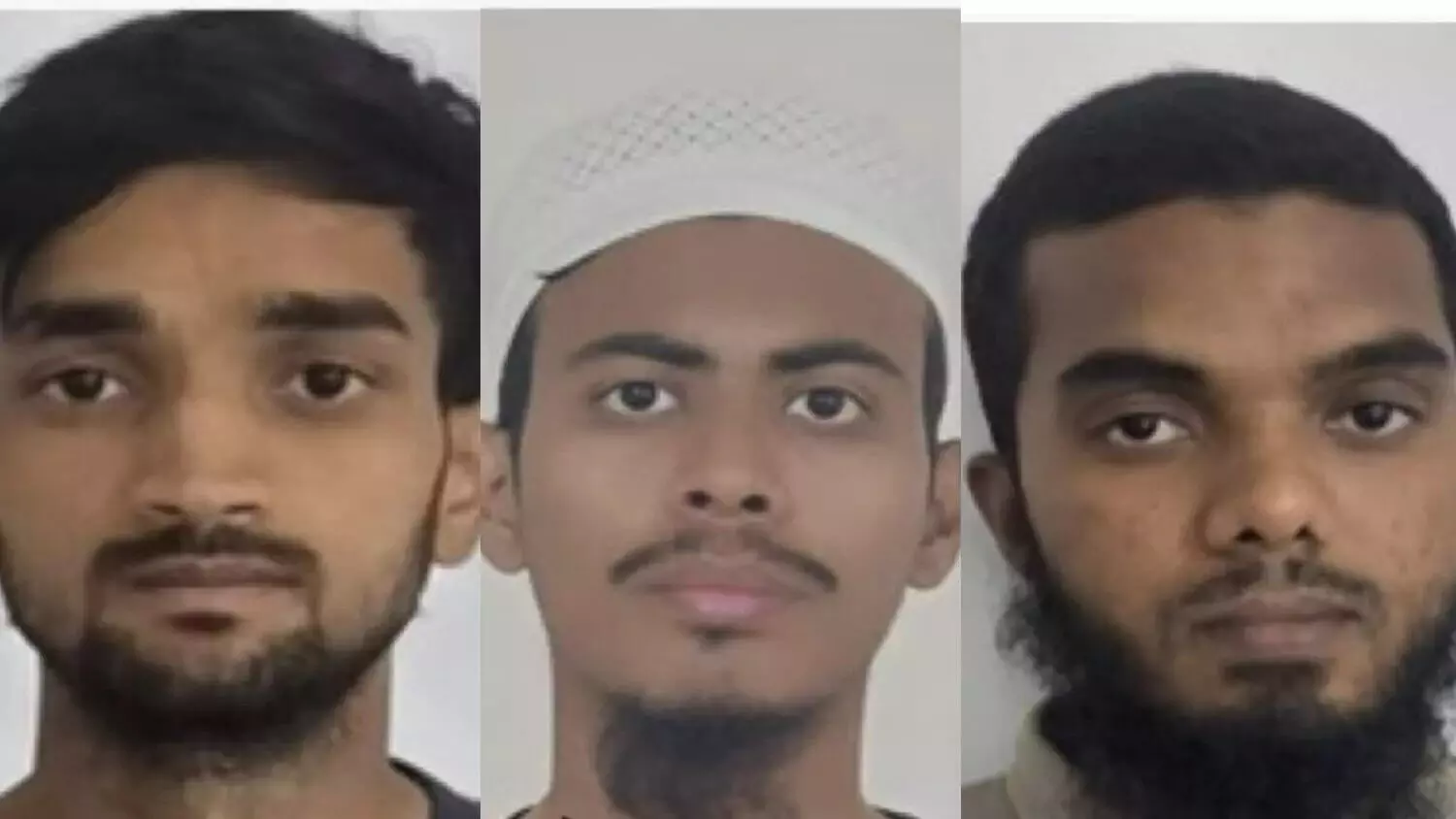
Amaravati: Interrogation of the Vijayawada terror case accused has revealed that foreign ISIS handler Al Hakeem Shukoor motivated them to recruit youth for suicide attacks.
During interrogation by Counter Intelligence (CI) Cell, the accused confessed that they were radicalised by Shukoor through social media, though they initially harboured extremist views.
According to police, the accused admitted that they acted on Shukoor’s instructions to promote the activities of ISIS in India. They allegedly attempted to radicalise youth and encourage them to carry out suicide attacks in the name of ‘jihad’.
Online network used for radicalisation
As part of their activities, the accused said they created multiple groups on Instagram and Telegram under the name `Benex Com’.
These groups were used to identify and recruit individuals with extremist leanings, particularly those willing to sacrifice their lives for jihad.
The accused reportedly maintained regular communication with group members, spreading radical ideology and expanding their network across different regions.
Foreign links and weapons supply claims
During questioning, some of the accused disclosed that Pakistani nationals were also part of the `Benex Com’ groups. They claimed that Shukoor had assured them of arranging weapons and explosives from Pakistan to carry out attacks in India.
Officials from the CI Cell, along with the National Investigation Agency (NIA) and intelligence units from various states, questioned the accused to gather details about their international links and operational plans.
Five-day police custody ends
The five-day police custody of the accused, Mohammad Rahantulla Sharif, named as accused number 1 (A1), Mohammad Danish (A2), Mirza Sohail Baig (A3), Saeeda Begum (A5) from Hyderabad, and Abdul Salam (A11) from Bellary, concluded on Sunday evening.
Investigators focused on understanding the factors that led to their radicalisation, how they established contact with foreign handlers, and the extent of their network within India.
`We followed Shukoor’s instructions'
The accused reportedly told investigators that they had never met Shukoor in person and did not even know what he looked like. Their interaction was limited to social media platforms.
They admitted to maintaining links with banned organisations such as Al-Qaeda in the Indian Subcontinent (AQIS) and ISIS, acting under Shukoor’s directions to expand a network across India to wage a so-called “Ghazwa-e-Hind” (war against India).
Anti-national propaganda and objectives
The accused allegedly confessed that their goal was to transform India into an Islamic state. As part of this agenda, they engaged in activities such as:
Praising ISIS and promoting its ideology
Insulting the Indian national flag and anthem
Posting provocative content on social media
Declaring themselves as `Mujahideen'
They also shared slogans such as “A nation led by Muhammad will not surrender” in their online posts.
Plans to recruit and train youth abroad
Investigators said the accused revealed that Shukoor had instructed them to lure young people through social media and send them to countries like Pakistan and Afghanistan for militant training.
They admitted to following these instructions and actively working towards recruiting and radicalising youth. Authorities continue to probe the case to uncover the full extent of the network and prevent further radicalisation efforts.


