Telangana BC Commission seeks caste-wise student data across schools, colleges from education depts
The primary agenda is the systematic collection of caste-wise student data across all levels of education in the state, to understand their education levels and job opportunities.
By - Newsmeter Network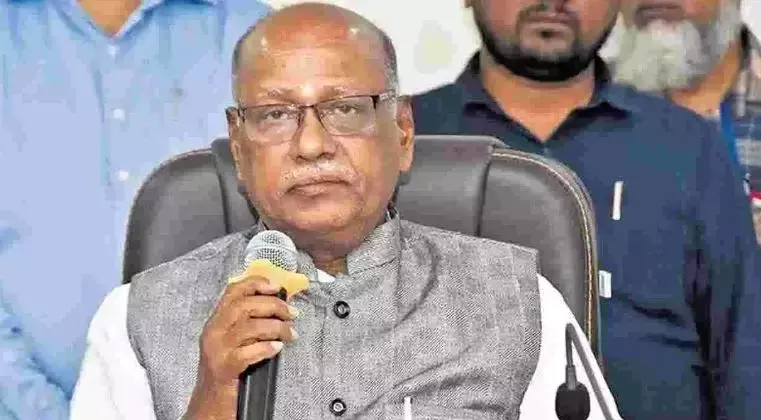
Telangana BC Commission seeks caste-wise student data across schools, colleges from education depts
Hyderabad: In a significant move toward data-driven social justice, the Telangana Commission for Backward Classes has announced a high-level meeting with heads of the State Education Departments on February 4.
The primary agenda is the systematic collection of caste-wise student data across all levels of education in the state, to understand their education levels and job opportunities.
Attempting to bridge educational gaps
The Commission is seeking granular details from departments, including School Education, the Board of Intermediate Education and Higher Education.
By analysing this data, the Commission intends to identify specific sub-castes within the Backward Classes that face high dropout rates or lack representation in professional courses. This information will be vital for:
Targeted Scholarships: Ensuring financial aid reaches the most marginalised sub-groups.
Policy Calibration: Strengthening programs like the Mahatma Jyotiba Phule Overseas Vidya Nidhi.
Scientific Ranking: Categorising 243 sub-castes based on an objective ‘Backwardness Index.’
Why is this happening in Telangana?
This initiative is part of a broader ‘Triple Test’ mandate required by the Supreme Court to validate reservations.
Following the 2024-25 Socio-Economic, Educational, Employment, Political and Caste (SEEEPC) Survey—which revealed that BCs constitute approximately 56.36 per cent of Telangana’s population—the state is moving to secure a 42 per cent reservation quota in local bodies and educational institutions.
G Niranjan, Chairman of the Telangana BC Commission, emphasised the necessity of this data for legal and social empowerment.
He stated: “The data we are collecting is not just a set of numbers; it is the scientific foundation required to ensure that no sub-caste is left behind. We are committed to a transparent process where every community’s status is accurately reflected. This empirical evidence is crucial to validate our 42 per cent reservation proposal in the courts and to provide the ‘last mile’ benefit to the most deserving students in Telangana.”


