After Kakinada blast, AP police study Sivakasi’s firecracker safety model to prevent future tragedies
Located in Virudhunagar district, Sivakasi began its first firecracker manufacturing unit in 1925
By - Sistla Dakshina Murthy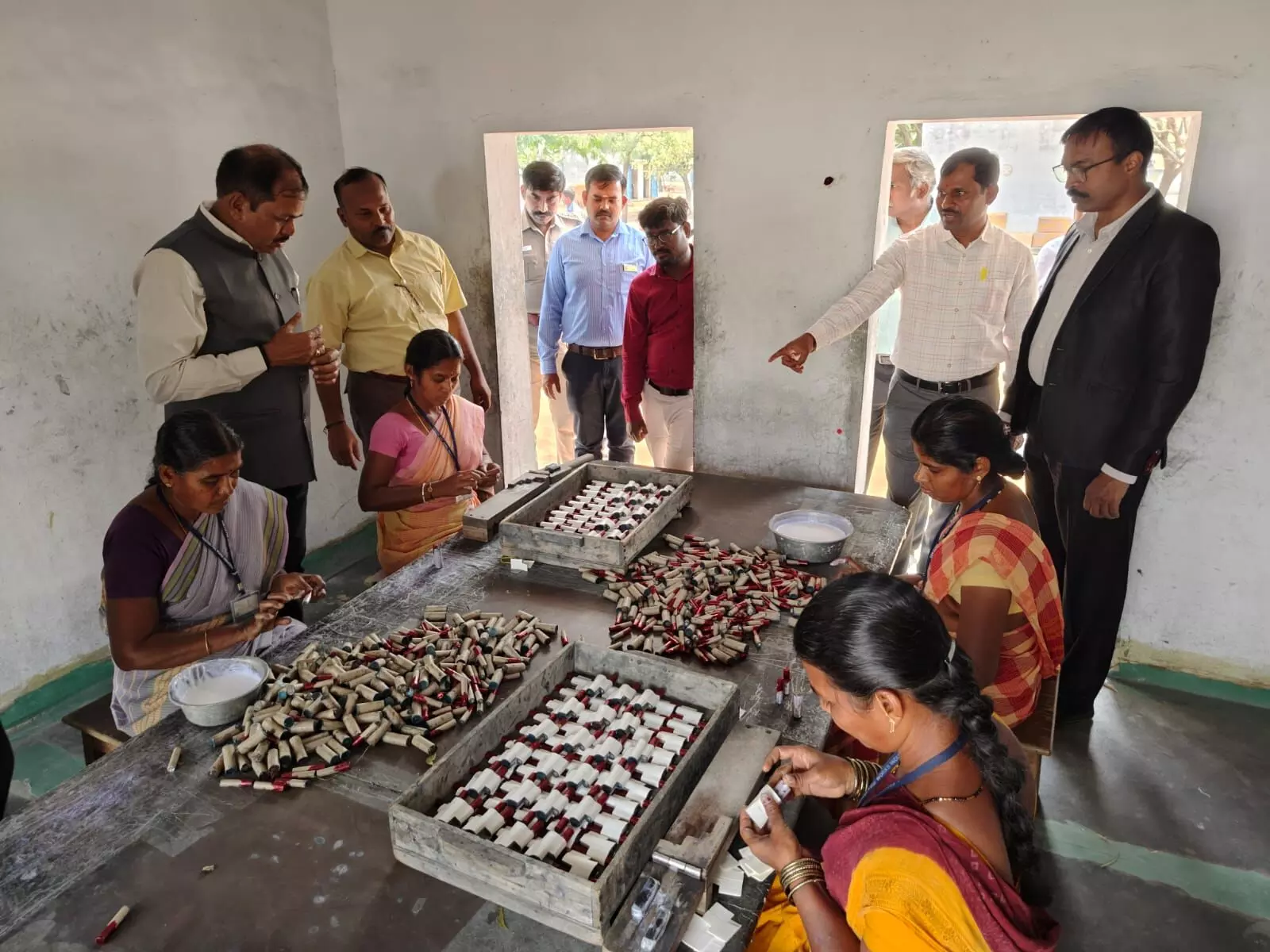
After Kakinada blast, AP police study Sivakasi’s firecracker safety model to prevent future tragedies
Sivakasi: In the aftermath of the cracker unit explosion in Kakinada that killed 20 people, a senior police delegation from Andhra Pradesh visited Sivakasi in Tamil Nadu.
The trip was aimed at studying the stringent safety protocols followed in the country’s largest firecracker manufacturing hub, with a focus on strengthening accident prevention measures.
‘Model for fire safety’
The delegation, led by the Inspector General of Police (IGP) and EAGLE chief Ake Ravi Krishna, along with the Director General of Fire Services Venkata Ramana, undertook the visit to closely examine the century-old standard operating procedures (SOPs).
The officials also examined the regulatory framework and preventive practices developed in Sivakasi, which is widely regarded as a national model for fire safety management in the fireworks industry.
Century-old safety ecosystem
Located in Virudhunagar district, Sivakasi began its first firecracker manufacturing unit in 1925.
Over nearly 100 years, the industry has developed a comprehensive safety ecosystem designed to minimise fire accidents in this high-risk sector.
Officials said the inspection was part of efforts to identify best practices that could be replicated elsewhere to prevent tragedies like the recent Kakinada blast.
Regulatory compliance and infrastructure standards checked
During the visit, the team held detailed interactions with officials from the Revenue, Fire Services, Labour, Inspector of Factories, Police and the Petroleum and Explosives Safety Organisation (PESO).
Discussions focused on regulatory compliance, infrastructure standards, enforcement mechanisms and accident prevention strategies.
The officers also inspected prominent manufacturing units, including Standard Fireworks and Vanitha Fireworks, to assess on-ground implementation of safety norms.
Infrastructure strictly as per PESO guidelines
Authorities noted that all manufacturing infrastructure in Sivakasi is constructed strictly in accordance with PESO guidelines.
Deployment of PESO-certified foremen, periodic training of workers and strict enforcement of explosive handling norms form the backbone of the safety framework.
Officials identified two critical pillars of accident prevention: manpower control and explosive control.
Tight restrictions in mixing and filling units
Mixing of chemicals and filling of firecrackers were identified as the most sensitive stages in the production process.
Key safety measures include:
- Only two workers are permitted inside mixing or filling rooms at a time.
- A maximum of 5 kilograms of explosive material is allowed in such units.
- All high-risk activities stopped by 11 am to prevent heat-induced friction fires as temperatures rise later in the day.
Officials explained that elevated temperatures significantly increase the risk of accidental ignition due to friction.
Static electricity and material safeguards
Before entering mixing or filling units, workers must discharge static electricity from their bodies to eliminate ignition risks.
Iron is completely avoided in these facilities, as iron and sulphur can form a dangerous pyrotechnic combination. Instead, aluminium tools are used and weighing blocks are made of wood to prevent sparks.
Workers go for regular training in handling firecrackers
Authorities highlighted that, apart from technical safeguards, worker discipline plays a crucial role in accident prevention.
Workers undergo regular training in firecracker handling and safety behaviour. A unique precaution followed in Sivakasi is that workers found to be emotionally disturbed or not in the right frame of mind are not permitted to work in sensitive mixing or filling sections.
Officials said such behavioural monitoring significantly reduces human error in high-risk operations.
The IGP stated that further observations and recommendations would be shared after a comprehensive review of the safety practices studied during the visit.


