Milk adulteration: Andhra launches massive screening drive after 5 die in Rajahmundry
Blood samples were collected from 315 individuals. Only two showed elevated parameters, but officials clarified these were not linked to milk adulteration.
By - Newsmeter Network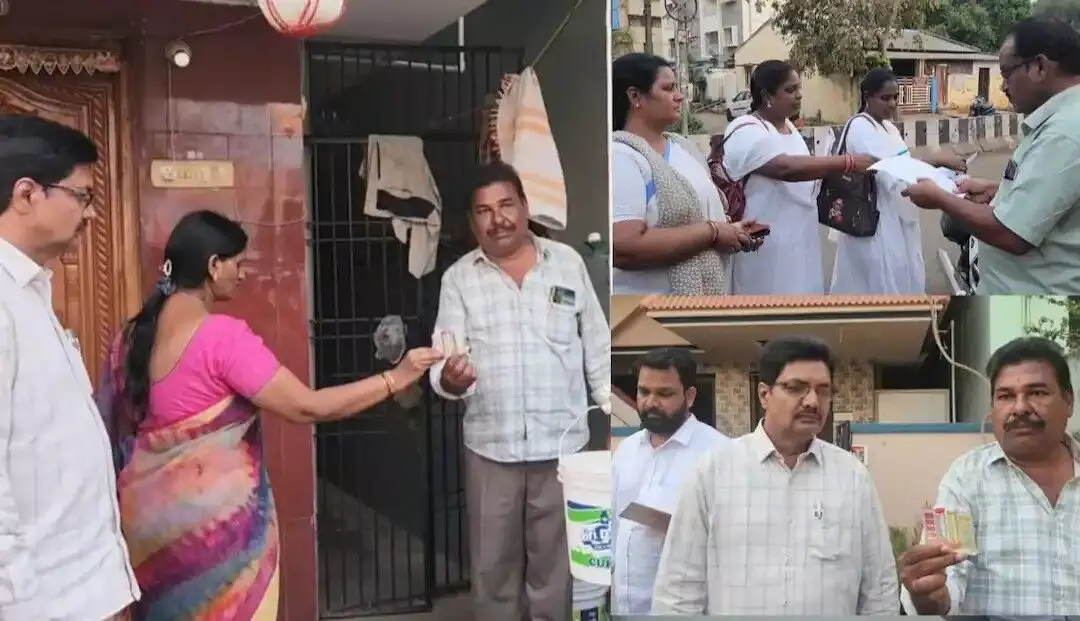
Amaravati: Andhra Pradesh government is waiting for a lab report and the investigation findings to proceed further against the accused in the milk adulteration case.
Five people, including a six-year-old boy, have died, and 15 others are undergoing treatment following suspected milk adulteration in Andhra Pradesh’s Rajahmundry.
The government has launched a household survey to screen the people for any symptoms in the area.
Officials said that the situation is now under control, even as an intensive multi-departmental investigation continues. Senior officials, including the Commissioner of Health and the Director of Food Safety, have been deputed to monitor the situation. Further action will be taken based on laboratory reports and investigation findings.
Massive household survey and medical screening
On February 25, nine medical teams were deployed to survey 110 families. A total of 307 individuals were covered. Six houses were found locked, but families were contacted over the phone and reported no symptoms.
Additionally, 14 field surveillance teams visited 679 houses and screened 957 families in the area.
Blood samples were collected from 315 individuals. Only two showed elevated parameters, but officials clarified these were not linked to milk adulteration.
Samples sent for advanced toxicology testing
Authorities collected 12 blood and three urine samples and sent them to the Indian Institute of Technology (IIT), Tirupati, for GC-MS analysis to detect nephrotoxic substances.
The Food Safety Officer inspected the Varalakshmi Milk Dairy premises and collected surveillance samples of milk, paneer, ghee, drinking water, and vinegar, along with one enforcement sample of milk.
Milk and curd samples were also collected from affected households. Samples were sent to JNTU, Kakinada, and VIMTA Labs, Hyderabad, for microbial, physio-chemical and toxic adulterant analysis.
Clinical symptoms point to toxic exposure
The first patient was admitted on February 16, and a total of 20 people were hospitalised by February 24. Of them, five succumbed. Three of the deceased were in their 70s.
According to health authorities, several patients presented with severe symptoms such as absence of urine output (anuria), vomiting, abdominal pain, and acute renal dysfunction requiring dialysis.
One patient is currently on ventilator support, six are undergoing dialysis, and eight are on both ventilator and dialysis support across six hospitals.
Doctors observed elevated blood urea and serum creatinine levels, indicating acute renal failure consistent with toxic exposure.
Dairy under scanner
On February 22, the District Medical and Health Officer (DMHO), East Godavari, received information from KIMS Hospital about multiple elderly patients with acute kidney injury.
Preliminary epidemiological investigations established a strong link between the affected individuals and milk consumption. Authorities traced the supply to Varalakshmi Milk Dairy in Narasapuram village of Korukonda mandal, which had supplied milk to 106 families.
Milk supply from the dairy was immediately stopped.
Criminal case registered, vendor in custody
Police registered a criminal case under Section 194 BNSS and Section 174 CrPC based on a complaint lodged by the son of one of the deceased.
A suspected milk vendor, Addala Ganeswararao (33), a resident of Narasapuram village, has been identified and taken into custody. Police are investigating the supply chain, distribution network, and the list of affected consumers.
Veterinary teams probe possible source
A separate team of four veterinary doctors is examining whether contamination could have originated at the source. The team collected 41 milk samples from animals and dairies.
Samples of cattle feed, water, dry and green fodder were also collected for proximate and toxicological analysis. These samples have been sent to the Veterinary Biological Research Institute (VBRI), Vijayawada.
Situation under control
Officials said Rapid Response Teams comprising surveillance officers, physicians, microbiologists, pediatricians, forensic experts, epidemiologists, and nephrologists have been constituted to handle the crisis.
While the immediate situation has stabilised, authorities said strict action will follow once laboratory confirmation establishes the exact nature and source of contamination.


