Why is Andhra's TDP pitching for social media regulation for children
The TDP MP urged the Ministry to constitute a dedicated committee or expert group to study the issue and recommend a comprehensive national framework that places responsibility on platforms, not just parents
By - Newsmeter Network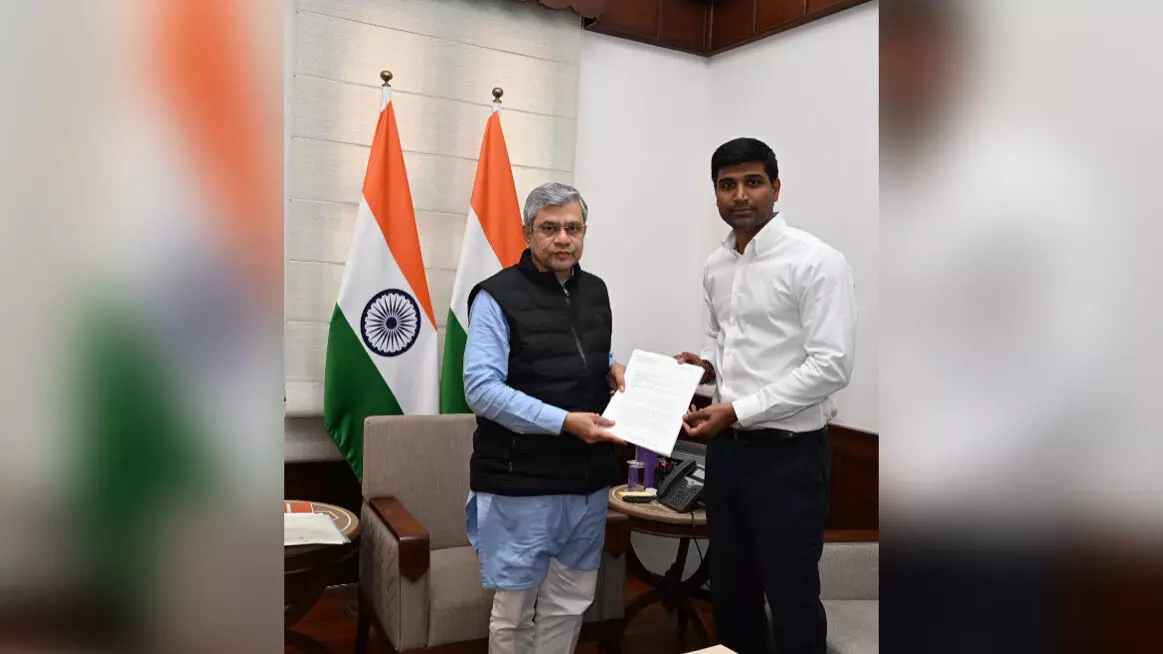
New Delhi: Telugu Desam Party (TDP) on Tuesday called on the Centre to initiate policy-level action on age-based regulation of social media, citing growing concerns over children’s online safety, digital addiction, and mental health risks.
Call for National Policy on children’s online safety
Telugu Desam Party Parliamentary Party leader Lavu Sri Krishna Devarayalu met Union Minister for Information and Broadcasting Ashwini Vaishnaw in New Delhi and submitted a memorandum seeking age-based regulation of social media for children.
The TDP MP urged the Ministry to constitute a dedicated committee or expert group to study the issue and recommend a comprehensive national framework that places responsibility on platforms, not just parents.
Andhra Pradesh examining legal framework
Devarayalu informed the Minister that the NDA government in Andhra Pradesh is actively examining the matter and exploring a robust legal framework to protect minors online, in line with global best practices.
Private member’s bill cited
Recalling his Private Member’s Bill—Social Media (Age Restrictions and Online Safety)—the MP said the proposed legislation includes a minimum age threshold for social media access, mandatory age-verification mechanisms, and permanent deletion of children’s personal data collected during verification, along with stringent penalties for non-compliance.
Alarming data on children’s exposure
Highlighting the scale of the problem, the memorandum noted that nearly 90% of children aged 14–16 in India have access to smartphones at home, while over 75% actively use social media.
Studies indicate that more than 60% of minors have faced online bullying, and nearly half have been exposed to age-inappropriate or harmful content.
Excessive social media use has been linked to rising anxiety, depression, and self-harm among adolescents, even as platforms continue to monetise children’s data without adequate safeguards.
Tragic incidents and official warnings
The MP pointed to recent incidents in Ghaziabad and Lucknow, where minors reportedly lost their lives following extreme digital addiction, cyberbullying, and online psychological distress. He also cited the Economic Survey 2025–26, which flagged rising digital addiction among youth and warned of serious mental health and behavioural risks linked to high-intensity social media use.
Global trend towards age restrictions
Devarayalu noted that several countries have begun taking decisive legislative action. Australia has enacted a ban on social media access for children under 16, while Denmark, Malaysia, Norway, the United Kingdom, and New Zealand are considering or advancing similar age-based restrictions as part of broader online safety frameworks.
This, he said, reflects a growing global consensus that parental controls alone are insufficient and that platforms must be held accountable.


