Pathogenic fungus threatens neem trees across Telangana, finds FCRI Mulugu
The initiative follows widespread reports of neem trees suffering from drying branches, sparse foliage and severe canopy loss
By - Newsmeter Network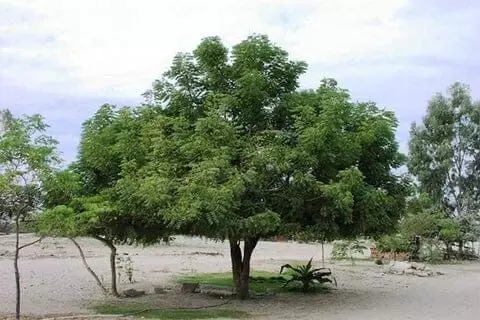
Hyderabad: Neem trees across Hyderabad and several districts of Telangana are showing alarming signs of decline. The cause: a pathogenic fungus.
This finding was made by the Forest College and Research Institute (FCRI), Mulugu, who launch an extensive scientific programme to diagnose the disease and frame effective, long-term remedial measures.
Cause traced to fungal infection
Detailed investigations by FCRI scientists have identified Phomopsis azadirachtae, a pathogenic fungus, as the principal cause of the disease. The pathogen attacks the tree’s internal systems, gradually weakening it and leading to progressive dieback if not addressed in time.
Growing concern over neem decline
The initiative follows widespread reports of neem trees suffering from drying branches, sparse foliage and severe canopy loss.
The visible deterioration of the hardy and culturally revered neem has triggered public concern, prompting the institute to intensify research into the causes behind the large-scale dieback.
Early intervention shows recovery
Pilot treatment trials carried out by the institute have shown promising outcomes.
Neem trees that received timely scientific treatment recorded notable recovery, underscoring the importance of early detection and intervention in managing the disease.
Integrated treatment protocol developed
Based on these results, FCRI has formulated an integrated treatment protocol to manage neem dieback. The protocol combines disease diagnosis, appropriate treatment measures and follow-up monitoring to ensure sustained recovery of affected trees.
Statewide, multi-year research initiative
The institute has now expanded its efforts into a statewide, multi-year research programme.
The initiative will focus on pathogen characterisation, epidemiological mapping, climate correlation studies and the development of long-term conservation strategies to protect neem populations across Telangana.
Towards scalable, science-backed solutions
Dean of FCRI and Conservator of Forests (R&D Circle), V Krishna said that safeguarding neem is a priority for the institute, given its ecological, medicinal and cultural importance.
He added that the research, led by forest pathology experts, aims to produce scalable, science-backed solutions that can be implemented across the State and eventually replicated at the national level.


