Unspent funds, open dumping: CAG flags gaps in Telangana’s solid waste management
The audit found that most Urban Local Bodies failed to prepare both short-term and long-term plans for scientific waste management, resulting in ad hoc and inefficient handling of waste.
By Sistla Dakshina Murthy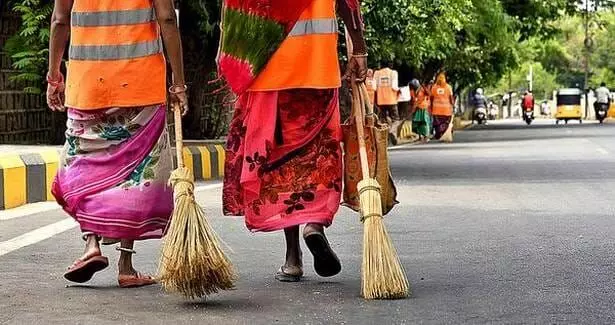
Representational Image
Hyderabad: Comptroller and Auditor General (CAG) has pulled up Telangana’s urban local bodies for failure in solid waste management.
CAG cited lack of policy clarity, poor planning, underutilisation of funds, and weak monitoring, which have led to unsegregated waste, open dumping, and mounting environmental and public health risks.
No comprehensive policy, unclear roles
The CAG Report (No. 1 of 2025) on Local Bodies for the period ending March 2022, tabled in the State Legislature on Monday, noted that the State lacked a clear policy framework defining the roles and responsibilities of officials involved in solid waste management.
It observed that key strategies such as reduction, reuse, and recycling (3R) were not adequately integrated into the system, pointing to weak institutional accountability.
Inadequate planning across ULBs
The audit found that most Urban Local Bodies failed to prepare both short-term and long-term plans for scientific waste management, resulting in ad hoc and inefficient handling of waste.
While the State had set a target to limit landfill waste to 20 per cent, only the Greater Hyderabad Municipal Corporation (GHMC) managed to meet this benchmark.
Funds left unspent, dues not collected
Highlighting financial lapses, the report said 14 test-checked ULBs failed to fully utilise funds under the Swachh Bharat Mission-Urban, leaving 37 per cent of allocated funds unspent as of March 2022.
It also pointed out that GHMC did not collect tipping fees amounting to ₹47.77 crore from various local bodies.
In a separate compliance audit, the CAG flagged a revenue loss of ₹2.29 crore due to incorrect levy of environment impact fee by GHMC, besides short collection of library cess amounting to ₹324.96 crore by ULBs.
Segregation and processing remain weak
Despite the provision of bins, source segregation was largely ineffective, with waste being transported and dumped in mixed form.
The report also revealed that GHMC paid ₹313.20 crore to a concessionaire for the treatment and disposal of dry waste between 2012 and 2020, even though the waste remained unprocessed during the period.
It further noted the absence of guidelines for inclusion and registration of waste pickers, affecting their role in the waste management ecosystem.
Infrastructure gaps, open dumping
The audit flagged serious infrastructure deficiencies, stating that over 50 per cent of unprocessed waste in the test-checked ULBs was being dumped at open sites due to a lack of landfill facilities.
It also highlighted the absence of a notified policy for construction and demolition (C&D) waste management and the underutilisation of existing processing plants, leading to the accumulation of waste.
Monitoring mechanisms found to be weak
The CAG observed that monitoring systems were inadequate, with no ward-level committees or dedicated teams in place to oversee and review solid waste management performance.
The lack of effective supervision, combined with gaps in execution, has resulted in inefficient practices across urban local bodies.
Rising environmental, health concerns
The report warned that continued failure to implement scientific waste management practices, including segregation, recycling, and safe disposal, poses significant environmental hazards and public health risks, calling for urgent corrective measures and systemic reforms.


