‘Metabolic sensitivity’: Hidden health risks even at low BMI flagged by AIG Hyderabad researchers
What is MONO? Hidden health risks even at low BMI flagged by AIG Hyderabad researchers
By - Kaniza Garari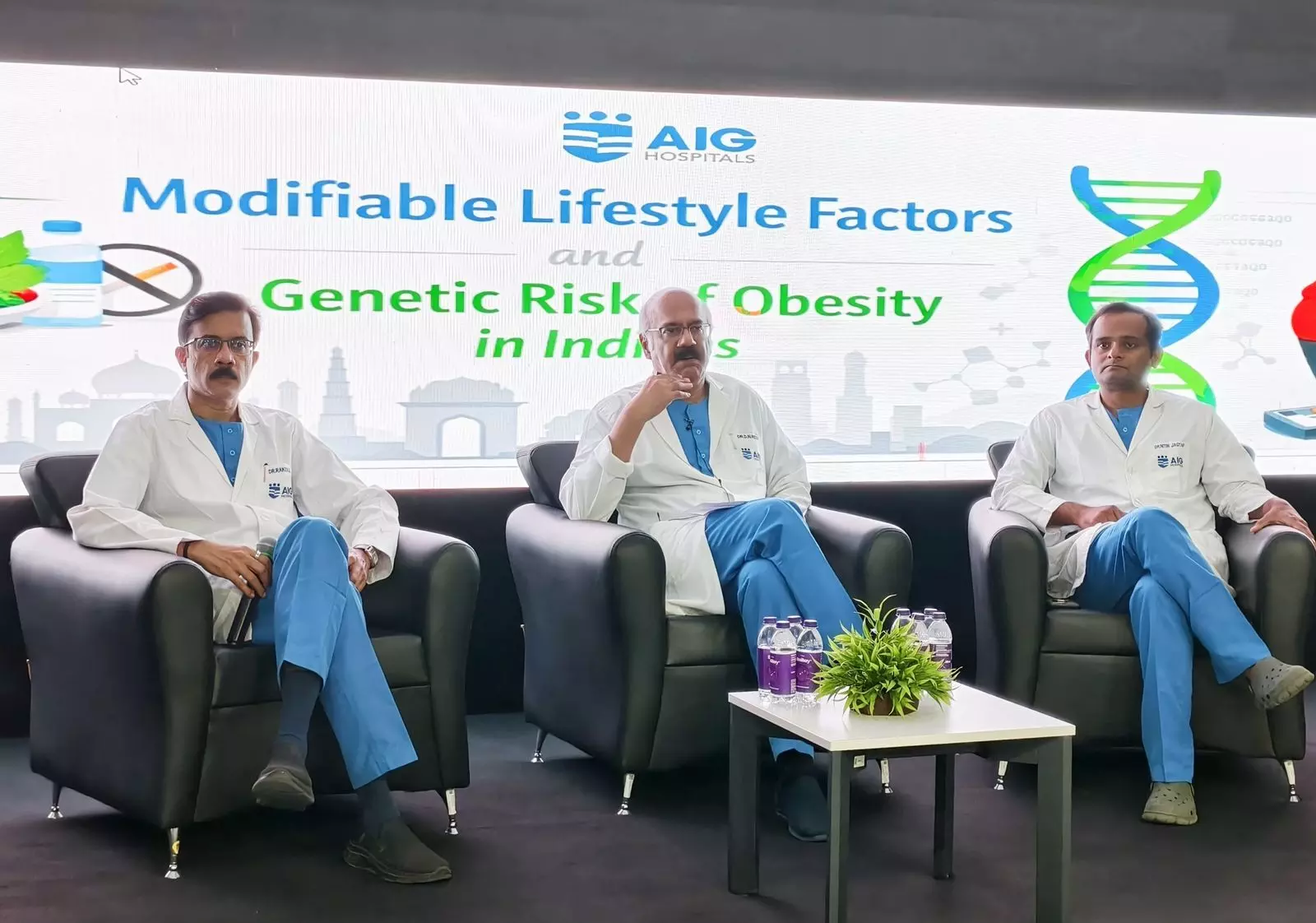
Hyderabad: What is MONO? Hidden health risks even at low BMI flagged by AIG Hyderabad researchers
Hyderabad: Even at lower BMI levels—where an individual might appear ‘thin’ or ‘healthy’—there is a high risk for severe complications like insulin resistance, fatty liver disease and chronic kidney issues.
This was shown in a study published in the Nature journal Scientific Reports by researchers from the Asian Institute of Gastroenterology (AIG) in Hyderabad.
What is the data?
As much as 43.3 per cent of Indians are metabolically sensitive, where even a lower body mass index can lead to insulin resistance, fatty liver disease and chronic kidney issues, making them the Metabolically Obese Non-Obese (MONO).
Indians possess a ‘metabolic sensitivity’
The research, led by AIG Hospitals in collaboration with international experts from Luxembourg and Germany, warns that Indians possess a unique ‘metabolic sensitivity’.
Unlike Western populations, many Indians develop severe health complications like insulin resistance and fatty liver disease at much lower Body Mass Index (BMI) levels.
Multiple genetic variants
“Obesity is influenced by thousands of genetic variants rather than a single mutation,” explained Dr D Nageshwar Reddy, Chairman of AIG Hospitals.
The study utilised data from the UK Biobank and a specialised Indian cohort to create ‘polygenic risk scores,’ which can now help identify high-risk individuals before they develop life-altering diseases.
India is the third most obese nation
The findings come at a critical time.
Recent data from the Economic Survey 2026 and the National Family Health Survey (NFHS-5) paint a sobering picture of India’s health landscape:
1. Third most obese nation: India now ranks as the third most obese country globally, trailing only the US and China.
2. Rising prevalence: Approximately 24% of women and 23% of men in India are now classified as overweight or obese.
3. Childhood concerns: Childhood obesity is surging, with excess weight in children under five rising from 2.1% in 2015-16 to 3.4% in recent years.
4. The ‘metabolic’ paradox: Experts highlighted that nearly 43.3% of Indians fall into the MONO category—meaning they may look thin but have the metabolic profile of an obese person, carrying high risks for chronic kidney and heart diseases.
What is MONO?
Metabolically Obese Non-Obese (MONO) phenotype is being seen in Indians. While Western health standards often rely on Body Mass Index (BMI), the study confirms that Indians possess a unique ‘metabolic sensitivity.’
Even at lower BMI levels—where an individual might appear ‘thin’ or ‘healthy’—there is a high risk for severe complications like insulin resistance, fatty liver disease and chronic kidney issues.
The 43.3% factor: Nearly half of the Indian population falls into this MONO category.
Visceral danger: For Indians, health isn’t about total weight; it’s about visceral fat (fat wrapped around internal organs) and waist circumference.
Lower thresholds: Indians develop metabolic diseases at much lower BMI thresholds compared to European or American populations.
Moving beyond the ‘fat gene’
Dr D Nageshwar Reddy and his team, in collaboration with experts from Germany and Luxembourg, have moved beyond the idea of a ‘fat gene.’
Their research identifies obesity as a polygenic condition, influenced by thousands of tiny genetic variants.
What are Polygenic Risk Scores (PRS)?
By utilising data from the UK Biobank alongside a specialised Indian cohort, researchers have developed Polygenic Risk Scores. This allows doctors to:
Identify high-risk individuals: Spot those genetically predisposed to obesity before they gain weight.
Predict disease: Forecast the likelihood of life-altering diseases like Type 2 Diabetes earlier in life.
Personalise prevention: Move toward ‘stratified screening’ where medical advice is tailored to an individual’s specific genetic makeup.
Early screening and lifestyle shifts are the way ahead
The AIG study emphasised that while genes may ‘load the gun,’ lifestyle ‘pulls the trigger’. Researchers identified four urgent public health priorities for the Indian population:
Start screening early: Metabolic risks often develop at lower BMI levels in Indians; monitoring should begin in young adulthood.
Focus on the waist: In India, waist circumference and visceral fat (fat around organs) are far more accurate indicators of health risk than simple body weight.
Lifestyle is key: Genetic susceptibility is modifiable. Daily patterns of diet and exercise significantly influence how one's genetic risk manifests over time.
Targeted intervention: Lifestyle changes in younger individuals can yield disproportionately large long-term health benefits.
As India faces a growing burden of non-communicable diseases, this genomic research provides a roadmap for more stratified screening and personalised preventive medicine.
“The publication strengthens the evidence base for gene–environment interaction research in Indian populations,” the researchers concluded, “underscoring the growing role of genomic risk modelling in preventive medicine.”
India rankings
- India is the third most obese nation according to the global rankings
- The prevalence of the disease in adults is 24% women and 23% of men
- There is a surge in childhood obesity from 2.1% to 3.4% in India


