Over 10 lakh urban, peri-urban poor accessed free healthcare in 2025: Helping Hand Foundation report
According to the report, nearly half of those served were migrants, often socially excluded and with limited access to healthcare
By - Newsmeter Network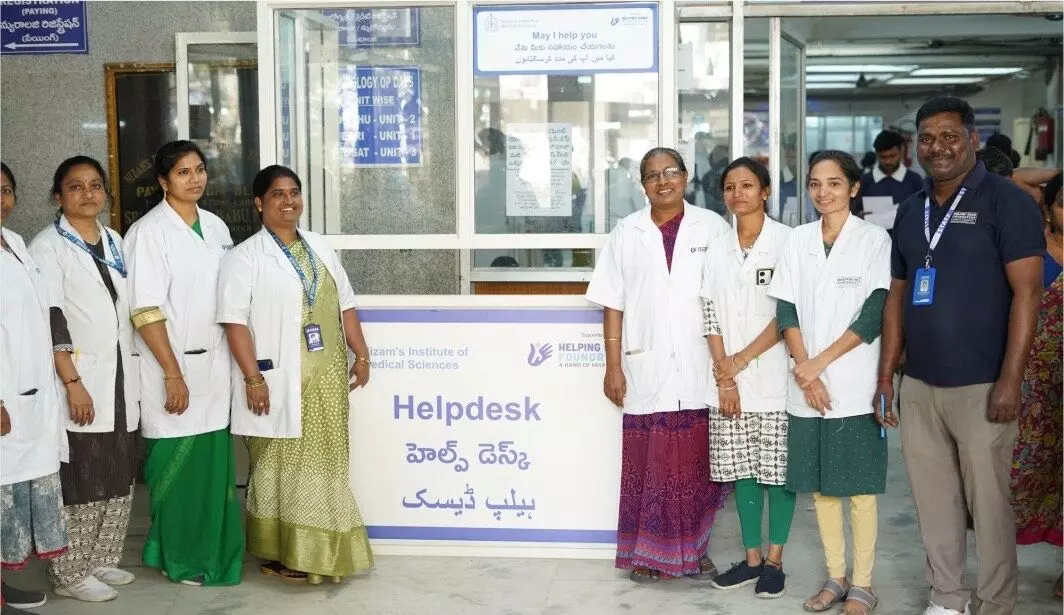
Over 10 lakh urban, peri-urban poor accessed free healthcare in 2025: Helping Hand Foundation report
Hyderabad: A Survey Report 2025 by Hyderabad-based NGO Helping Hand Foundation (HHF) showed that 10.83 lakh urban and peri-urban poor, accessed free and integrated healthcare services over the year.
The data, which included 45 per cent migrants from other states, helped avert an estimated Rs 101.06 crore in out-of-pocket expenditure (OOPE) and reduced pressure on government tertiary hospitals.
Reaching migrants and the urban poor
According to the report, nearly half of those served were migrants, often socially excluded and with limited access to healthcare.
The remaining beneficiaries included daily-wage families, women managing households, elderly individuals with chronic illnesses and children living in underserved settlements.
HHF’s interventions spanned over 150 urban slums and 35+ rural villages, focusing on prevention, early detection, treatment, referral and long-term care.
Community Health Centres drive primary care
At the core of HHF’s model are 20 Community Health Centres and Sub Centres (14 CHCs and 6 Sub Centres). During the year, these facilities recorded 5,83,697 outpatient consultations across general medicine, maternal and child health, gynaecology, dentistry, ophthalmology, diagnostics, physiotherapy and emergency care.
The centres also provided:
• Antenatal care to 13,487+ pregnant women, with over 75 per cent linked to government maternity hospitals for free institutional deliveries
• 9,491+ inpatient and daycare services
• 7,200+ minor operation theatre procedures
With 84.6 per cent of cases managed at the primary care level, the initiative led to a 25–30 per cent reduction in OPD load at government tertiary hospitals. HHF estimates that Rs 82.4 crore in OOPE was averted through these services.
NCD sub-centres and doorstep care
HHF established six Non-Communicable Disease (NCD) Sub Centres in deep urban slums, modelled on Tamil Nadu’s doorstep NCD care approach. These centres handled 6,977 NCD consultations, conducted 2,073 screenings and held 32 awareness sessions.
Through door-to-door surveys, home visits and follow-ups, the model enabled early detection and improved treatment adherence, averting an estimated Rs 76 lakh in OOPE.
Strengthening government hospitals through PPPs
In partnership with the state, HHF operates 17 Help Desks in government hospitals, supporting 7,26,985 patients during the year.
The desks facilitated 1,54,561 ABHA ID registrations under the Ayushman Bharat Digital Mission and helped link patients to government schemes.
Service enhancements included a 24x7 mobility assistance bay with wheelchairs and stretchers at Osmania General Hospital and an e-token OP registration system at Government General Hospital, Khammam.
Compassionate support—food, clothing, medicines, bedside assistance and a helpline for unknown or unaccompanied patients, helped avert Rs 13.7 crore in OOPE.
Rural outreach and AI-enabled screening
HHF’s two rural primary health projects conducted 108+ outreach camps across 35+ villages, reaching 20,866+ individuals. Services included general OPD care, maternal and child health screening, NCD screening, treatment and health education.
For the first time, AI-enabled breast cancer screening and ECG screenings were rolled out in 11 villages in Medchal–Malkajgiri district, alongside structured NCD tracking. These rural interventions averted an estimated Rs 2.6 crore in OOPE.
Specialised care and emergency assistance
The foundation supported over 20 paediatric cardiac surgeries in collaboration with private hospitals and provided financial assistance to more than 2,000 emergency medical cases, spending Rs 4 crore.
Funding and partnerships
HHF received Rs 24.16 crore in donations, primarily through CSR and institutional funding.
About 40 per cent came via foreign contributions under FCRA, with the remainder from Indian partners, including Wipro Foundation, Biocon Foundation, SEED-USA, AMPI-USA and Human Development Trust.
Focus for 2026
Outlining the roadmap ahead, Mujtaba Hasan Askari of Helping Hand Foundation said the organisation will expand community-centric primary healthcare, strengthen the public health system and deepen collaborations.
“Further expanding community-centric primary healthcare, strengthening the public health system, and collaborations with public health organisations will be our key focus in 2026. For this, a robust team of public health experts in maternal and child health, epidemiology and biostatistics has been added,” he said.


