What is dyslipidaemia? Why 70% of Hyderabadis tested have abnormal fat levels in blood?
Apollo Hospitals released its Health of the Nation 2026 report on April 7, drawing on over three million preventive health assessments conducted across its network in 2025.
By - Newsmeter Network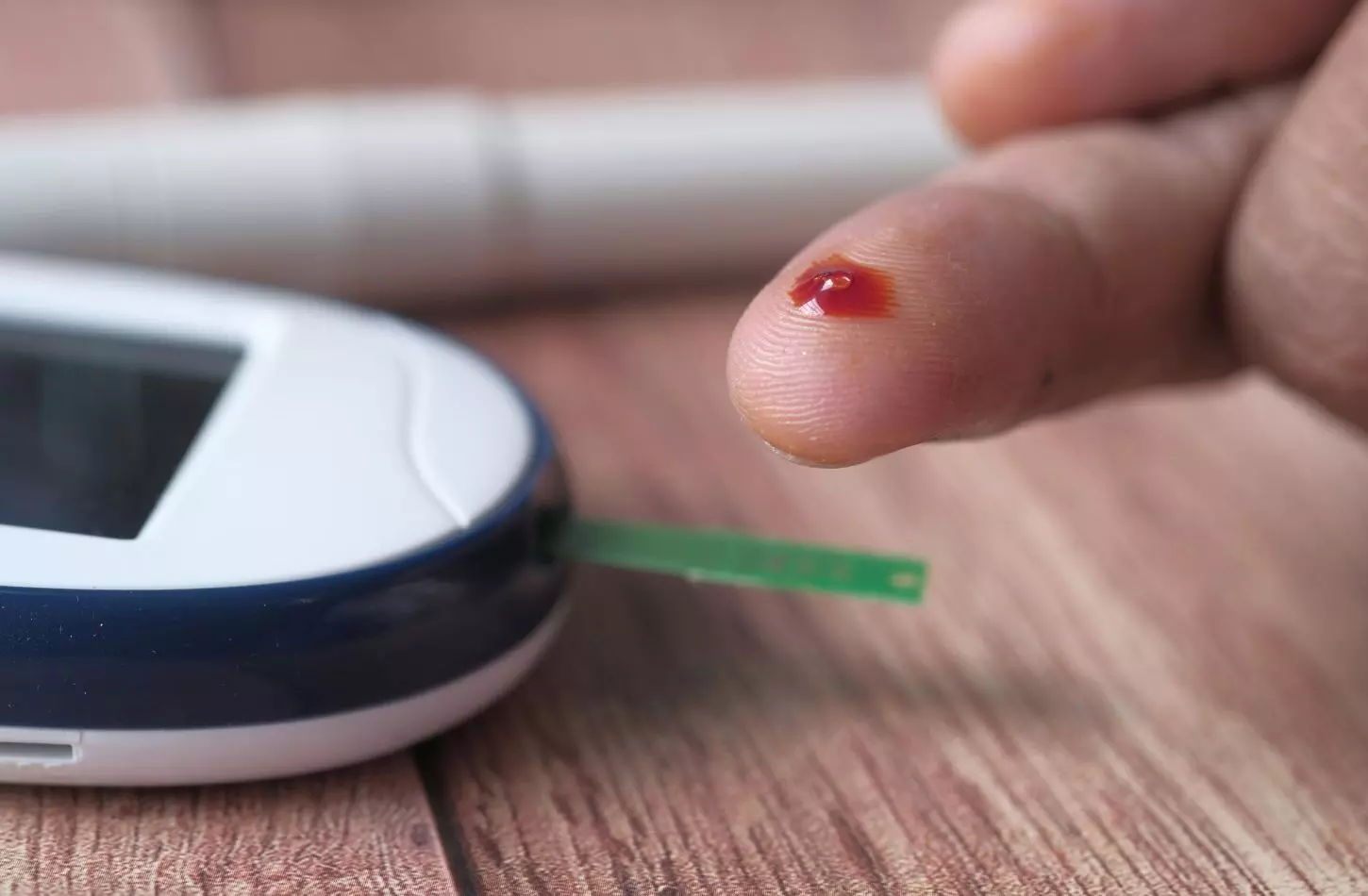
Representative Image
Hyderabad: Ask someone in Hyderabad about their health risks, and they will almost certainly mention diabetes or hypertension. It runs in families. It comes up at every annual check. There is a whole vocabulary around it, HbA1c, fasting sugar, the post-lunch spike.
But a new national health report quietly points to a different number. One that is less discussed, less visible, and in Hyderabad's case, more alarming.
That number is dyslipidaemia, abnormal levels of fat in the blood, or in common man language, high levels of Cholesterol. And in Hyderabad, 70.6% of people screened had it.
The number that stands out
Apollo Hospitals released its Health of the Nation 2026 report on April 7, drawing on over three million preventive health assessments conducted across its network in 2025.
The people in this data are not a random cross-section. They are urban, economically active, health-aware, the kind of people who walk into an Apollo facility for a check-up or get sent by their employer. Educated, working in Hyderabad, in other words.
Seven in ten of them showed abnormal lipid levels.
To put that in context: Bangalore, a city with a broadly comparable demographic profile, comes in at 46.2%. Mumbai at 66.8%. Even Chennai, which carries its own significant metabolic burden, is at 63.2%.
Hyderabad, at 70.6%, is the highest among major cities in the data.
Why cholesterol flies under the radar
Diabetes has cultural visibility. Cholesterol does not.
Your blood sugar makes you feel tired, thirsty, and sluggish. It shows up in symptoms you eventually can't ignore. Abnormal lipids, on the other hand, produce nothing you can feel. No headaches. No fatigue you'd specifically attribute to it. Nothing that sends you to a doctor.
The Apollo report makes a point that lands harder when you pair it with Hyderabad's numbers: among people who underwent coronary calcium scoring, a non-invasive scan that detects plaque build-up in arteries, 45% of completely asymptomatic individuals showed early atherosclerosis.
Nearly half. No symptoms. No warning.
"The right health check, at the right time, can detect heart disease and cancers at Stage 1, when they are most treatable and least life-disrupting," said Dr. Sangita Reddy, Joint Managing Director, Apollo Hospitals. "India cannot afford to remain symptom-led."
The full picture of Hyderabad's health
Dyslipidaemia does not sit alone. In Hyderabad's screened population, 81.3% are overweight or obese by Asian BMI standards. Diabetes stands at 25.3%. Hypertension at 27.3%. Anaemia at 22.1%.
These conditions do not queue up politely. They compound each other.
The report's longitudinal data, tracking nearly 180,000 people over ten years, shows a consistent disease cascade: weight and blood pressure tip first, within 1.4 years of a normal health check. Cholesterol and liver health follow at around 2.8 to 3.0 years. Blood sugar comes last, at 3.3 years.
By the time sugar shows up, the damage has often been accumulating for years.
The fatty liver finding adds to this. Among people with ultrasound-confirmed fatty liver in Apollo's data, 74% had completely normal liver enzyme levels. The standard blood test said nothing was wrong. Only imaging caught it. That cohort showed 87% obesity and 66% dyslipidaemia, a profile that overlaps significantly with what Hyderabad's numbers suggest.
The working Hyderabadi is the person most at risk
The report profiles corporate India specifically, screened through employer health programmes, with an average age of 38. Eight in ten are overweight. Nearly half have prediabetes or diabetes. One in four has high blood pressure.
Weight appears as the single biggest cardiovascular risk driver in four out of five high-risk patients, based on Apollo's AI-powered cardiac risk scoring across 373,000 assessments.
"The desk drives the inactivity. The inactivity drives the weight. The weight drives the risk," the report notes. "At an average age of 38, most of these conditions are still reversible."
Hyderabad's economic growth over the past two decades has come with a specific trade-off: longer desk hours, car-dependent commutes, and a food culture that has expanded well beyond its traditional roots. The report shows that over two-thirds of working Indians are not meeting even the basic threshold of 150 minutes of moderate exercise per week.
What the rest of Telangana tells us
The Telangana state numbers in the report are nearly identical to Hyderabad's, 25.5% diabetes, 27.3% hypertension, 70.6% dyslipidaemia. The city and the state are essentially the same dataset, which reflects how thoroughly Hyderabad dominates the state's screened population.
Warangal is the exception. Hypertension sits at 52.6%, nearly double Hyderabad's rate, while obesity is at 50%, significantly lower. It is a different risk profile in a different kind of city, and it suggests that Telangana's health story outside Hyderabad deserves its own examination.
The window that is still open
"Every woman's well-being is a force multiplier that strengthens families, communities, and the economy," said Dr. Preetha Reddy, Executive Vice Chairperson, Apollo Hospitals. "Women in India continue to carry a significant health burden that often goes undetected."
That observation extends beyond gender. The report's most important finding may be about timing.
Among people under 30 who were prediabetic and took action, 28% reversed to normal blood sugar. Among those over 50 who tried, only 7% did. The steepest disease progression in the data happens between ages 30 and 40, precisely the age band that defines Hyderabad's working population.
Among those who returned for follow-up and acted, 56% with hypertension saw meaningful improvement. 34% with diabetes improved their HbA1c. 26% reduced weight.
"A health check finds the problem," the report states. "Action is what fixes it."
The cholesterol number will not improve on its own. But for most of Hyderabad's working population, it is a number they have probably never been told.


