AIG Hyderabad unveils emergency stroke command centre to provide care before reaching hospital
The system ensures continuous monitoring, live communication, pre-hospital data transmission, advanced patient registration and immediate activation of stroke protocols
By - Newsmeter Network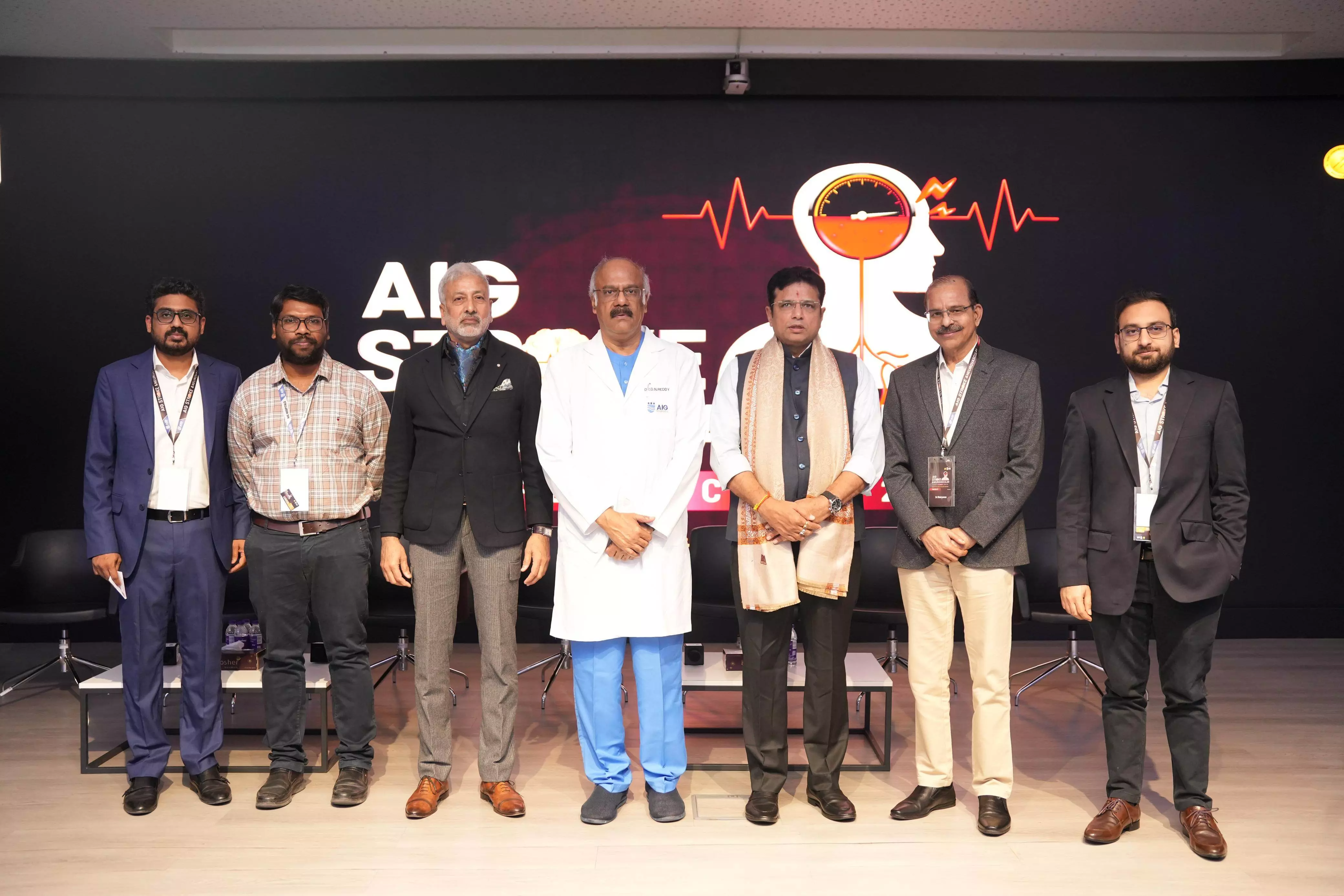
Hyderabad: Asian Institute of Gastroenterology (AIG) has started an integrated stroke command centre for stroke management.
It’s a first-of-its-kind initiative designed to begin stroke management from the moment an emergency call is received, significantly reducing delays in diagnosis and treatment.
The command centre was inaugurated by D Sridhar Babu, Minister for Information Technology, Government of Telangana, in the presence of senior clinicians, healthcare professionals and leadership from AIG Hospitals.
Real-time coordination between emergency response and medical treatment
The Integrated Stroke Command Centre enables real-time coordination between the emergency call centre, advanced life-support ambulances, radiology services, neuro-intervention teams and hospital command staff. The system ensures continuous monitoring, live communication, pre-hospital data transmission, advanced patient registration and immediate activation of stroke protocols even before the patient reaches the hospital.
Speaking on the occasion, Dr D Nageshwar Reddy, Chairman, AIG Hospitals, said, “The launch of this Stroke Command Centre is not an isolated initiative; it is the beginning of a much larger movement by AIG Hospitals towards stroke awareness, early recognition and timely intervention. Stroke outcomes are determined by how quickly care begins and with this integrated approach, we believe Telangana has the potential to emerge as a national model for stroke prevention and management.”
Stroke requires immediate medical attention
Dr Reddy further emphasised that structured systems, public awareness and technology-enabled coordination are critical to reducing stroke-related mortality and long-term disability across communities.
D Sridhar Babu congratulated AIG Hospitals on the forward-looking initiative and highlighted its relevance to public healthcare systems: “Medical emergencies such as stroke demand speed, preparedness and coordination. The Integrated Stroke Command Centre at AIG Hospitals demonstrates how technology and clinical expertise can come together to save lives. Such models are extremely important for our healthcare ecosystem, and I would encourage AIG Hospitals to share its technical knowledge and experience so that similar systems can be adapted within government healthcare setups as well.”
He added that initiatives like these reflect Telangana’s broader vision of leveraging technology for meaningful social impact, particularly in healthcare delivery.
Explaining the clinical concept and execution framework, Dr Chaitanya Koduri, Clinical Lead – Stroke and Neurointerventions, AIG Hospitals, said, “In stroke care, every minute counts. The idea behind the Stroke Command Centre is to eliminate avoidable delays by initiating assessment, monitoring, and decision-making during patient transit itself. From real-time vital monitoring and neurological assessment to advanced imaging readiness and intervention planning, this algorithm ensures that definitive treatment can begin within the shortest possible time window, which ensures prompt care delivery time once the patient reaches the hospital.”
Dr Chaitanya noted that the integrated workflow allows rapid triaging of patients for thrombolysis or thrombectomy, or any other neuro-interventional procedures based on real-time patient data and imaging findings, thereby improving survival and functional recovery.
With the launch of the Integrated Stroke Command Centre, AIG Hospitals reinforces its commitment to advanced emergency care, community-centric healthcare delivery and innovation-driven clinical excellence, the hospital said in a public note.
The hospital group also announced that the Command Centre will serve as a cornerstone for future public awareness campaigns focused on early stroke recognition and timely access to care.


