First phase of Musi Riverfront project Rs 6500 - Rs 7000 crore for developing 21 kms
For years, the Musi River has been a symbol of urban decay, with 27 major nalas discharging untreated sewage directly into its waters
By - Kaniza Garari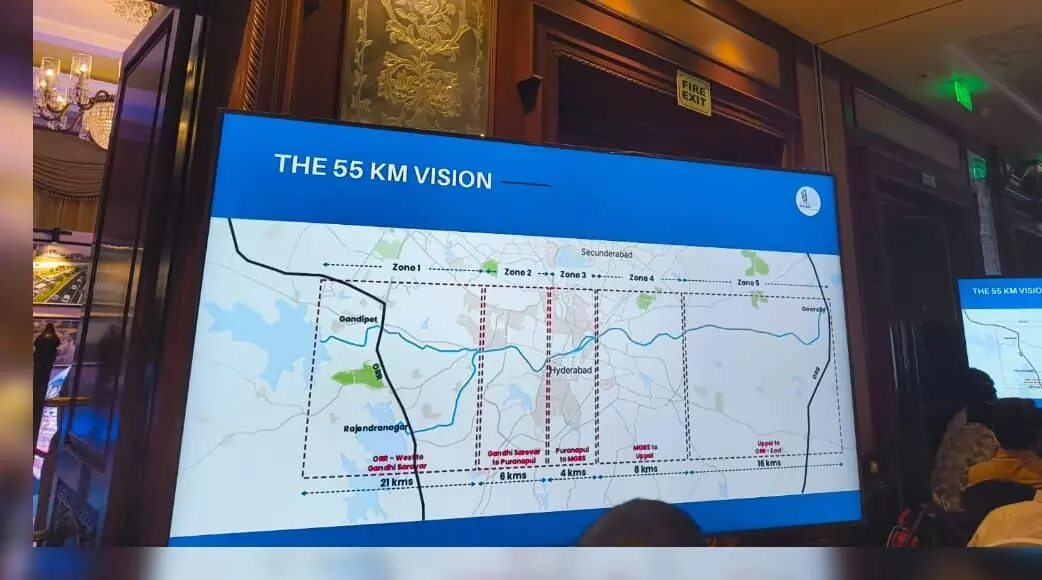
First phase of Musi Riverfront project Rs 6500 - Rs 7000 crore for developing 21 kms
Hyderabad: Aiming to transform a toxic urban drain into a thriving global landmark, the Telangana State government has greenlit the first phase of the Musi Riverfront Development Project on Friday.
With a projected cost of Rs 6,500 to Rs 7,000 crores for the initial 21-kilometer stretch, the project aims to replace decades of neglect with a sustainable ‘blue and green economy.’
27 major nalas discharge untreated sewage into Musi
For years, the Musi River has been a symbol of urban decay, with 27 major nalas discharging untreated sewage directly into its waters.
The 2020 floods, which claimed 50 lives, underscored the urgent need for a hydrological overhaul.
Under the leadership of EV Narsimha Reddy, IAS, Managing Director of the Musi Riverfront Development Corporation (MRDCL), the plan moves beyond ‘AI-generated dreams’ toward a data-driven field study and implementation, the government said.
The vision involves a 55-km master plan that integrates water retention, flood mitigation and an East-West mobility corridor.
What is the restoration plan?
Key components include:
Sewage Prevention: Massive trunk pipelines and specialised Sewage Treatment Plants (STPs) to stop the flow of untreated waste.
Bapu Ghat Transformation: The development of Gandhi Sarovar at the confluence of the Musi and Esi rivers, featuring a world-class monument and public spaces.
Multi-Use Buffer Zones: Creating accessible riverfronts with parks, cycling tracks and walkways.
Hydrological Stability: Bringing Godavari water to the Musi to ensure a perennial, clean flow.
Addressing displacement and climate change
With over 1,000 families displaced and the shadow of climate-induced urban flooding looming, the government said it is pushing for an integrated departmental approach.
This involves not just beautification, but a complete overhaul of land use and the creation of marquee infrastructure projects to catalyse the city’s economy.
“Hyderabad will be a blue and green economy,” Narsimha Reddy stated at the event, emphasising that the 1,000 lakes of the region must be linked to a clean, flowing river system. By treating the river as the city’s ‘spine,’ the project seeks to ensure that future generations are protected from the disasters of the past while enjoying a vibrant, accessible waterfront.


