INS Vikrant to lead International Fleet Review in Vizag; ships from 19 nations expected to attend
International Fleet Review (IFR) will be held at Visakhapatnam from February 18
By - Sistla Dakshina Murthy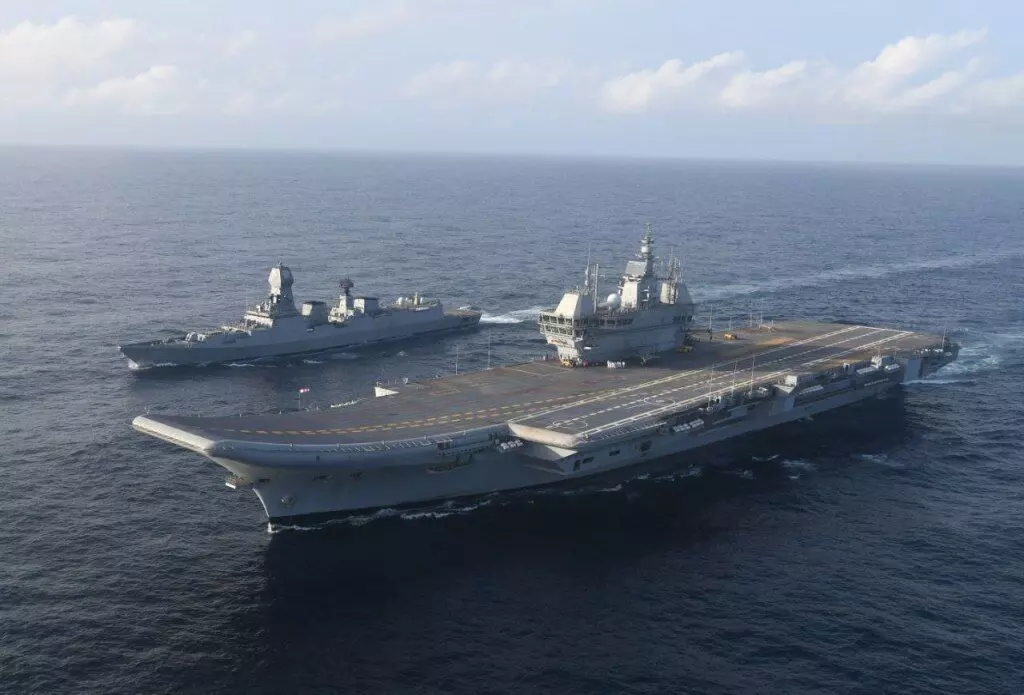
INS Vikrant to lead International Fleet Review in Vizag; ships from 19 nations expected to attend
Visakhapatnam: India’s indigenous aircraft carrier INS Vikrant, which played a decisive role during Operation Sindoor, will be the centrepiece of the International Fleet Review (IFR) to be held off Visakhapatnam from February 18.
The high-profile naval event, to be followed by the multinational exercise MILAN‑26, is expected to draw warships, aircraft and delegates from dozens of friendly foreign nations, underscoring India’s growing maritime stature.
INS Vikrant: From operations to showcase
During Operation Sindoor, the Vikrant Carrier Battle Group formed the backbone of the Indian Navy’s offensive deterrent posture.
Deployed in the northern Arabian Sea, it played a critical role in India’s strategy of compellence, forcing the Pakistan Navy into a defensive posture.
For the IFR, INS Vikrant will sail to the Bay of Bengal, transitioning from active operations to ceremonial review and international engagement.
Indigenous capability on display
Measuring 262.5 metres in length and 61.6 metres in width, with a displacement of around 45,000 tonnes, INS Vikrant can reach speeds of up to 28 knots.
The carrier accommodates about 1,600 personnel, including women officers, and can operate up to 30 aircraft. Its air wing includes MiG-29K and MiG-29KUB fighter jets, Kamov-31 airborne early warning helicopters, MH-60R multi-role helicopters, Chetak helicopters and Advanced Light Helicopters (ALH).
Legacy behind the name
INS Vikrant derives its name from India’s first aircraft carrier, INS Vikrant (R11), decommissioned in 1997.
The original carrier earned a place of pride in Indian naval history for its role in the 1961 Goa Liberation Operation and the 1971 Indo-Pak War, making ‘Vikrant’ synonymous with India’s maritime power.
What the fleet review represents
The International Fleet Review is a ceremonial assembly of naval delegations, ships, submarines and aircraft from across the world, during which the President of India, as Supreme Commander of the Armed Forces, reviews the fleet.
The event showcases maritime strength, fosters cooperation and camaraderie and reaffirms sovereign oversight at sea. India previously hosted IFRs in Mumbai in 2001 and in Visakhapatnam in 2016.
VVIP presence and global participation
President Droupadi Murmu will review the Indian Navy’s capabilities during the IFR, an occasion also referred to as the President’s Fleet Review, held once during a President’s tenure.
Ships from 19 countries, including Sri Lanka and Iran, along with around 4,000 delegates, are expected to attend. The event will also be attended by Defence Minister Rajnath Singh, Andhra Pradesh Governor Justice S. Abdul Nazeer (retd) and Chief Minister N. Chandrababu Naidu.
Preparations underway
Senior officers of the Eastern Naval Command, led by Chief of Staff Vice Admiral Sushil Menon, have held coordination meetings with Andhra Pradesh Chief Secretary K Vijayanand to finalise arrangements.
Officials said many ships, aircraft and delegates from various countries would participate, including three ships and about 150 delegates from the United States, Germany and France. From India, around 90 ships, 45 aircraft and nearly 600 delegates will be part of the event.
The State government has assured full cooperation, with instructions issued to ensure security, logistics and civic arrangements in view of the presence of top constitutional authorities.
MILAN-26: Strengthening maritime cooperation
Following the IFR, Visakhapatnam will host the 13th edition of MILAN from February 19 in the Bay of Bengal. Invitations have been extended to over 135 countries.
The exercise aims to strengthen professional bonds among navies, promote the sharing of best practices and enhance interoperability through large-scale multilateral maritime operations.
A growing tradition
India began opening its ports to allied navies in 2001 to demonstrate its blue-water capabilities. The first IFR that year saw 97 warships from 20 countries.
The 2016 edition in Visakhapatnam marked the largest gathering of warships in Indian waters, with about 100 ships from 50 countries.
With INS Vikrant at the centre stage, the upcoming IFR and MILAN-26 are expected to project India’s expanding naval capability and its commitment to cooperative maritime security.


