Mulugu: Massive cluster of ancient ‘Rakasi’ burial sites discovered in Telangana
As per the Telangana Heritage Department, the burials found prominently on Kappalayi Gutta are identified as "dolmen" structures.
By Newsmeter Network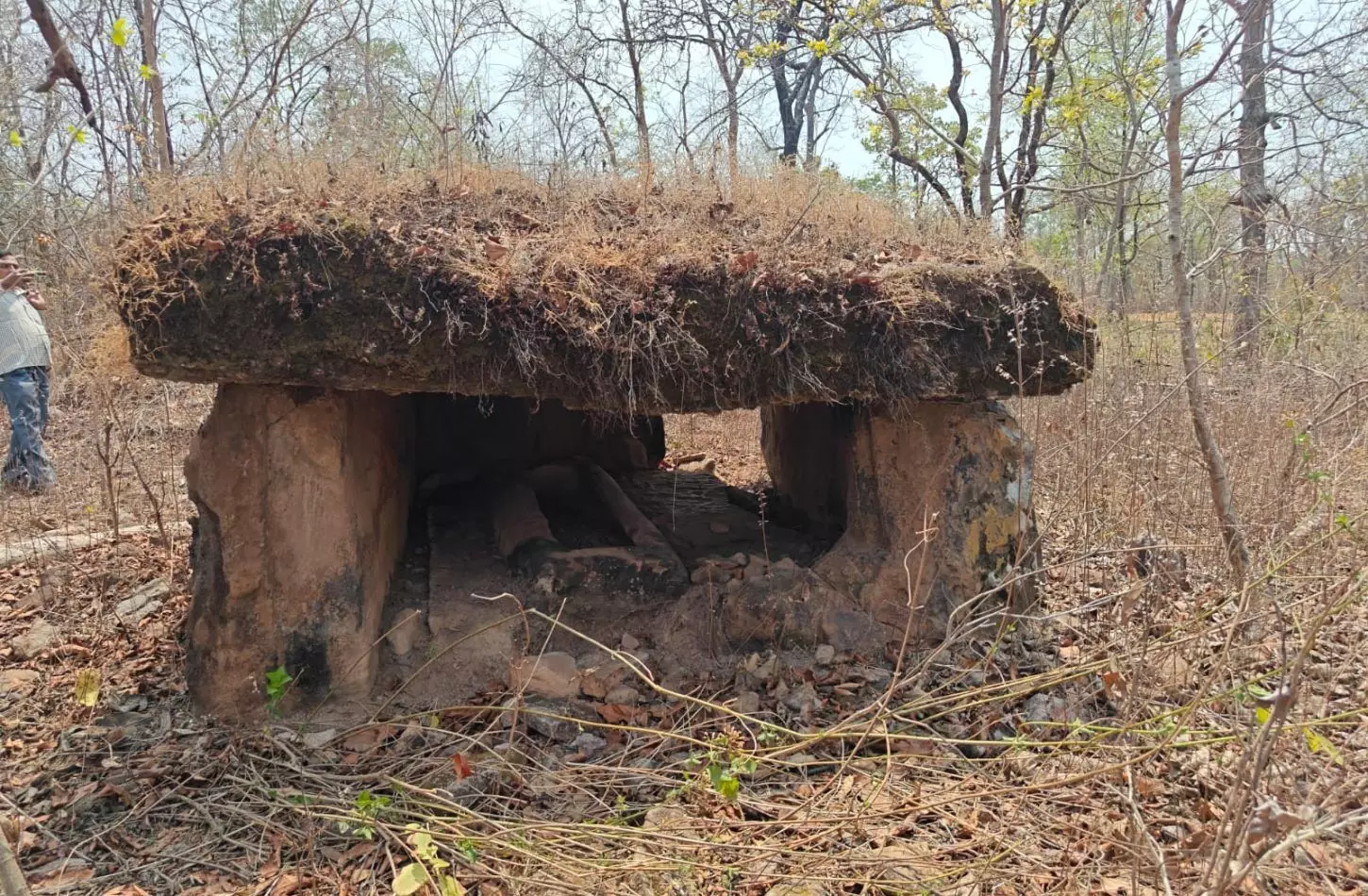
Telangana archaeologists discover ancient ‘Rakasi’ burial sites in Mulugu
Mulugu: A technical team from the Telangana Heritage Department has discovered a vast cluster of ancient human burial sites in the Godavari River basin of Mulugu district.
Located near Motlagudem village in Tadvai Mandal, approximately 120 kilometers from Warangal, these structures, locally known as `Rakasi Bandalu’ (giant stones) and `Rakasi Guhalu’ (giant caves), provide a rare glimpse into the social structures and customs of early humans.
An ‘Ancient Township’
Under the guidance of Special Chief Secretary Jayesh Ranjan, the heritage team, led by Director Acharya Arjun Rao, Deputy Director Dr. P. Nagaraju, and OSD A. Raju, conducted a field survey.
As per the Telangana Heritage Department, the burials found prominently on Kappalayi Gutta are identified as "dolmen" structures. Constructed using roughly hewn sandstone slabs, these monuments stretch across areas ranging from 4 to 25 meters.
Each site typically features four massive vertical stone slabs topped by a capstone weighing anywhere between 10 and 20 tons. Inside these structures, archaeologists discovered small stone troughs resembling sarcophagi, all enclosed within a circular stone boundary wall with a radius of approximately 10 feet.
The spatial planning of these sites, with individual burials spaced 5 to 100 feet apart, suggests the presence of a well-organized ancient township, says the Heritage department officials. According to the technical team, the site at Kappalayi Gutta, spread across nearly 100 acres, could potentially be one of the largest clusters of dolmen burials in India.
Threat of neglect
While these megalithic structures stand as a testament to the engineering prowess of our ancestors, comparable in their spiritual significance to the pyramids of Egypt, they are currently facing the threat of neglect.
The heritage team reported that many of these sites have deteriorated over time. Local encroachment has led to the dismantling of stone slabs for house construction, and some of the ancient stone troughs have been repurposed as livestock water containers.
The team noted that what were once sacred memorial sites have now become overgrown forest areas, occasionally serving as habitats for wild animals.
Ancient beliefs
The discovery extends across several areas in the Eturnagaram agency and Mangapet Mandal, including sites in Damaravai, Jaggaram, Gangaram, Mallur Gutta, and Komuraram.
These burial traditions, which reflect the prehistoric belief in life after death and rebirth, are consistent with similar megalithic cultures found across South India, including Tamil Nadu, Karnataka, Andhra Pradesh, and Kerala, according to the Heritage department.


