New anti-piracy warning to play in theatres across Telangana before movies
The message is intended to create awareness among audiences about the legal consequences of piracy and cam-cording inside cinema halls
By - Newsmeter Network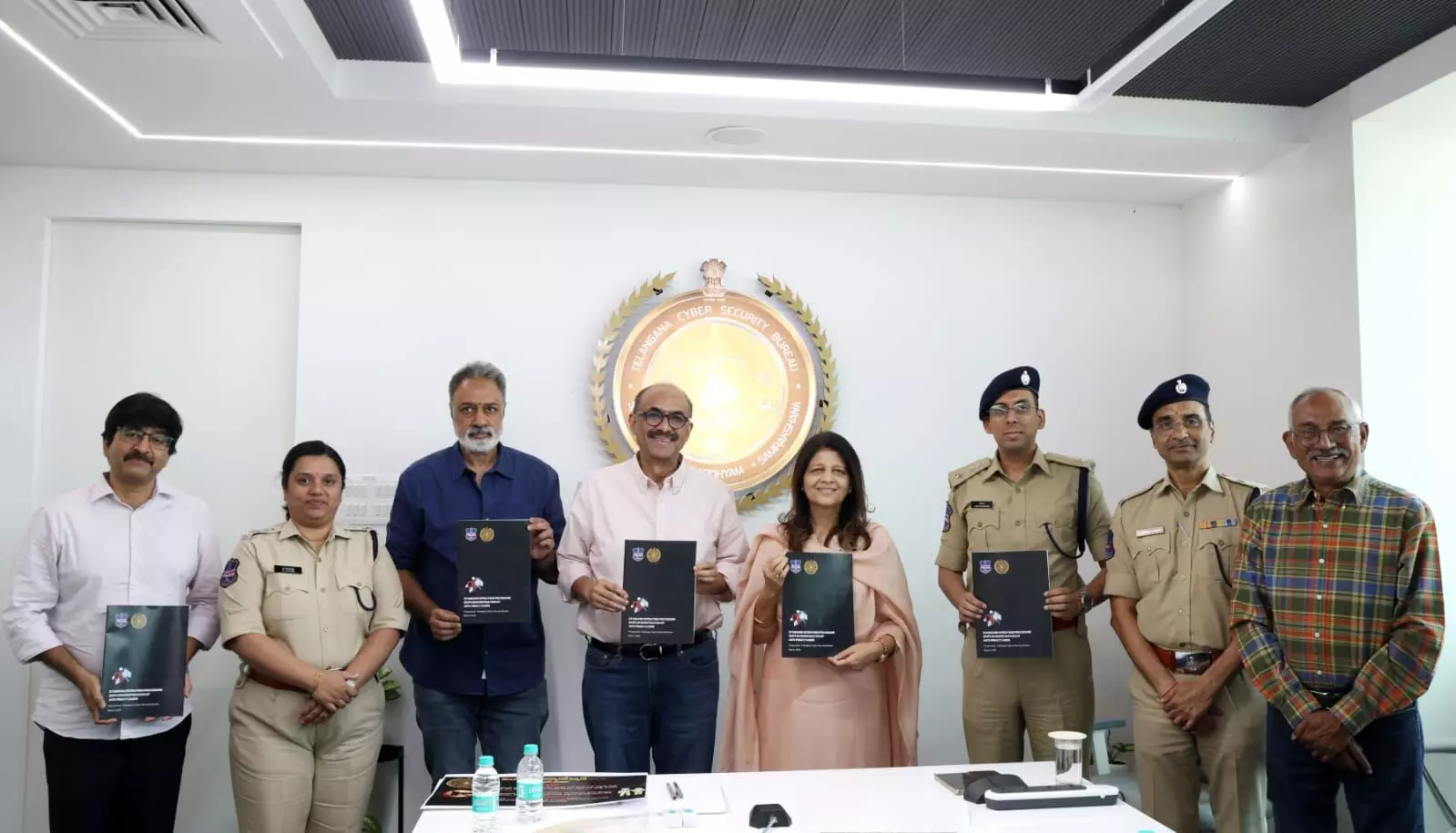
New anti-piracy warning to play in theatres across Telangana before movies
Hyderabad: In a move to curb the growing menace of film piracy, the Telangana Cyber Security Bureau (TGCSB), in collaboration with the Telugu Film Chamber of Commerce (TFCC), on Monday launched a new anti-piracy disclaimer to be displayed before movie screenings across theatres.
It also unveiled a Standard Operating Procedure (SOP) for investigating piracy cases.
The initiatives were launched by TGCSB Director Shikha Goel, IPS, and TFCC President Daggubati Suresh Babu during a stakeholder consultation meeting held in Hyderabad to strengthen cooperation between law enforcement agencies and the film industry in tackling digital piracy.
Anti-piracy unit formed to tackle movie leaks
The TGCSB had earlier set up a dedicated Anti-Piracy Unit on January 5, in partnership with the Telugu film industry, to combat the illegal recording and distribution of films.
As part of the new initiative, an anti-piracy disclaimer will be screened before every movie in theatres. The message is intended to create awareness among audiences about the legal consequences of piracy and camcording inside cinema halls.
The warning states that film piracy and unauthorised recording are punishable offences and can attract imprisonment of up to three years, a fine of up to Rs 3 lakh, or 5 per cent of the film’s production cost.
SOP to strengthen piracy investigations
TGCSB also released a Standard Operating Procedure (SOP) for the investigation of anti-piracy cases, aimed at strengthening enforcement against digital film piracy.
The SOP provides a structured framework for:
- Registration of FIRs under the Copyright Act, Cinematograph Act and Information Technology Act
- Forensic examination of pirated content
- Identifying source theatres using forensic watermarking and server data
- Coordination with digital service providers and industry stakeholders
- Preservation of electronic evidence
- Blocking of infringing URLs under IT Rules
Officials said the guidelines will help investigators respond faster and handle piracy cases more effectively.
Huge financial losses due to piracy
During the consultation, stakeholders discussed the scale of losses caused by piracy. Industry estimates suggest that the Telugu film industry loses nearly Rs 13,700 crore annually, while the Indian film industry suffers losses exceeding Rs 22,400 crore.
Investigations by law enforcement agencies indicate that piracy usually originates from two major sources:
1. Leakage of high-quality film content before release at post-production or digital service provider levels
2. Cam recording inside theatres during screenings, which accounts for many cases.
Industry and exhibitors urged to step up vigilance
The meeting also emphasised preventive measures across the film distribution chain.
These include secure handling and transmission of film content, restricted access through authenticated systems, vigilance by theatre staff to prevent cam-cording, and retaining CCTV footage for at least one month after a film’s release.
The implementation of theatre-specific forensic watermarking was also highlighted as a key tool to trace the origin of pirated copies.
‘Piracy is now an organised cybercrime’
Speaking on the occasion, Shikha Goel said film piracy has evolved into a highly organised cybercrime ecosystem and requires coordinated action from both law enforcement and the industry.
She noted that the newly introduced SOP would enable faster and more structured investigations, while the anti-piracy disclaimer would help build public awareness and act as a deterrent against illegal recording and distribution of films.
Daggubati Suresh Babu highlighted the severe economic impact of piracy on the film ecosystem and stressed the need for collective responsibility from all stakeholders involved in film production, distribution and exhibition.
Stronger coordination key to curb piracy
Rajkumar Akella, Chairman of the Anti-Video Piracy Cell of TFCC, emphasised that closer coordination between the film industry and law enforcement agencies is essential to dismantle piracy networks.
TGCSB officials said the newly introduced measures are expected to strengthen deterrence, improve investigative efficiency and protect the livelihoods of thousands of people associated with the film industry.


