NIA chargesheets absconding terror accused Abubakar Siddique in Andhra explosives, IED training case
According to the NIA, the accused had been living in Rayachoty town of Annamayya district using forged documents and an assumed identity since absconding from Tamil Nadu in 1999
By - Newsmeter Network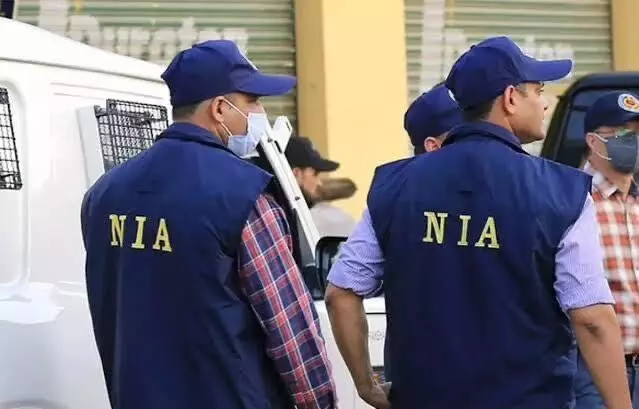
Representational Image
Vijayawada: National Investigation Agency (NIA) has filed a chargesheet against a key accused in a terror-related explosives case, exposing a decades-long trail of violence and clandestine activities spanning multiple states.
Chargesheet filed in explosives case
The chargesheet was submitted on Friday before the NIA Special Court in Vijayawada against, under provisions of the Unlawful Activities (Prevention) Act, Bharatiya Nyaya Sanhita (BNS), the Explosive Substances Act, 1908, and the Arms Act.
Living under a false identity
According to the NIA, the accused had been living in Rayachoty town of Annamayya district in Andhra Pradesh using forged documents and an assumed identity since absconding from Tamil Nadu in 1999. Investigations revealed that he was wanted in as many as 14 criminal cases in Tamil Nadu.
Arrest and transfer of investigation
Abubakar Siddique was first arrested by Tamil Nadu Police on July 1, 2025, after his true identity was confirmed. In August 2025, Andhra Pradesh Police arrested him in connection with the explosives seizure case. The probe was later handed over to the NIA for a comprehensive investigation.
Terror plans and radicalisation network
The NIA’s ongoing investigation found that the accused had illegal explosive substances and prohibited arms, allegedly intended for carrying out terror acts.
At the time of his arrest, he was reportedly engaged in selecting targets, radicalising and recruiting vulnerable youth, and training them in the preparation of Improvised Explosive Devices (IEDs).
Long history of violent offences
The chargesheet details Siddique’s alleged involvement in multiple serious crimes in Tamil Nadu over the past three decades. These include sending parcel bombs in 1995, planting bombs at five locations across three cities in 1999, illegally transporting explosives by train the same year, harbouring absconders linked to terror acts, planting a bomb during a prominent leader’s rath yatra in 2011, and the brutal killing of several political leaders during 2012–13.
Further probe underway
The NIA said further investigation is continuing to uncover the full extent of the conspiracy, identify associates, and dismantle any remaining networks linked to the accused.


