Telangana key transit hub in ganja smuggling: Over 21,000 plants, 24,000 kg of drug seized in 4 years
A significant portion of ganja cultivated in Odisha is trafficked through Telangana, particularly via Khammam and Bhadrachalam routes, before being supplied to several states
By - Sistla Dakshina Murthy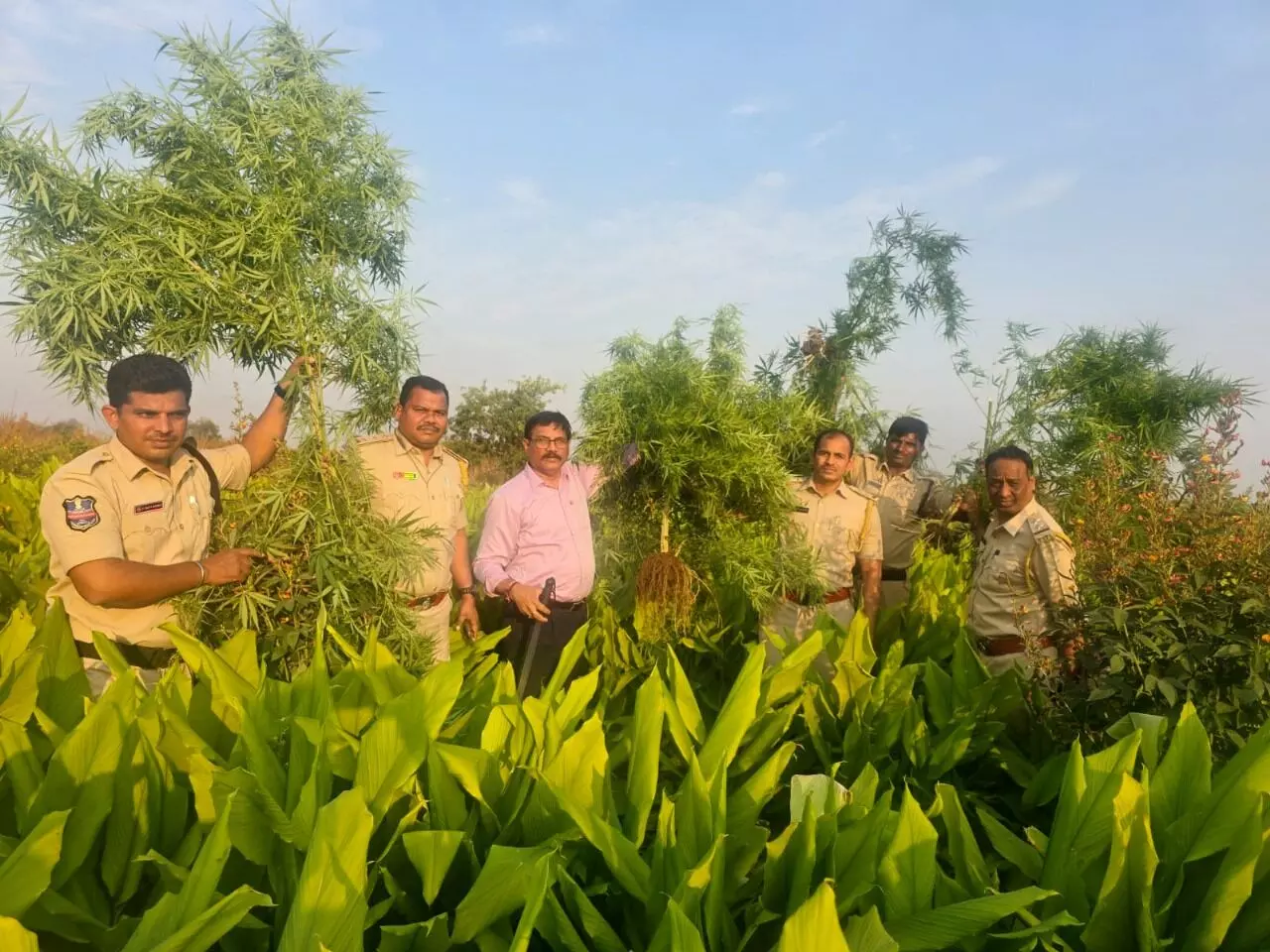
Telangana key transit hub in ganja smuggling: Over 21,000 plants, 24,000 kg of drug seized in 4 years
Hyderabad: The Telangana Excise Department seized as many as 21,050 cannabis plants and 24,245 kg of dry ganja between 2021 and 2025, reflecting the scale and persistence of the illegal trade.
Similar large-scale seizures by other enforcement agencies indicate that ganja cultivation, trafficking and consumption continue to expand across districts, posing a serious challenge to law enforcement.
Seizures highlight alarming trend
Recent cases point to the widening footprint of cultivation. In Hyderabad, enforcement officials seized cannabis plants from the Malakpet Gunj area, where they were being grown on rented premises by migrants.
In Vikarabad district, excise officials unearthed over 100 cannabis plants worth several lakhs in a village of Tandur mandal. Similar incidents have been reported from Medak, Sangareddy and Adilabad districts.
Telangana as transit corridor
According to the Excise department officials, a significant portion of ganja cultivated in Odisha is trafficked through Telangana, particularly via Khammam and Bhadrachalam routes, before being supplied to several southern and northern states.
According to official estimates, traffickers procure cannabis in Odisha for Rs 5,000 to Rs 10,000 per kilogram and sell it in destination states for prices reaching up to Rs 1 lakh per kilogram, making the trade highly lucrative and difficult to dismantle.
From herbal remedy to dangerous intoxicant
Cannabis, once used under strict medical supervision to treat chronic pain and sleep disorders, has today transformed into a widely abused narcotic.
What earlier grew naturally in remote forests and hilly tracts has now entered agricultural fields, residential colonies and city rooftops, driven by organised networks and rising demand.
Despite sustained crackdowns by police, excise and intelligence agencies, cannabis continues to spread from urban centres to rural pockets, increasingly targeting young people.
Odisha and Andhra Pradesh: Key source zones
Large-scale cannabis cultivation is concentrated in the forested and hilly regions of Odisha and the Agency (Manyam) areas of Visakhapatnam district in Andhra Pradesh. In the Visakhapatnam Agency, a variety known as Seelavathi is widely cultivated due to its high potency and strong market demand.
In the illegal market, five grams of cannabis sells for around Rs 500, while one kilogram fetches close to Rs 1 lakh, making it a highly profitable crop for cultivators and traffickers alike.
Easy money, shattered futures
What often begins as casual experimentation gradually leads to addiction. Many users, unable to sustain the habit financially, turn into peddlers. Several eventually land in jail, destroying their own futures and inflicting lasting trauma on their families.
Others, drawn by the lure of quick money, enter the cannabis trade, only to spend years caught in a cycle of arrests, prosecutions and imprisonment.
Cultivation on a massive scale
In Odisha’s remote and mountainous regions, cannabis is cultivated across thousands of acres. Each acre typically hosts 450 to 500 plants, yielding produce worth Rs 7 lakh to Rs 10 lakh.
Similar large-scale cultivation is estimated in the Visakhapatnam Agency areas as well. The crop follows a four-month cycle, with harvesting beginning in November and December.
Forest dump points and smuggling routes
Cannabis harvested in Odisha is stored at concealed dump points deep inside forests, particularly along routes passing through Malkangiri district. From these locations, consignments are moved to different states based on demand.
Smugglers rely on private vehicles, buses and trains to transport the contraband. While some are intercepted and jailed, others evade detection, earn lakhs and often return to the trade even after earlier arrests.
From forests to fields to rooftops
Cannabis cultivation is no longer confined to forest areas. In several regions, it is being grown alongside crops such as cotton, turmeric and pulses.
In metropolitan cities like Hyderabad, some migrant workers from Bihar, Odisha and Rajasthan have begun cultivating cannabis plants on rented rooftops and in godowns. What starts as cultivation for personal use frequently evolves into organised illegal trade.
What are the government’s efforts to stop cannabis usage?
Recognising the grave threat posed by cannabis abuse, the Central Government brought cannabis under the Narcotic Drugs and Psychotropic Substances (NDPS) Act, 1985.
Cultivation, transportation, sale and consumption of cannabis are criminal offences. Yet, its continued availability in illegal markets remains a major concern for enforcement agencies.
Peak season for trafficking
Cannabis cultivated in Odisha becomes ready for sale from November to December. Trafficking peaks between December and January, when large quantities are illegally transported from the Malkangiri district to other states.
Excise department steps up vigil
“The Excise Department has intensified efforts to prevent cannabis from entering Telangana. Given the increased risk of inflow from Odisha during the next two to three months, checkpoints have been strengthened and special operational arrangements put in place. Along with the Excise Department, TGNAB, police, EAGLE and other intelligence agencies are closely monitoring cannabis cultivation and trafficking,” said Director of Excise Enforcement (Hyderabad) Shahnawaz Qasim.


