Telangana cancelled only 16 food licences in three years: Centre
The data, submitted to Parliament as part of a national food safety enforcement report tells a story of near-total inaction by Telangana's designated food safety authorities.
By - Newsmeter Network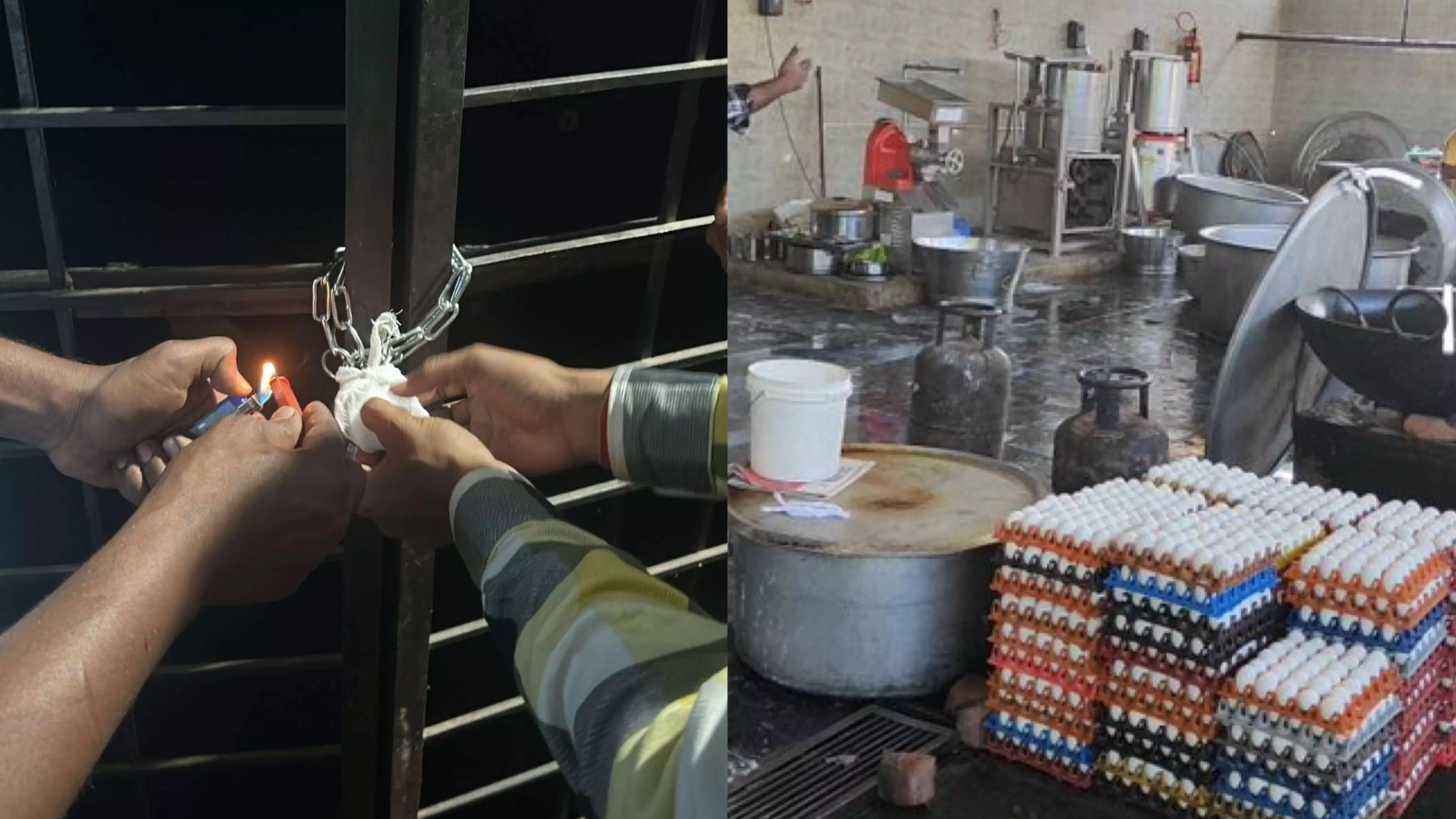
Expired food items to cockroach infestation: Licence of Sri Chaitanya Educational Institutes, Madhapur central kitchen suspended
Hyderabad: When officers from Mailardevpally police station walked into a house in Subhan Colony, Ali Nagar, they were in for a big shock. The house was masking an illegal factory which was turning spoiled ginger paste into branded food products, destined for retail shelves across Hyderabad.
Investigators seized 675 kilograms of adulterated paste, 200 labels bearing the brand name "Seven Cooks," and 1.5 kg of Xanthan Gum powder used to bulk out the contaminated mix. Two men identified as Mohammed Ziyauddin (45), owner of Seven Cooks, and Mohammed Mazhar Ali (47), owner of Arjun Enterprises, the distribution arm, were arrested.
Two FIRs have been registered at Mailardevpally Police Station under Sections 318(4) and 274 of the Bharatiya Nyaya Sanhita.
The product had already reached local shops across the city before anyone intervened.
Deputy Commissioner of Police (Rajendranagar Zone) Srinivas said after the raid that "strict action will be taken against those endangering public health by manufacturing and selling adulterated food products."
The pledge came from the police, not from the Commissioner of Food Safety. That distinction matters enormously when set against three years of enforcement data tabled in Parliament by the Union Minister of State for Health, Shri Prataprao Jadhav.
The numbers parliament was shown
The data, submitted to Parliament as part of a national food safety enforcement report covering 2022-23 to 2024-25, tells a story of near-total inaction by Telangana's designated food safety authorities.
In three years, Telangana tested 14,312 food samples. It cancelled 16 licences. It filed zero criminal cases.
The downward trend in 2024-25 is particularly striking: sampling fell by 46 per cent in a single year, civil cases dropped by 71 per cent, and licence cancellations hit a new low of just one. It is even though the state is home to 40 million people.
What the law actually requires
The Food Safety and Standards Act, 2006, is not toothless. In his parliamentary submission, Jadhav confirmed that the Act empowers authorities to pursue "punitive measures" including criminal prosecution and licence cancellation against defaulting Food Business Operators. The FSSAI, he noted, "conducts regular localised and targeted special enforcement and surveillance drives" throughout the year via state food safety authorities.
On paper, Telangana's Food Safety Officers, who work under the Commissioner of Food Safety, are legally mandated to collect samples, refer violations for prosecution, and cancel licences of repeat offenders. In practice, the data suggests something far more passive is happening.
Jadhav told Parliament that "State Food Safety Authorities are primarily responsible for enforcement at the field level." If states are primarily responsible for enforcement, and Telangana's enforcement is collapsing year on year, the blame falls on the state.
How Telangana compares
The national data make clear that Telangana is not a victim of some systemic national trend. Other states are enforcing the law.
Kerala, with a comparable annual sample count of roughly 10,000, secured 206 criminal convictions in 2024-25 alone. Karnataka recorded 34. Even Chandigarh, a Union Territory of barely one million people, recorded 41 convictions from just 374 samples. Andhra Pradesh, which shares Telangana's geography, food culture, and regulatory architecture, has consistently pursued criminal enforcement every single year. Telangana has not pursued it once.
The contrast is not statistical noise. It reflects a deliberate or deeply negligent difference in enforcement will.
The spoiled ginger paste seized on Wednesday was already in shops across Hyderabad before police acted. The food safety department, which exists precisely to prevent that, had filed zero criminal cases in the three years prior. One cancelled licence. Three years. Forty million people.


