Aras Cypress: The 4,825-year-old tree that predates the pyramids
Its massive trunk and dense evergreen crown have made it more than a tree; it is a national symbol, a spiritual icon and a reminder of gritty endurance against all odds
By - Beyniaz Edulji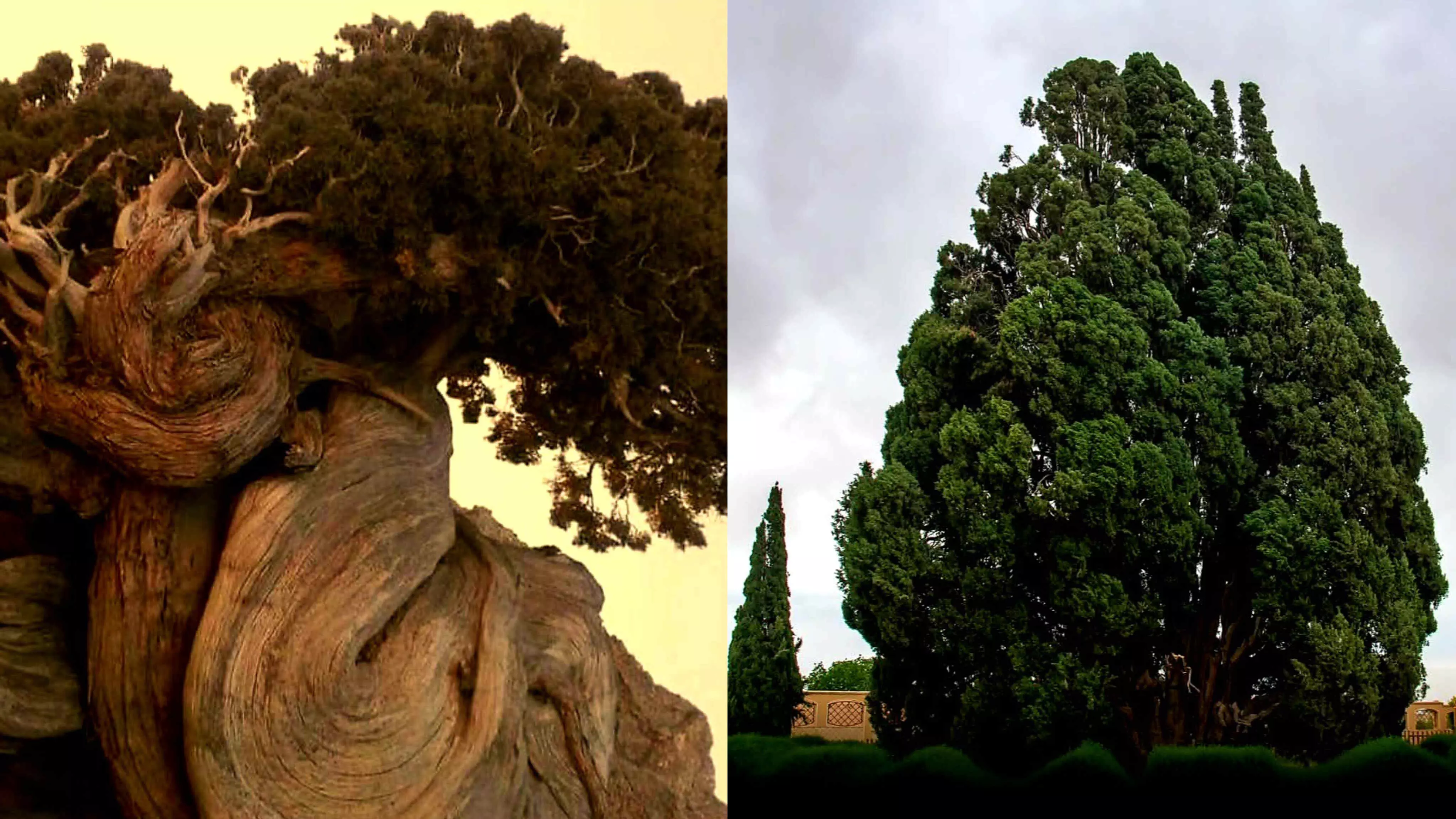
Hyderabad: In the heart of Iran stands the Aras Cypress, also known as Sarv-e Abarkuh. It is more than 4,825 years old, making it one of the oldest living things on Earth.
Growing in the city of Abarkuh, this ancient Cypress has outlived empires, monarchs, invasions and nearly every chapter of recorded human history.
More than a tree
Its massive trunk and dense evergreen crown have made it more than a tree; it is a national symbol, a spiritual icon and a reminder of gritty endurance against all odds.
It was already old when the pyramids were young and it’s still alive today. Scientists believe that its extraordinary age comes from Iran’s dry climate and the tree’s unique genetic features. Season after season, century after century, it continues to grow steadily.
A living monument
Visitors travel from around the world to see it and to touch something that has seen almost 5,000 years pass, yet remains steadfast and alive. The Aras Cypress is not just a tree; it is a monument to nature’s strength, older than most civilisations and still reaching for the sky.
At Tandooreh National Park in northeastern Iran, the Aras Cypress stands as a living monument to time itself.
Estimated to be nearly five millennia old, this ancient tree has quietly witnessed the rise and fall of empires, climate change and generations upon generations of people who have lived and died while it remained alive. Its resilience makes it not just a natural wonder, but also a cultural treasure deeply tied to the region’s history.
Sacred symbol
The cypress has long been a sacred symbol in Persian culture, often associated with eternity, resilience, and protection. Ancient Persians considered cypress trees to embody both strength and grace, which is why these trees appeared through the ages in poetry, gardens, and architecture.
The survival of the Aras Cypress for nearly five millennia reflects this symbolism perfectly, embodying endurance in the face of nature’s vagaries.
Protected to preserve
Today, the Aras Cypress is carefully protected within the park, drawing visitors and researchers alike.
For many, standing in front of such a tree is like a bridge to the ancient world. It has silently recorded the story of humanity’s past. It serves as a reminder of nature’s power, longevity and the need to preserve such irreplaceable living treasures for future generations.
A national monument
The Cypress of Abarkuh, or the Sarv-e Abarkuh in Persian, also called the Zoroastrian Sarv, is a Persian cypress (Cupressus sempervirens) tree in Abarkuh in Yazd Province of Iran.
It is protected by the Cultural Heritage Organisation of Iran as a national natural monument and is a major tourist attraction with a height of 25 metres and a perimeter of 11.5 metres at its trunk and 18 metres higher up around its branches. It is the oldest living life form in Asia.
Planted by Prophet Zoroaster
According to legend, the tree was planted by Zoroaster, the founder of the Zoroastrian religion. It is said that Zoroaster left to spread his teachings to an Iranian city, towards Balkh and met Shah Vishtaspa. He stopped at Abarkuh and supposedly planted this tree.
Other long-lived trees in Iran
Trees are known as genetic, botanical, cultural and even historical reservoirs in the world, and there are countless efforts to maintain and protect them.
The quality, number and diversity of long-lived trees in Iran are impressive and astonishing. More than 2,000 long-lived individual trees were identified in Iran and their information was recorded.
The beginning of the longevity period is different and depends on the tree species. The beginning of longevity takes a very long time to start in some trees, which makes them very valuable, long-lived individuals. The suitable natural habitats, special concern paid to the high productivity of trees, being in historical and religious places and specific religious beliefs are reasons for the extraordinary age of long-lived trees.
In Iran, Plane tree (Platanus orientalis) with 398 individual trees, walnut (Juglans regia), Juniper (Juniperus excelsa), cedar (Cupressus sempervirens) and wild pistachio (Pistacia atlantica) were the longest living trees.
The oldest long-lived tree is Abarkouh cedar (estimated to be almost 5,000 years old), followed by Sharestank, Abarsij and Serani Juniper with estimated to be 2,700 to 2,800 years old. The age of the Estand and Esfad cypresses was estimated to be 990 to 1040 years old. Over the past two decades, there have been a lot of efforts by organisations to protect long-lived trees precisely and scientifically.
The Cypress of Abarkuh, also called the Zoroastrian Sarv (Cupressus sempervirens) in Abarkuh in Yazd Province of Iran, is one of the well-known trees in the list.
It is the oldest living life form in Asia.
Favourable natural conditions of its location have been credited as the main reason for the tree’s longevity.


