What is Beating Retreat ceremony? Why is it held three days after Republic Day?
The ceremony was started in 1955 and has been a hallmark of Republic Day celebrations ever since. Brig Bewoor and Maj Roberts of the Ceremonial and Welfare Directorate of the Indian Army conceived the first Beating Retreat in India. Army, Air Force
By - Beyniaz Edulji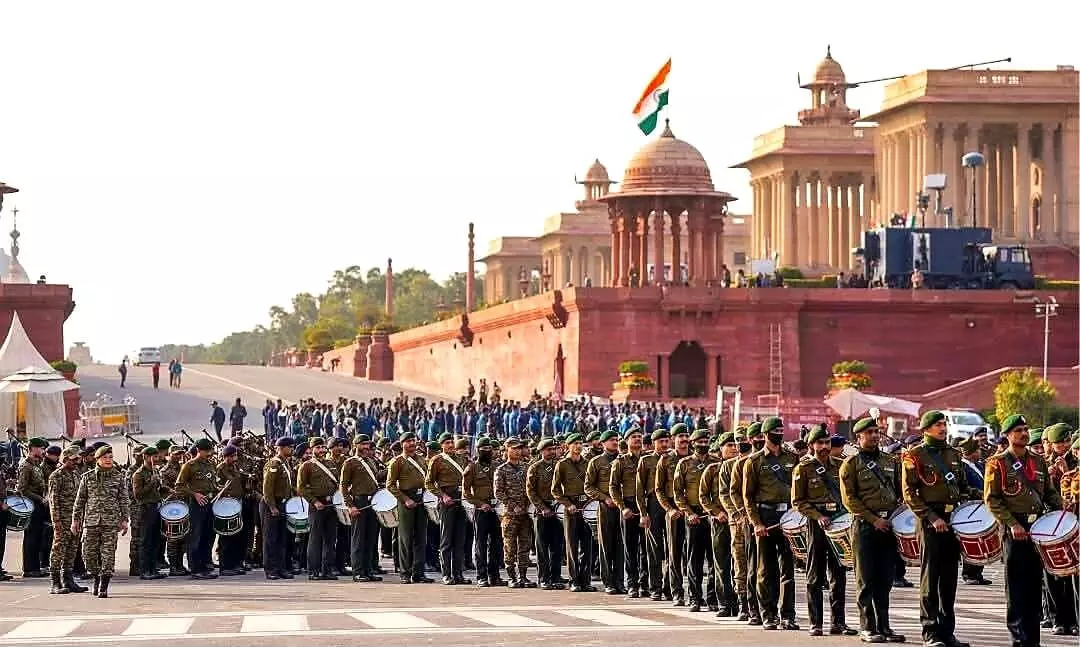
Beating Retreat is a ceremony that marks the end of Republic Day festivities in India. It is held on the evening of January 29, three days after Republic Day, at the Vijay Chowk in New Delhi. The ceremony features a musical performance by the bands of the Indian Army, Navy, Air Force, Delhi Police, and the Central Armed Police Force (CAPF). The ceremony is presided over by the President of India, who is the supreme commander of the Armed Forces. The beating retreat ceremony in India was first held in the 1950s, during the state visit of Queen Elizabeth and Prince Philip. Since then, the ceremony has become an annual event to pay tribute to the valor and sacrifice of the Indian Armed Forces. It has been watched by millions of people on television over the decades.
Beating Retreat and Tattoo ceremony
Beating retreat in India officially denotes the end of Republic Day festivities. It is conducted on the evening of 29 January, the third day after the Republic Day, and is organized by Section D of the Ministry of Defence. It is performed by the bands of the three wings of the military, the Indian Army, Indian Navy, and Indian Air Force, and pipe bands from the Army, plus, from 2016 onwards, a massed formation of bands of the Central Armed Police Forces and the Delhi Police. The venue is Raisina Hills and an adjacent square, Vijay Chowk, flanked by the North and South blocks of the Central Secretariat and the Rashtrapati Bhavan (President's Palace) towards the end of Kartavya Path.
History
The ceremony was started in 1955 and has been a hallmark of Republic Day celebrations ever since. Brig Bewoor and Maj Roberts of the Ceremonial and Welfare Directorate of the Indian Army conceived the first Beating Retreat in India. Army, Air Force, and Navy bands consisting of pipes, drums, buglers, and trumpeters from various regiments took part. It has become an official ceremony to have a Head of State of a country as the chief guest, and that year the Beating Retreat was in their honour.
Origin and Significance
The ceremony revives a centuries-old military tradition where troops would cease fighting at sunset, sheathe their arms, and return to camp, symbolizing a peaceful return from battle.
Venue
Vijay Chowk at Kartavya Path, with Secretariat Buildings in the background, New Delhi, is the venue of the Beat Retreat ceremony. The chief guest of the function is the President of India, who arrives escorted by the President's Bodyguard (PBG). When the President arrives, a fanfare is sounded by the trumpeters of the Brigade of the Guards on their fanfare trumpets, and then the PBG commander asks the unit to give the national salute, which is followed by the playing of the Indian national anthem, Jana Gana Mana, by the massed bands, and at the same time by the unfurling of the flag of India on the flagpole right at the Vijay Chowk.
Bands
The ceremony starts with the massed bands of the three services marching in unison, playing popular marching tunes like ‘Colonel Bogey March’, ‘Sons of the Brave’, and ‘Qadam Qadam Badhaye Ja.’ The fanfare by the buglers is then followed by the bands of the Navy and the Air Force. This part of the ceremony ends with their compound marches involving movements to form intricate and beautiful patterns and concert pieces. Then the pipes and drums of the Indian Army play traditional Scottish tunes and Indian tunes like Gurkha Brigade, Neer's Sagar Samraat, and ‘Chandni.’ The pipe bands also do a compound march and formation numbers. The massed military bands of the Indian Army perform last, marching forward in quick time, then breaking into slow time, then by the compound marches. The massed military bands, again, break into quick time and go back to the farthest end of Raisina Hills to reunite with the other bands.
Drummers
All five or six participating band contingents march forward and take position close to the President's seat. The drummers, mostly from the Army's pipe bands, give a solo performance, known as the Drummer's Call. A regular feature of this pageant is the last tune played before the Retreat, when the national flag is lowered. It used to be the famous hymn written by Henry Francis Lyte, ‘Abide with Me’, set to music by William Henry Monk, and one of Mahatma Gandhi's personal favorite hymns, and had remained part of the ceremony over the years, but along with many other foreign tunes has now been phased out to make way for Indian tunes. The chimes made by the tubular bells, placed quite at a distance, create a mesmerizing ambiance.
Bugle Call
This is followed by the bugle call for sunset by the buglers, and all the flags are slowly brought down. The band master then marches to the President and requests permission to take the bands away, and informs that the closing ceremony is now complete. The bands march back playing a popular martial tune and the official march of the Armed Forces, ‘Sare Jahan se Accha.’ As soon as the bands cross Raisina Hills, a spectacular illumination and Son et lumière display is set up on the North and South Blocks of the Parliament building with music and narration as the buildings' lightings are lit in front of the audience. As the President's Bodyguard (PBG) horse-mounted troops arrive back in after the bands leave, the band stops as another band from the Army is stationed to play the national anthem again as the President receives the final salute for the day by the PBG, before the President and the PBG depart with the bands leading the way, dispersed on the Rajpath leading to the Rashtrapati Bhavan and the Secretariat Buildings . In the past, this finale was also followed by a short fireworks display.
Camels
The Beating Retreat ceremony in Delhi also features decorated camels, specifically the iconic camel-mounted contingent of the Border Security Force (BSF). The BSF camel contingent is a special attraction of the ceremony and has been a part of the Republic Day events since 1976. They participate in the full-dress rehearsals and the main event at Vijay Chowk, adding a unique and traditional element to the military display.BSF personnel ride the decorated camels. The contingent includes soldiers mounted on camels, with some camels carrying musical instruments for the BSF band. The BSF is one of the few forces globally that still uses camels for both operational and ceremonial duties, and their presence highlights the blend of tradition and modern defence in India.


