Why do peacock feathers glow in different colours? A closer look at the science
What makes peacock feathers unique? Science behind their optical illusion
By - Beyniaz Edulji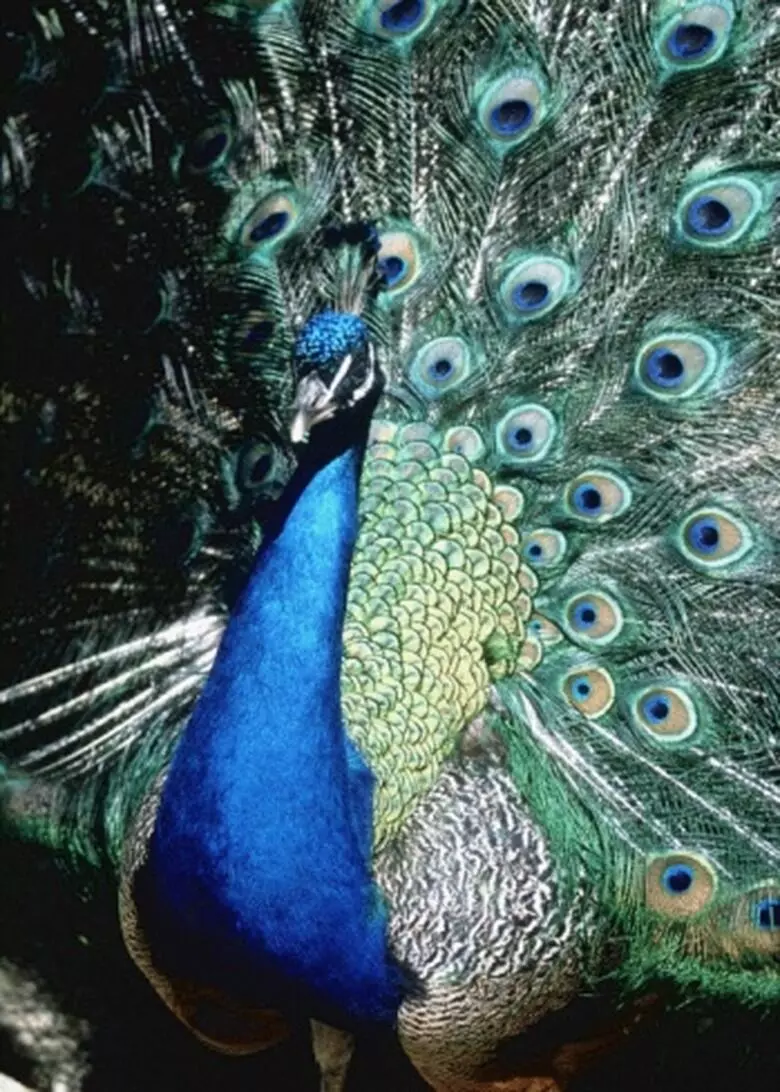
What makes peacock feathers unique? A closer look at the science
Hyderabad: The peacock is the National Bird of India, but there are many little-known facts about its beautiful feathers.
What makes peacock feathers unique?
Peacock feathers are unique for their brilliant, iridescent colours created by microscopic, crystal-like structures rather than pigments, a phenomenon known as structural colouration.
These feathers feature complex, nano-arranged keratin layers that act like prisms to reflect, bend and amplify light into vivid, metallic blues, greens and gold.
How are the ‘eyes’ formed?
The vibrant colours are not caused by pigments but by light interacting with tiny, periodic structures within the feather barbs, causing them to shift colours based on the viewing angle.
The iconic ‘eye’ spots are formed by minute variations in the thickness of keratin layers, with up to one million barbules in a single feather.
How do the feathers reflect light?
Research has shown that these feathers contain nanostructures capable of acting like natural laser cavities, emitting laser-like light at specific wavelengths when excited.
The feathers are not part of the actual tail but are elongated tail coverts that form a ‘train’ comprising 60 per cent of the bird’s body length, used specifically for mating displays.
Significance of sound by peacocks
During courtship, peacocks shake their feathers to produce a ‘drumroll’ sound, which they likely use for communication, potentially acting as a form of ‘Bluetooth for birds’ in dense habitats.
Feathers are shed annually
These feathers are shed annually after the mating season, meaning they can be collected without harming the bird.
Peacocks are renowned for their vibrant, iridescent plumage, primarily featuring a stunning mix of deep blue, bright green, gold and bronze tones. The male’s long tail, or train, displays iconic eye-shaped patterns that appear to change colour from blue to green depending on the light angle.
Primary colours
The body is covered in intense metallic blue and green feathers.
1. Iridescence
The plumage, especially on the tail, is iridescent, meaning the hues shift between blue, green, and gold based on lighting.
2. The ‘eyes’
The long, trailing tail feathers are marked with intricate, eye-shaped spots (ocelli) that contain deep blue, green, purple and bronze, surrounded by iridescent gold or green.
3. Female appearance
Female peacocks, called peahens, are more subdued in colour, with brown, grey, and limited green feathers, which helps them blend in for camouflage.
A specific, popular colour inspired by these birds is a deep, rich teal or ‘peacock blue-green’.
The colours are not just pigments but structural, caused by the reflection of light off the feather microstructure.
Spiritual symbolism
Their rich cultural symbolism represents beauty, luck, royalty, protection, wisdom, and immortality in various religions and myths, often used decoratively or spiritually in Hinduism (Lord Krishna) and Vastu Shastra.
Biomimicry
This light-refraction principle inspires anti-counterfeit technology, paints, and holography.
Geometric grid
The geometric grid in the image is real, and studies have found that each peacock grows about 170 eyespots, and that number is biologically locked in. The feathers grow from the tailbone in a zigzag pattern, adding rows of 10 or 11 each year, creating the tightest possible packing arrangement in nature.
When fanned out, the eyespots form spirals that follow the same Fibonacci pattern you see in sunflowers and pinecones.
Optical illusion
The barbs inside each eyespot are hooked together, making them heavier than the loose feathers around them. So when the peacock shakes its tail, the eyespots stay perfectly still while everything around them shimmers. It's a built-in optical illusion. The shaking also produces a low hum below the range of human hearing, but peahens can hear it.
Robert Hooke first noticed these structures in 1665 through one of the world's earliest microscopes. 360 years later, engineers are still trying to copy them. A UK startup called Sparxell won a major innovation prize in 2023 for making paint from plant cellulose that uses the same trick, colour from structure instead of chemicals, which means it never fades. Researchers at the University of Michigan used the same idea to build screen prototypes that work like e-paper in direct sunlight.
Culture and symbolism
Hinduism: Peacock feathers are associated with Lord Krishna, purity, good luck, prosperity, wisdom and protection.
Vastu Shastra and Astrology: Used for attracting positivity, wealth, mental clarity, and warding off negativity.
Buddhism: Symbolises wisdom and enlightenment.
Mythology: Represents immortality, rebirth, royalty, beauty, and spiritual connection.
Uses
Decorative: Clothing, jewellery, home decor.
Spiritual: Keeping them at home for good fortune or using them in rituals for blessings.
Writing: Historically used by sages for writing in ancient epics.
Prosperity and Good Luck: Believed to bring wealth and fortune into homes, especially in India, associated with Goddess Lakshmi.
Protection: Their ‘eyes’ signify protection from negativity and evil, warding off harm.
Spirituality and Rebirth: Symbolise spiritual renewal, immortality, due to the moulting of feathers and seeing beyond illusion.
Divine Connection: Vehicle for deities like Kartikeya (war/victory) and associated with Lord Krishna's divine play and wisdom.
Beauty and Royalty: Represent elegance, confidence, and power, historically linked to kings and empires.
Christianity: Symbolises resurrection, immortality and spiritual renewal, appearing in art alongside angels.


