Why Hyderabadis use silver vark to garnish sweets on festivals
It is primarily applied to sweets like kaju katli, barfi, and gulab jamun, as well as to dry fruits, cardamom, and in Ayurvedic medicines.
By - Beyniaz Edulji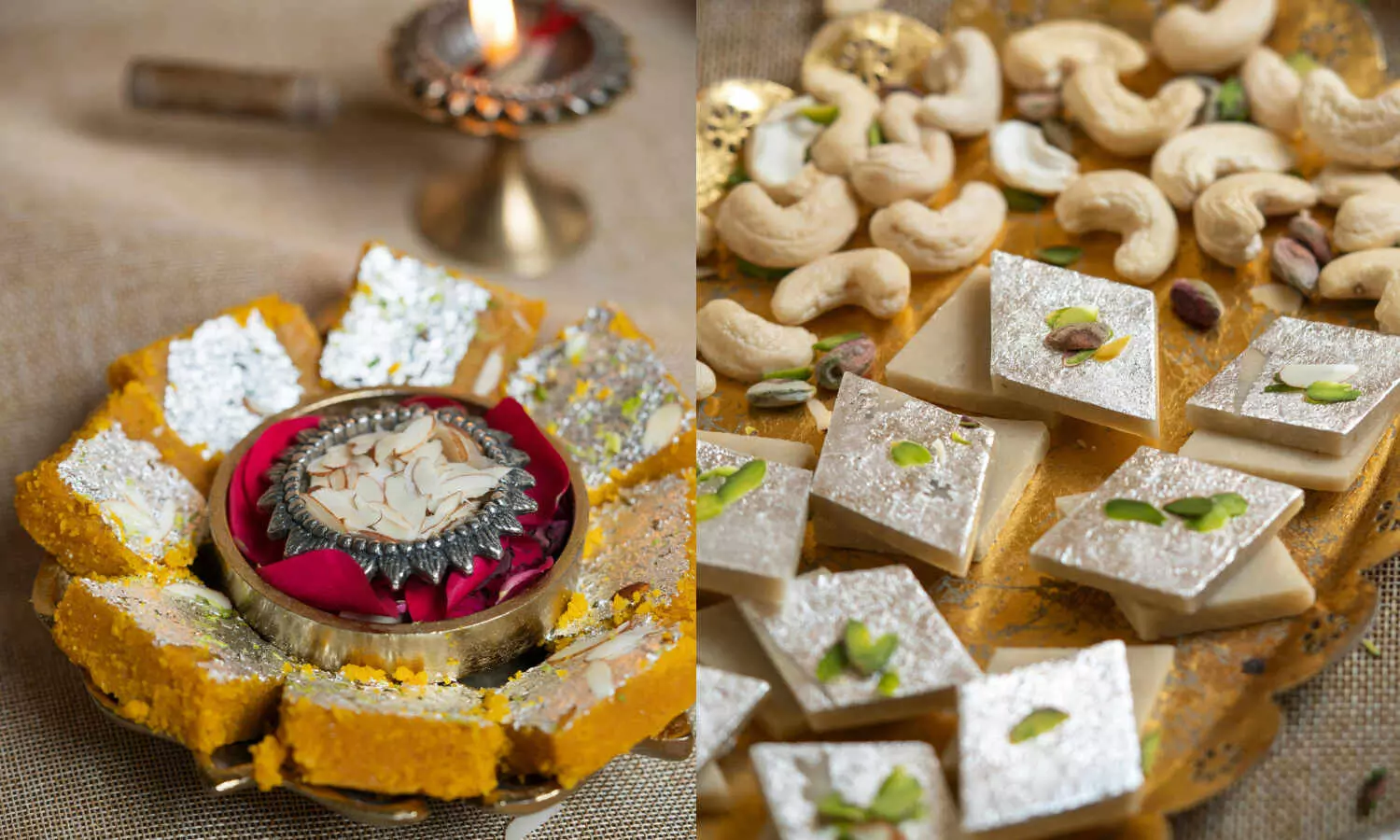
Representational Image
Hyderabad: On festive and special occasions in Hyderabad, sweets are garnished with silver or vark.
What is Vark
Vark is made of pure silver, used to garnish sweets, paan, fruits, and spices, adding a luxurious shimmer. Modern vark is typically produced using machine-beaten, vegetarian methods, and is tasteless and safe for consumption.
Usage
It is primarily applied to sweets like kaju katli, barfi, and gulab jamun, as well as to dry fruits, cardamom, and in Ayurvedic medicines.
Production
It used to be traditionally beaten between layers of animal intestine, but most modern production has shifted to clean, vegetarian, and machine-driven methods.
Purity
High-quality vark is 99.9% pure silver.
Adulteration Check
Genuine silver leaf disintegrates when rubbed between fingers, while adulterated foil, often aluminum, tends to roll into a ball.
Health Benefit and Symbolism
It is believed to have antimicrobial properties and symbolizes luxury, often used in religious offerings and festive occasions.
Ensuring purity
You should purchase certified "vegetarian" or "99.9% pure" vark for assurance against non-vegetarian processing and aluminum contamination.
Traditional and Ayurvedic beliefs, as well as modern scientific research into the properties of silver, suggest several potential benefits related to its antimicrobial properties.
Antimicrobial properties
Silver is a known antimicrobial agent that can help inhibit the growth of bacteria and fungi. When used as a food garnish, the foil acts as a protective barrier that can extend the shelf life of sweets by reducing microbial contamination and preventing the oxidation of fats. This is one of the primary historical and practical reasons for its use.
Traditional medicine
In Ayurvedic medicine, silver has been used for centuries and is believed to have various properties. It is considered a cooling agent that helps balance internal body heat and pitta dosha, and some traditional practices suggest it aids digestion and boosts immunity.
Immunity
Some sources suggest that trace amounts of silver, whether from food contact or in specific formulations (like Swarna Bhasma, powdered gold/silver), may enhance immunity and general well-being. But edible silver must be at least 99.9% pure.
Adulteration risks
A major concern is that some manufacturers may use cheaper, toxic metals like aluminum, copper, lead, or mercury instead of pure silver, which can pose severe health risks if consumed.
Manufacturing methods
Traditional vark manufacturing methods sometimes involved animal intestines, making the product non-vegetarian. Modern, vegetarian-friendly methods using advanced machinery or parchment paper are now available.
While pure, edible silver foil is considered safe in small quantities, its primary role is aesthetic and traditional, with any potential health benefits being minimal or largely based on ancient tradition.
Along with silver foil, edible gold leaf, gold flakes, gold dust, silver flakes, and silver dust are also used in luxury dining and desserts worldwide. In Indian culture, however, silver leaf has a special place, particularly in sweets like kaju katli, barfi, and malai chop.
Symbol of Celebration
Silver-coated sweets are associated with joyous occasions. Birthdays, engagements, weddings, and religious festivals often feature sweets decorated with vark.
Hyderabadi Delicacies
In Hyderabad, silver-coated sweets are particularly common. The city’s rich culinary traditions often merge Mughal influences, and vark remains a staple in sweet shops. Badam ki jaali and Jauzi halwa are both adorned with vark.
Affordability of Glamour
Contrary to what one might think, silver leaf isn’t very expensive. Since it is only a few atoms thick, a single sheet can cover a lot of sweets. This makes it an affordable way for sweet makers to add beauty and value.
Regional Variations
Hyderabad
Known for its rich desserts, Hyderabad frequently uses silver leaf in sweets like badam ki jaali and double ka meetha during festivals and weddings.
Tamil Nadu
Some milk-based sweets are adorned with silver foil to enhance their festive appeal.
Northern India
In places like Uttar Pradesh, Delhi, and Rajasthan, silver leaf is always used on festival favourites such as motichoor ladoos and barfi varieties.
Silver Leaf and Edible Gold
Silver leaf may be more common in Indian sweets, but it belongs to the same family of edible decorations as gold leaf, gold dust, gold flakes, and even 23-carat and 24-carat gold leaf sheets used worldwide.
Gold Leaf
A staple in luxury dining, gold leaf is often sprinkled on cakes and cocktails, too.
Gold Flakes and Gold Dust
These are used as finishing touches for champagne, chocolates, and gourmet desserts.
Silver Flakes and Silver Dust
These are used similarly but seen more in India.
Symbolism
Both edible gold and silver represent wealth, status, and festivity. In India, silver is more practical for daily celebrations, while gold leaf is often reserved for ultra-premium desserts, luxury chocolates, or fusion recipes.
Modern Trends
The use of silver leaf isn’t confined to traditional sweets anymore.
Fusion Desserts
Pastry chefs experiment with silver flakes on cakes, mousses, and macarons.
Cocktails
Just like gold dust in champagne, silver dust sometimes finds its way into high-end beverages.
International Influence
Global chefs have started incorporating edible metals into gourmet experiences.
While edible gold leaf, gold flakes, and gold dust dominate the global luxury food scene, in India, it’s silver leaf that has held its own for generations.


