Why monoculture forests are dubbed as `green deserts’
Why are natural forests better than monoculture ones
By - Beyniaz Edulji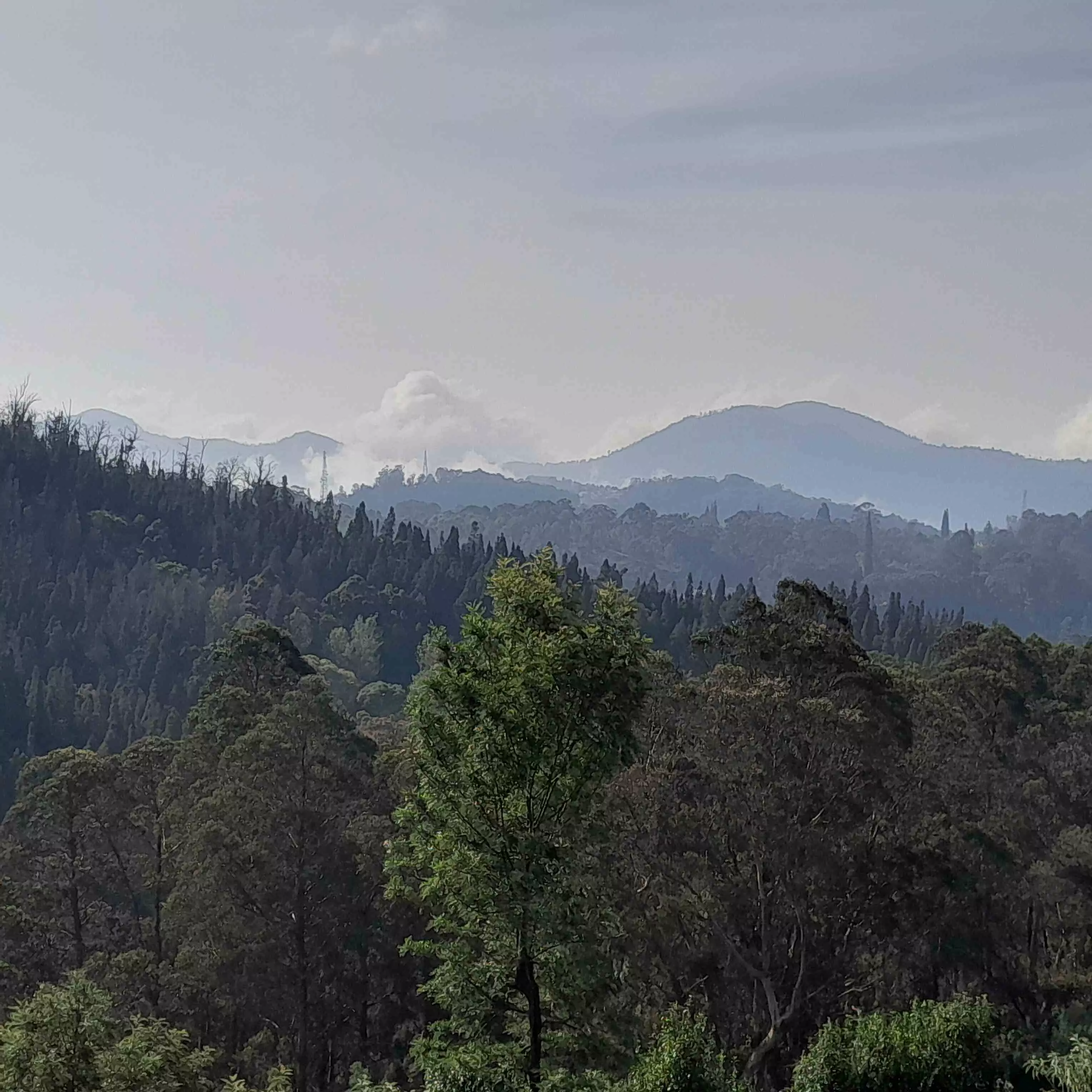
Why are natural forests better than monoculture ones
Hyderabad: Of late, the quickest fix for climate change seems to be planting new forests with fast-growing trees. Replacing natural forests with monoculture plantations may boost carbon absorption, but scientists warn that biodiversity is collapsing as a result.
Monoculture Forests
A monoculture forest is a plantation consisting of a single tree species, often planted in rows of identical age for industrial timber, pulp, or carbon sequestration. Carbon sequestration is the process of capturing, removing, and long-term storage of atmospheric carbon dioxide to mitigate climate change. It involves storing carbon in forests, soil, oceans, or via technological means to prevent it from contributing to global warming. While economically efficient, these "green deserts" lack biodiversity, making them highly susceptible to pests, diseases, and fire. They often degrade soil, deplete water, and do not support much wildlife.
Characteristics of monoculture forests
Composition: Primarily non-native, fast-growing species like Eucalyptus, pine, or acacia.
Environmental Impact: Low biodiversity, soil acidification, and much reduced carbon storage compared to natural forests. They can lead to water scarcity and increased fire risk.
Economic Drivers: High-volume, uniform production for paper and timber exports.
Social Impact: Can lead to the displacement of local communities and loss of traditional land-use practices.
"Green Deserts": Often criticized for looking like forests but functioning more like agricultural fields.
Monoculture forestry, while used for rapid reforestation, is increasingly criticized for not providing the ecological benefits of natural, biodiverse forests. There are fewer birds and insects.
Natural Forests
Whereas in a natural forest, there are old patches of natural woodland, Messy branches, fallen trunks, and mushrooms glowing on rotten logs. Life abounds here. Spiders, beetles, birds, frogs, and fungi are all in this space.
Both places store carbon. Only one feels alive. Replacing wild, tangled forests with single-species plantations is good for climate targets, but it is bad for biodiversity. A plantation of fast-growing pines or eucalypts is good for statistics, rapid trunk growth, predictable harvest cycles, and tonnes of carbon.
Chile
In Chile, millions of acres of mixed native forest have been converted into uniform pine and eucalyptus plantations over recent decades. On satellite images, the green coverage even increased. It looked like a reforestation success story. On the ground, scientists found that bird diversity dropped, small plants vanished, and streams warmed up. Local communities spoke of fewer mushrooms, fewer medicinal plants, and fewer wild foods.
China and Indonesia
A similar pattern plays out in parts of China’s “Great Green Wall”, or in Palm Oil areas of Indonesia, where peat forests once stood. The carbon figures sometimes look good in the short term, but not in the long term.
Natural forests, especially old ones, work differently. They’re slower, layered, and stronger. Carbon isn’t just in the trunks; it’s in deep roots, dark soils, and deadwood that takes decades to rot. Hundreds of species work together- fungi transporting nutrients, microbes fixing nitrogen, and insects breaking down litter. When we exchange natural forests for a single tree species chosen for fast growth, we do not just change the number of trees, but we rewrite the rules of the carbon game.
At first glance, monocultures sound like a winning solution. Pick the fastest-growing species, plant it in rows, harvest, repeat. You get wood, jobs, and good carbon metrics. But forests are not just carbon machines; they are also climate regulators, water filters, flood buffers, and gigantic seed banks of future medicines and crops.
Importance of diversity
Take away diversity, and the system becomes fragile. A single pest or disease can jump from tree to tree and wipe out the entire forest. Drought hits harder when every tree has the same water needs. Fire spreads more evenly through uniform fuel. When a plantation collapses, carbon is lost from trunks.
Natural forests spread risk
Some species thrive in wet years, others in dry ones. Some resist heat, others shelter shade-loving neighbours. When storms or fires hit, patches survive, pockets regrow, life reshuffles. The overall carbon stock wobbles but doesn’t crash. That resilience is invisible in a single snapshot of carbon numbers, yet it’s exactly what we need for a century of climate shocks.
How to restore forests
When planting is really needed on degraded land, abandoned farms, or in mined areas, mixed-species are much better. Instead of one type of tree, teams choose a set of natives with different roles-some fast growers for early shade, some nitrogen-fixers to heal the soil, some long-lived giants that will carry the canopy in 80 years. A few fruit or nut trees can give nearby communities a reason to care, and a reason not to cut everything down at once.
Practical tips
These can transform a carbon plantation into something closer to a living forest. Leaving buffer strips of natural habitat along rivers. Keeping irregular “islands” of native vegetation inside large blocks of planted trees. Using varied spacing so that light and shade aren’t the same everywhere. These small breaks in uniformity give birds and insects stepping stones, and they create microclimates that keep moisture and carbon locked in.
Why climate projects fail
A lot of well-meaning climate projects fail at a very human level: they treat local people as an obstacle instead of as long-term guardians. On a map, a new plantation looks perfect. On the ground, it may have replaced pasture where families grazed cattle, or areas where villagers collected firewood or herbs. Displaced livelihoods often mean quiet resentment, and those trees become targets in hard times.
Things to plan for
1. Favour protection of remaining natural forests over new monoculture planting where possible.
2. When planting, mix native species and leave patches of wild habitat intact.
3. Plan for at least 30–50 years, not just the next carbon reporting cycle.
4. Share real benefits with local communities, not only carbon credits on distant markets.
5 . Track biodiversity indicators (birds, insects, plants) alongside carbon tonnes.
Climate urgency
The climate clock is ticking. Governments and companies are hunting for fast, measurable wins, and tree planting feels like something you can launch with a press release and a drone shot. Natural forests, with their rough edges and slow timelines, don’t fit the need for instant statistics.
Quick fix
Many of us have fallen for the simple story: Plant a tree, and fix the climate. It is hopeful, but we do not see the silent birds, the streams runningmore slowlyr, and the soils slowly losing their sponge-like texture.
Research now shows that protecting and gently restoring natural forests may not be the fastest climate solution, but it’s the best. This isn’t a call to stop planting trees. It’s a call to plant smarter, and to stop pretending monoculture plantations are the same as forests just because they’re green.
Monocultures versus natural forests. Plantations can boost short-term carbon numbers, but they erode biodiversity and resilience.
Combining native species, keeping wild patches, and protecting old forests offers more stable carbon storage.
Human role and long-term view
Local communities and long timelines are crucial to avoid future carbon loss and forest collapse.
Mixed species
Mixed-species plantations, or those that keep natural patches and corridors, can host high levels of life. The actual problems come when large, dense monocultures replace rich natural forests.
Plantations versus natural forests
Plantations often grow faster at first, so trunks accumulate carbon quickly. But over several decades, natural forests usually store more total carbon in wood, soil, and dead matter, and they’re less likely to lose it all at once.
Protect existing forests
Protecting existing natural forests ensures both carbon and biodiversity. Restoring degraded land is also valuable, especially if done with native species and long-term care.
Aiming for good reforestation projects
Use native species, involve local communities, protect remaining natural habitat, and track biodiversity in addition to carbon.
The Bottom Line is to beware of projects promising ultra-fast carbon gains with single-species plantations.


