25 Indian artisans showcase handmade products in natural dye festival in Hyderabad
Exclusive Natural Dye Handmade Festival in Hyderabad from terracotta jewellery to metal artifacts, 25 artisans from India showcased handmade products
By - Beyniaz Edulji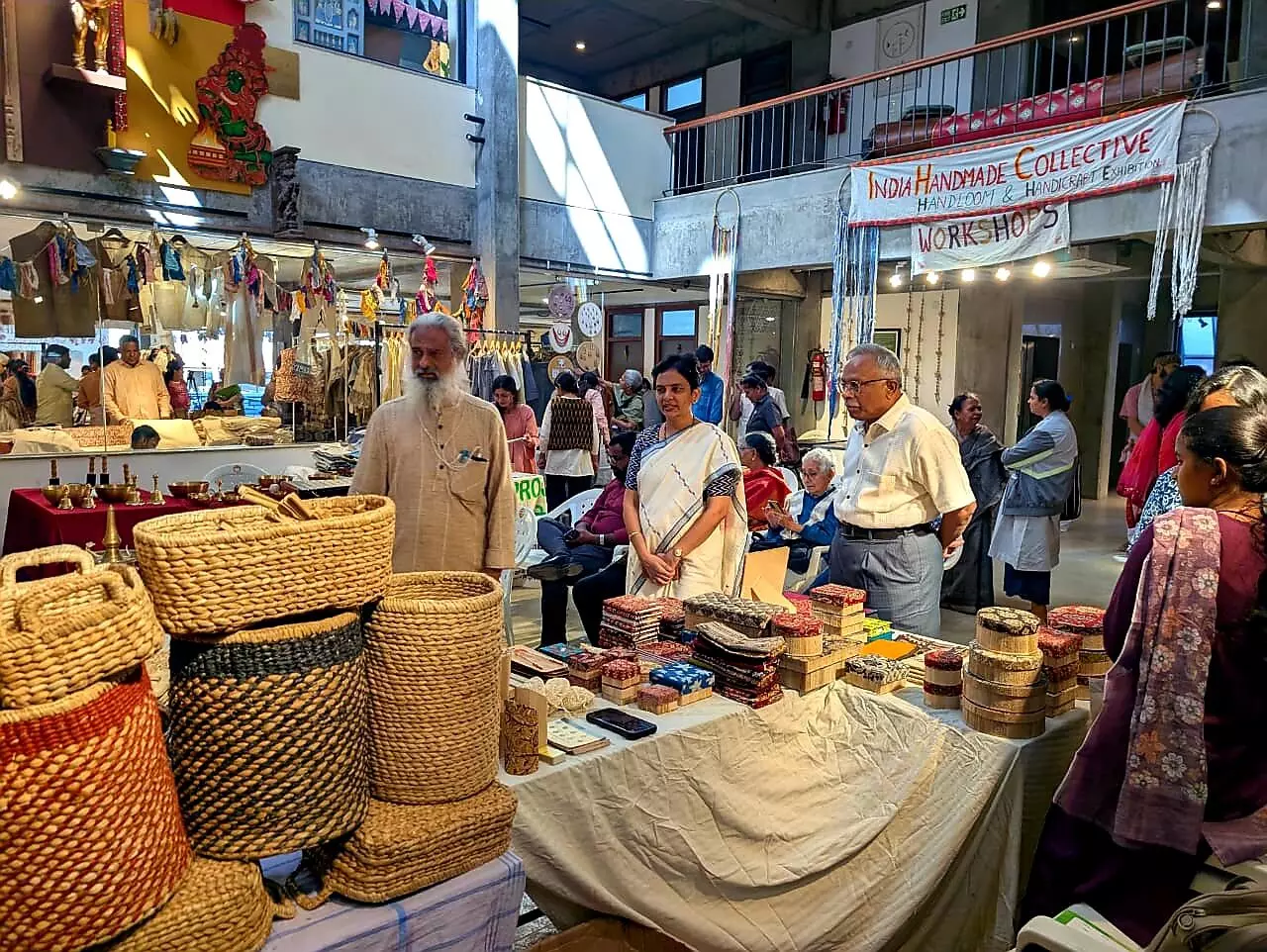
Exclusive Natural Dye Handmade Festival: From terracotta jewellery to metal artifacts, 25 artisans from India showcased handmade products
Hyderabad: The 3-Day Exclusive Natural Dye Handmade Festival by India Handmade Collective was held from Dec 19 to 21st at CCT SPACES, Road No.12, Banjara Hills, Hyderabad. It was very well attended by those who value handmade and eco-friendly textiles. The Chief Guests were Jagada Rajappa (Natural dye and textile expert), Divya Devarajan IAS (CEO, SERP), actress Geetha Bhascker, and T. Vijay Kumar, former IAS officer.
Crafts Council of Telangana, Hyderabad, showcased an event of Natural Clothing, Crafts, and Workshops. Sustainable craft Artisans from all over India displayed their creations, interacted, and demonstrated the art of handmade crafts. Varieties of handmade colours of Nature showed visitors the way to beautiful natural living. There were creative hands-on workshops on all three days.
There was interaction with three interesting and enterprising artisans selected for this year's JC Kumarappa Award by the Gandhi-Kumarappa Trust.
Several Brands
The Exclusive Natural Dye Handmade Festival by India Handmade Collective was inaugurated amidst a lot of handmade, khadi, and handicraft enthusiasts and a gamut of celebrities. The festival featured several brands like Nature Alley, Tula, MGGSS Foundation, Tinctoria, Sahajaallika Project, Moral Fibre, Gandhigram Khadi, Wavilal Khadi, Porgai, Gram Sewa Mandal, and Qalambatik for Fabric and Garments. These brands offer a wide range of eco-friendly products, such as naturally dyed, handspun, handwoven cotton, which can only be made through intricate techniques performed by talented artisans.
Diverse Displays
The display creations ranged from Eco printing, Batik and Kalamkari, Lambadi Embroidery, and Clothing ranging from dresses and sarees to tops and pants, all in Natural Dyes. Displayed were Terracotta Jewellery, Coconut Shell crafts, Reed woven baskets, Dakhnii Wool, Sound Instruments, metal artefacts, wooden toys, Sustainable home decor, and utilities.
Service and Dedication
The JC Kumarappa Distributed Economies Award by the Gandhi Kumarappa trust for the year 2025 for infusing hope and motivation in rural India, abiding by Gandhian values, and nurturing & preserving our heritage was also handed to the awardees by the chief guests. The JC Kumarappa Distributed Economy award 2025 by ‘Gandhi Kumarappa Trust’ was awarded to 3 individuals for their service and dedication to handmade heritage in rural India. The awardees are Shri Raunaki Ramji, aged 78, a handloom weaver from Jalandhar, Punjab; Ramji Marvad, aged 35, from Kutch, Gujarat, who started a Kala cotton Enterprise; and Saravanan Dandapani, aged 33, who anchors a textile group initiative in Tenkasi, TN.
Workshops
This Festival featured several hands-on workshops such as hand spinning, toy making with Reed grass and seeds, Batik workshop, Wool felting and Tapestry weaving, palm leaf and Coconut Shell craft for visitors to view and participate in. This festival’s focus was to keep traditional, natural handicrafts alive and allow customers to feel confident, comfortable, and fashionable in a way that is safe for the environment.
About India Handmade Collective
India Handmade Collective was founded in 2020 in response to the devastating impact of the COVID-19 pandemic on nearly 40 lakh local Indian artisans. By offering a platform for weavers, spinners, and small producers, IHMC promotes fully sustainable clothing and handcrafted goods and connects them with eco-conscious consumers nationwide. IHMC aims to raise awareness about the challenges faced by artisan communities, while fighting against overconsumption and environmental harm in the fashion industry.
Stalls by artisans
The exhibition featured stalls by 25 artisans from across the country, displaying hand-made products. These ranged from naturally dyed dresses and sarees to tops and trousers, along with reusable bindis, chemical-free scrubs, terracotta jewellery, coconut shell crafts, reed-woven baskets, metal artefacts, wooden toys, and sustainable home décor. Techniques on display include Eco printing, batik, Kalamkari, and Lambadi embroidery.
The exhibition connected visitors directly with people who value handmade textiles. Mill-spun cotton may be easier to work with, but hand-spun and hand-woven cotton needs skill and patience. These are dying art forms that the collective is trying to save.


